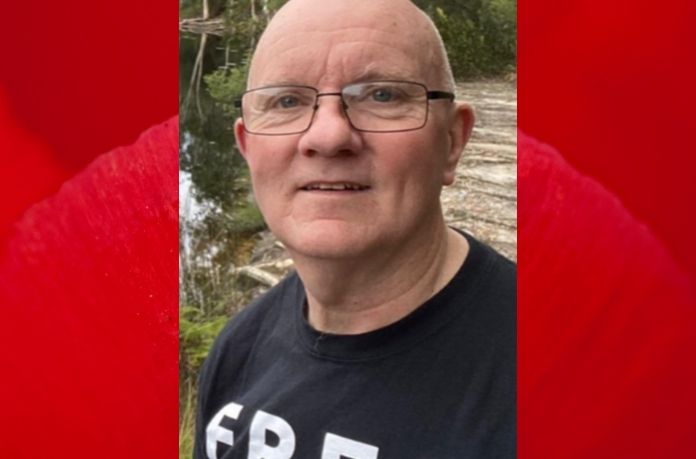
Speakers from four faith traditions – Buddhist, Islamic, Unitarian/Atheism and Christian – presented at a “faith, sexuality and sexual ethics” seminar conducted by the UNSW Health Promotion Unit as part of its online festival SEXtember.
Dr Desmond Perry, from Pitt Street Uniting Church, spoke of his experience as a gay man, with reference to the seminar’s sub-theme “pleasure and danger” for LGBTI people.
“It was terrific hearing how much we [speakers] each had in common,” he said, “including the struggles dealing with other religious people’s negative attitudes.”
Dr Perry cited research by John Boswell from the 1980s which showed that Christian views on homosexuality were not inherently negative, and there was great diversity and inclusion over the first 18 centuries of Christianity’s existence.
“It has really only been in the 19th and 20th centuries that Christian fundamentalists have used somewhat obscure ancient texts to justify homophobia. This was part of a reaction against the growth of science.”
Dr Perry also spoke about the stages of moral development outlined by Lawrence Kohlberg which starts with children complying with the expectations of authority figures and evolves through other stages to the point where a person has an emerging comfort with diversity, mutual respect of difference and focuses on justice rather than rules.
The danger for LGBTI people, Dr Perry said, is identical to the danger for Christian evangelicals.
“It is a danger of getting stuck in a less mature stage of moral development.
“This is more dangerous for LGBTI people as it is an affront to their sense of self, and connection. It is therefore important to question the validity of faith-based homophobia.”
Dr Perry said a new progressive approach to Christian thinking was emerging.
“It is not an attempt to scientifically explain religious stories, but a reclaiming of ancient narratives. The premise is that religious stories are told in a cultural context in time and place. The challenge is to enter the power of the story and see if it applies in a new cultural context, to decide if the story is or is not culturally appropriate to our time and place.”