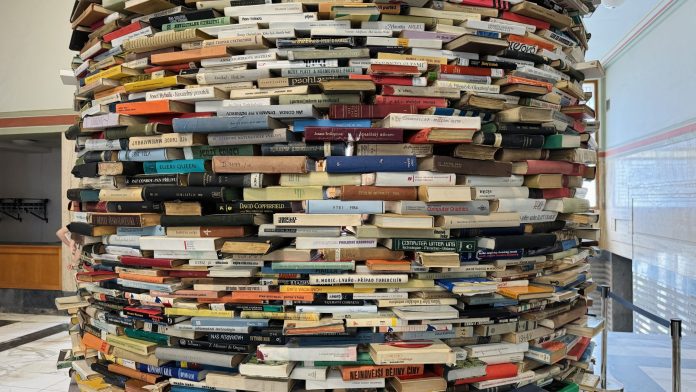
Remember when Donald Trump made “Drill, baby, drill!” a campaign slogan? Today, a new chant seems to echo across some US states: “Ban, baby, ban!” Thousands of books are being pulled from school shelves for the most surprising reasons. Titles like The Diary of Anne Frank have been banned over “inappropriate content”, while books about race, gender or even historical truth are being silenced under vague accusations of being “divisive”.
So why are books still being banned in 2025? Because – even in the digital age – words still carry power. They challenge us, open minds, spark empathy. And sometimes, that’s exactly what makes them targets.
That’s why the Sydney Writers’ Festival, held at the end of May, felt more important than ever. It was a vibrant celebration of storytelling with a strong spotlight on local and Indigenous voices, but also with a global outlook. Most importantly – and we can’t stress this enough – Gaza. Our journalists and photographers were there, capturing the energy, listening to the stories and witnessing just how alive literature is in our communities (see pages …).
The same spirit is showing up in a quiet but powerful movement in Sydney libraries: read-ins. These are gatherings where people meet in libraries with a book and read together – silently, side by side. It’s a peaceful act of solidarity, a celebration of the freedom to read and a subtle stand against censorship (see page …).
Words can still change the world – and sometimes they simply make our day better. So check out our book review by our very own editor, Melinda Kearns, along with our takes on films, food, sports and the work of emerging young writers and creators – the voices of the future.
Whether you’re looking to be informed, inspired or entertained, we’ve got you covered. Words matter. Let’s keep reading them – and fighting for them.