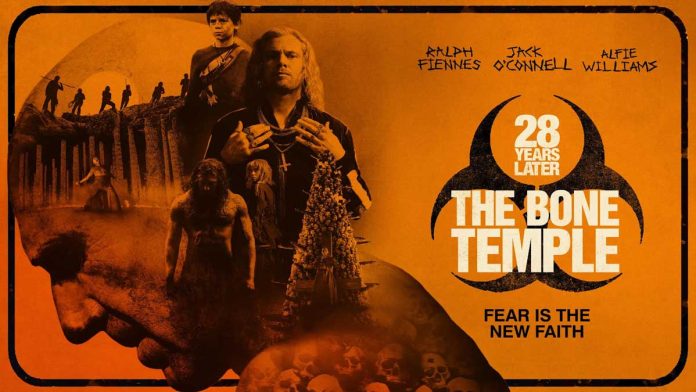
Director Nia DaCosta
Starring Ralph Fiennes, Jack O’Connell, Alfie Williams
Genre 28 zombies
This review was originally going to be of 28 Years Later (2025) and its sequel 28 Years Later: The Bone Temple. But much to my surprise, the films were very different, though both were great examples of excellent zombie films that aren’t specifically about zombies.
The Bone Temple and the original 28 Days Later (2002) are more similar to each other – both very post-apocalyptic, demonstrating the challenges to humanity once only a small fraction of humans survive the apocalypse (alas, 28 Weeks Later (2007) was much less interesting and less relevant). Other examples of zombie shows not really about zombies include Night of the Living Dead (1968) which is about the benefits and dangers of capitalism, while The Walking Dead TV series (2010-2022) is mostly about man’s inhumanity to man (humans were the real monsters).
The Bone Temple does feature a few standard zombies and one extraordinary and monstrous zombie in particular. But it focuses mostly on the critical challenge of competition between the remaining humans struggling to survive post-apocalypse by living semi-normal lives or thrive in violence and chaos. Admittedly that’s a deep and meaningful interpretation. Most viewers will simply enjoy and/or be freaked out by the horrific battles and torture scenes between the humans and the drug-friendly efforts by legendary Dr Kelson (Ralph Fiennes) to ‘befriend’ and ‘cure’ the extreme ‘Alpha’ zombie.
Fiennes’s performance is extraordinary, to the extent that he’s now being rightfully considered for an Academy Award. He’s slightly unhinged, very British, insightful, perceptive, and a great performer who loves Duran Duran. That’s both Fiennes in person and the role he’s playing and why he deserves the award.
The good news is that there’s another 28 Years Later sequel on its way, while anticipation of other subsequent films in 28 decades and 28 centuries is also hoped for.
Rating Five futures