The Half-Life of Marie Curie
Writer: Lauren Gunderson
Director: Liesel Badorrek
Venue: Ensemble Theatre
June 13 – July 12, 2025
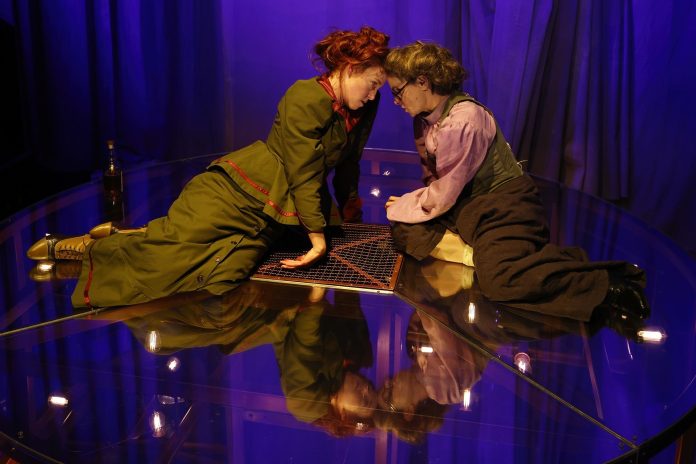
There’s a moment early in The Half-Life of Marie Curie where the weight of public shame threatens to crush even a double Nobel laureate – and it’s here, in this quietly combustible tension, that Gunderson’s play plants its feet as Hertha (Rebecca Massey) arrives, with her pipe swinging like her imagined sabre, to cut through the prurient crowd and be there for her friend.
What follows isn’t just a historical footnote about two incredible women of science. It’s a beautifully structured piece of theatre about what remains when the noise fades: the core self, stripped bare like radium transforming, change misread as decay until only a stable centre is left. And in this case, what remains is female friendship – unsentimental, fiercely intelligent, and deeply, unapologetically tender.
Gabrielle Scawthorn is riveting as Marie Curie – her French accent unforced, her presence kinetic. She moves across the stage like a current under tension: grief and guilt and genius all jostling beneath the surface. Her performance balances wit with pain, playfulness with pride.
Rebecca Massey’s Hertha Ayrton is a perfect antidote – equally brilliant, less bruised. Hertha is self-named, self-made, and whilst armoured with humour and irony she is equally complex. She’s the kind of woman who can picnic by the sea while dissecting fluid dynamics, or patriarchy. Massey gives her warmth without softness. Massey also loves the humour of her character; a little line perfectly dropped into a serious moment counterpoints the tension without letting the audience escape.
The direction by Liesel Badorrek is clear and perfectly paced. There’s texture in every scene. Moments of quiet are earned. The play, though intimate, never feels small. The relationship between the two characters is fully formed at the start, it grows and matures, culminating in a beautiful dénouement.
The only issue with the production is in the staging as even before a technical malfunction, there were moments when the staging distracted rather than added to the world of the play. The malfunction (part of the raised staging platform became unsafe) could have derailed the performance. Instead, the actors left the stage in character, the crew made repairs, and within minutes, the performance resumed. In the hands of the cast and crew, this became a minor moment, soon left behind.
What lingers is the image of two women standing at the edge of the world as they know it – sifting through ruin, reputation, and radiation – and choosing to keep going, to keep thinking, to keep exploring.