While cities are now the world’s focal point, they are facing the modern world’s most urgent problems: increasing inequality and shrinking resources. With public space and services being increasingly privatised and commodified, many people are progressively being denied access to what was once considered social capital, available to all. The city of Sydney, like many other cities, is experiencing a fight-back in the form of grassroots organisations promoting the sharing of collective resources and collaborative action.
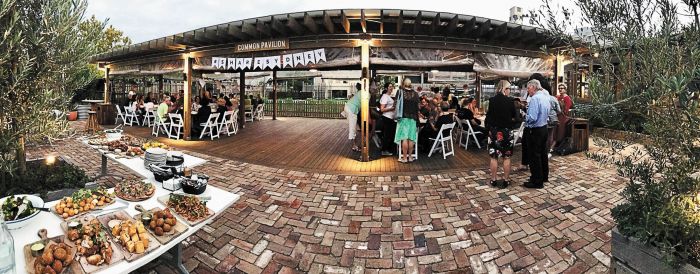
“Sharing Cities” aims to provide new insights into the social process of sharing which will hopefully be used to guide future urban policy. The Commons participants took part in semi-structured conversations on various aspects of sharing – skills, bikes, tools, toys, gardens, crafts, recycling, clothes, food – and by moving the eager contributors from table to table, each topic was covered by all present. Attendees needed no inducement to talk and were clearly inspired by hearing about the practices of others and inspiring when speaking of their own enterprises. Those with experience offered invaluable advice, and Costa Georgiadis, from Gardening Australia, made the important point that guidelines, which allowed a necessary flexibility, were needed, rather than policies.
Also present were representatives from the The Sharing Map, a collective made up of people from diverse professional backgrounds. The Sharing Map aims to facilitate access to shared resources and maximise usage. By consulting the website www.thesharingmap.com.au people can locate a wide range of initiatives according to suburb, via an interactive map. The Inner West Tool Library (Marrickville), for instance, gives access to hundreds of useful tools and implements. The library is based on the sensible notion that many tools, ranging from a spade to a whipper snipper, may be used only a few times a year and then will “sit around wasting space”.
Many enterprises, like the library, do not entail the use of money, but emphasise instead swapping, bartering or just plain giving. Apart from preventing waste and saving money, collective initiatives foster connection and build more democratic and resilient communities.