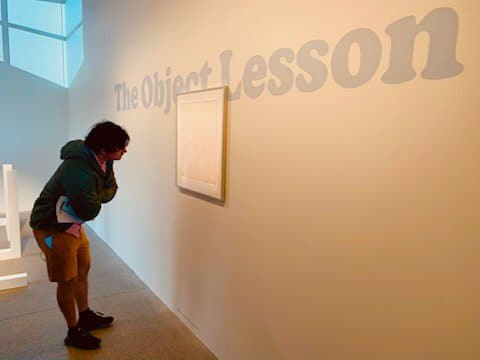
Thomas Demand: The Object Lesson
Kaldor Public Art Project 38
Art Gallery of New South Wales
August 30, 2025 – January 11, 2026
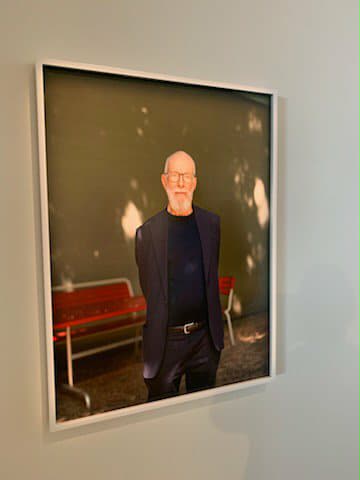
John Kaldor is a legend of the Australian contemporary art scene. He has been that for more than fifty years. A former WWII refugee from Budapest, he used his family pedigree in textiles and combined it with a creative vision. His push towards excellence eventually established a garment business internationally. By the 1960s, he was in a position to focus his passions towards philanthropy and the arts.
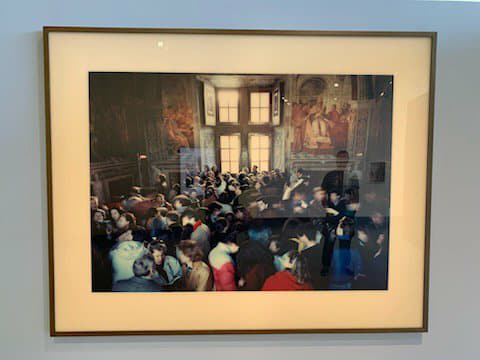
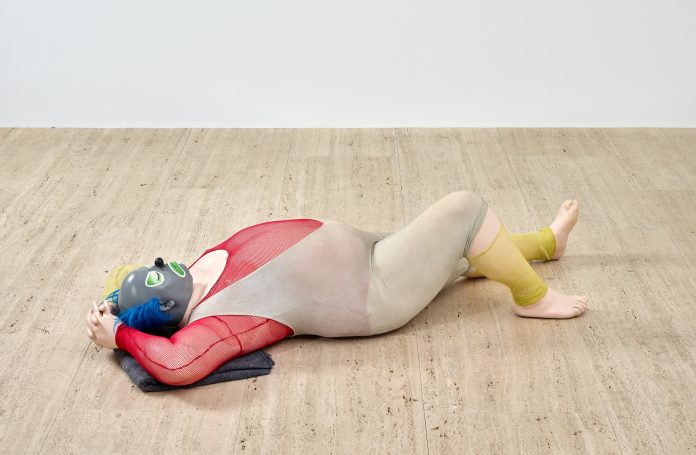
Not only was he commissioning leading artists from Europe and the Americas to come to our shores and literally wrap them up, but he also began acquiring a jaw-dropping personal collection from the best and most experimental artists across the globe. They were some of the most modern of the moderns. Where they fit into the arc of art history, well it’s too soon to know. These works are probably part of a sense of meta-modernism. Works that exist independently of each other and are not necessarily part of a specific movement or style.
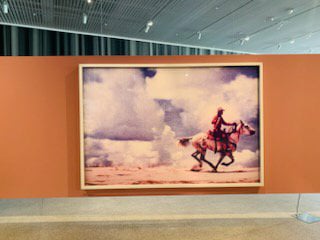
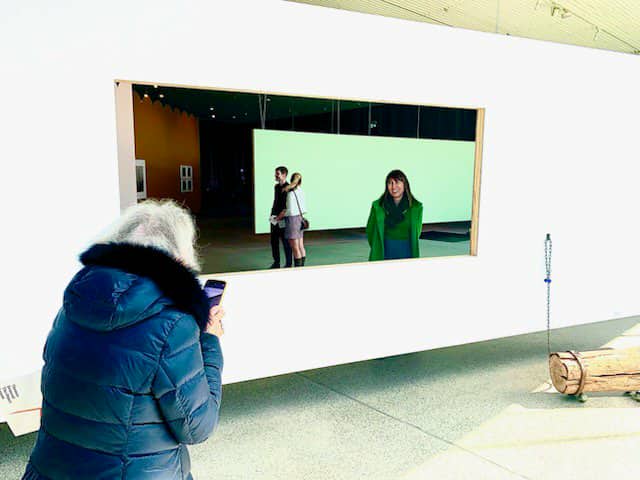
In 2008, Kaldor eventually donated his extensive collection to the Art Gallery of NSW. Meanwhile, he continued to bring artists to our shores, show local artists abroad and sponsor the education of art across a range of learning institutions. Right now, AGNSW is hosting a selection from this collection in collaboration with Kaldor himself. He has commissioned his own exhibition designer and curator, Thomas Demand, who also happens to be a world-recognised artist of the still and moving image. Not content with works displayed on neutral white walls, Demand has used an obscure drawing by Sol LeWitt, one of the collection’s artists, to design the layout of the show. This becomes a series of floating partitions painted in daring colours that complement and challenge the displayed pieces.
As you enter a vast space on the ground floor of the AGNSW’s new building, you are met with an unfolding maze of floating walls. Standing just inside this large and whimsically laid out space, I can see that each piece exists in a spacious singularity positioned uniquely on each floating panel. A very small label near the base begrudgingly identifies the artist and their work. I began to see how the works could be seen as objects floating in their own space.
I also started thinking about collectors who spirit away their precious items into some adorned treasure chest or archive. At that moment, John appeared next to me. I mentioned to him that his pieces looked like precious jewels in a box that was unfolding itself. I think that was way too poetic. He looked at me blankly and nodded his head down to the floor below the floating wall and remarked, “Look, you can see what shoes people are wearing on the other side of the wall”. He left me there and continued circulating. “Wow”, I thought, “what a cool dude”. He has his own quirky and generous vision. He’s not just the money guy.