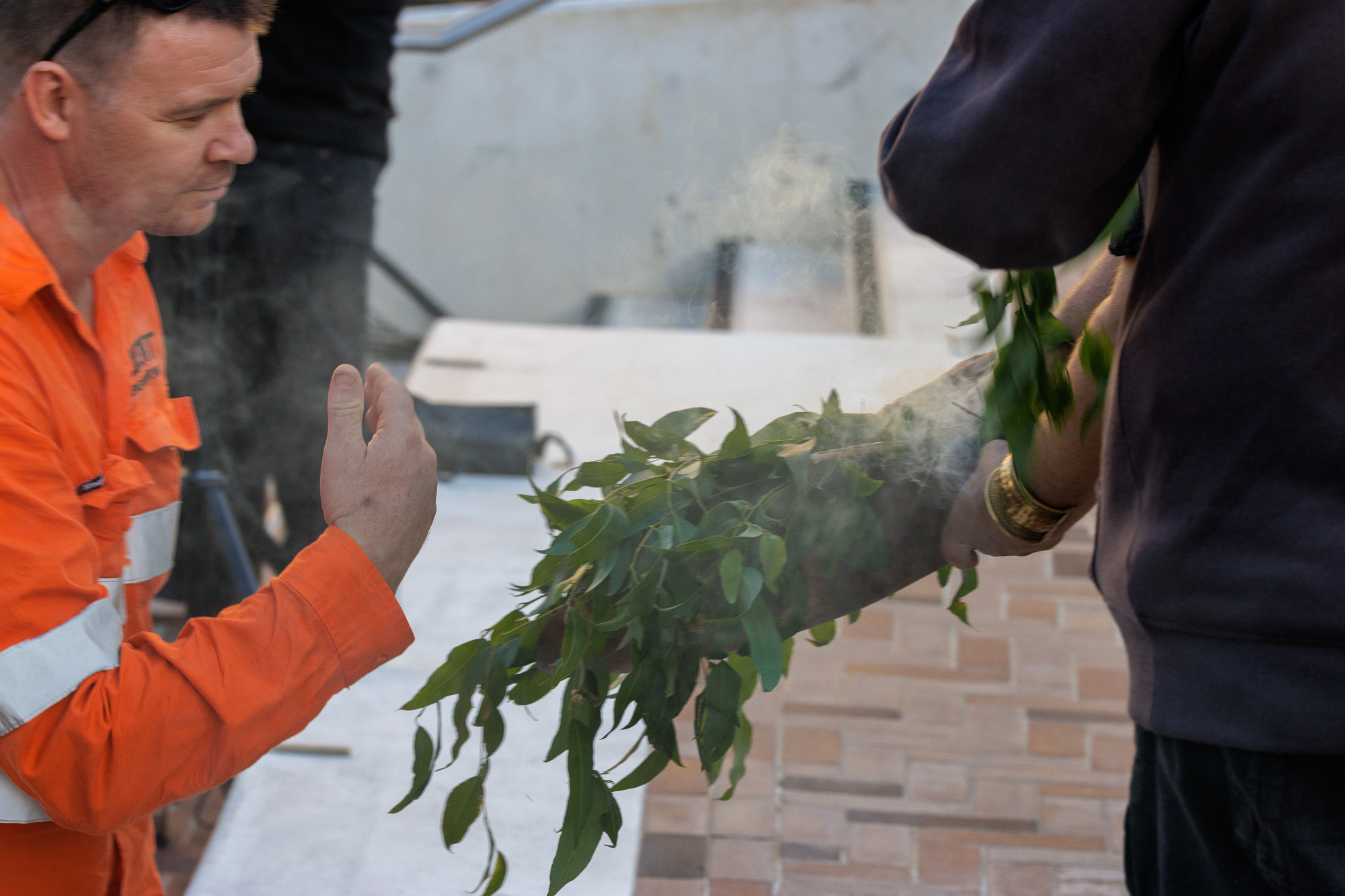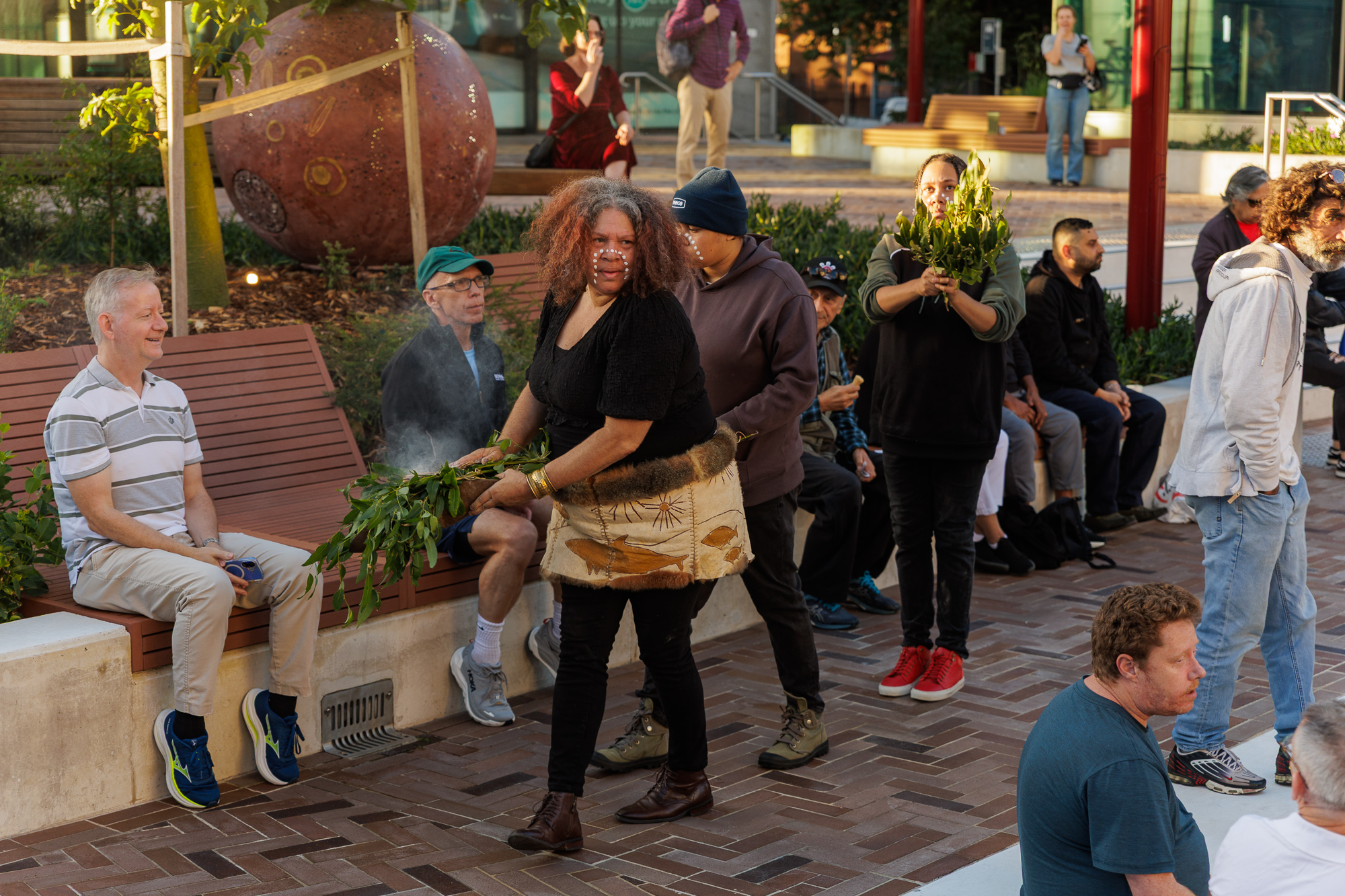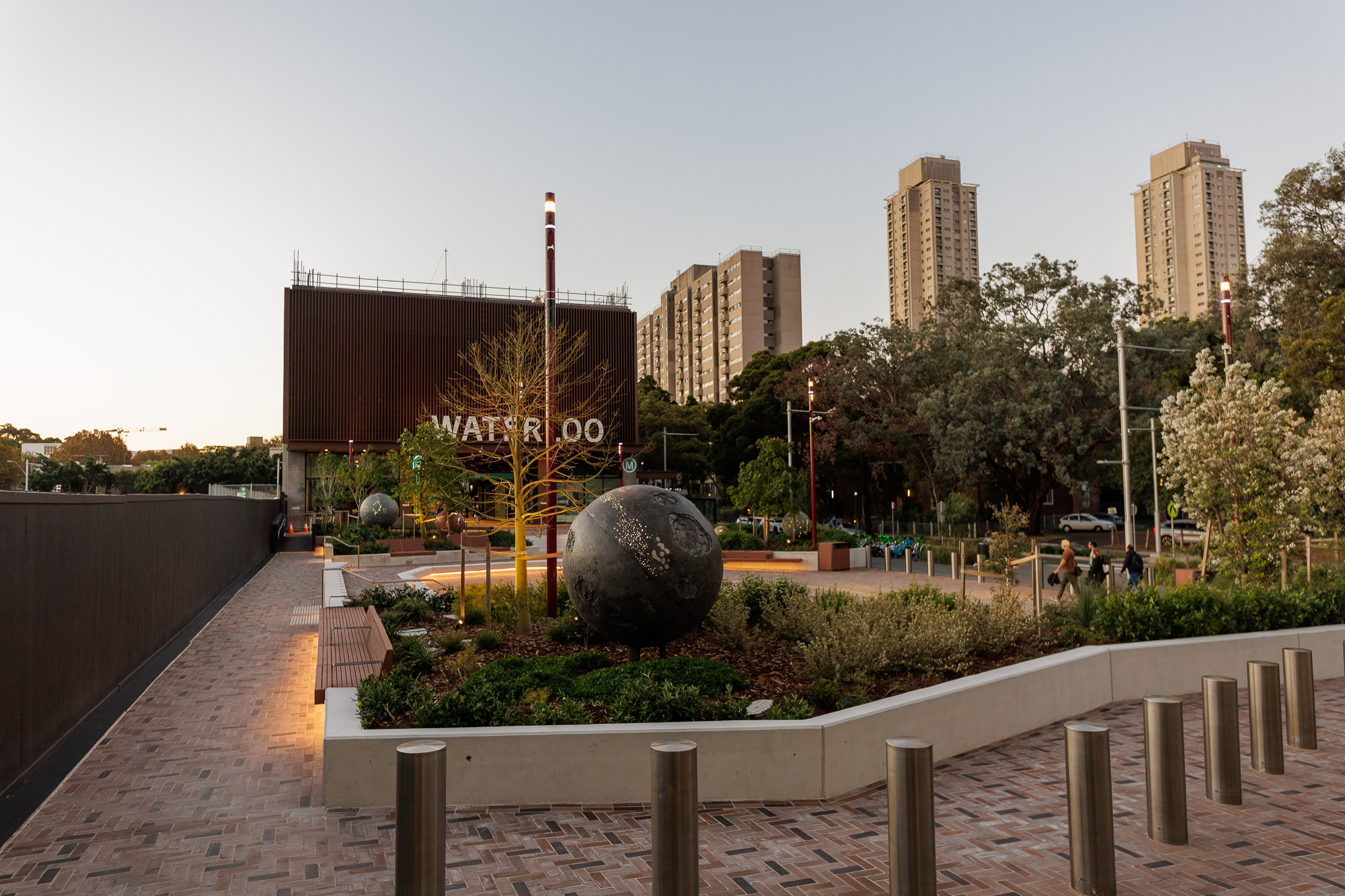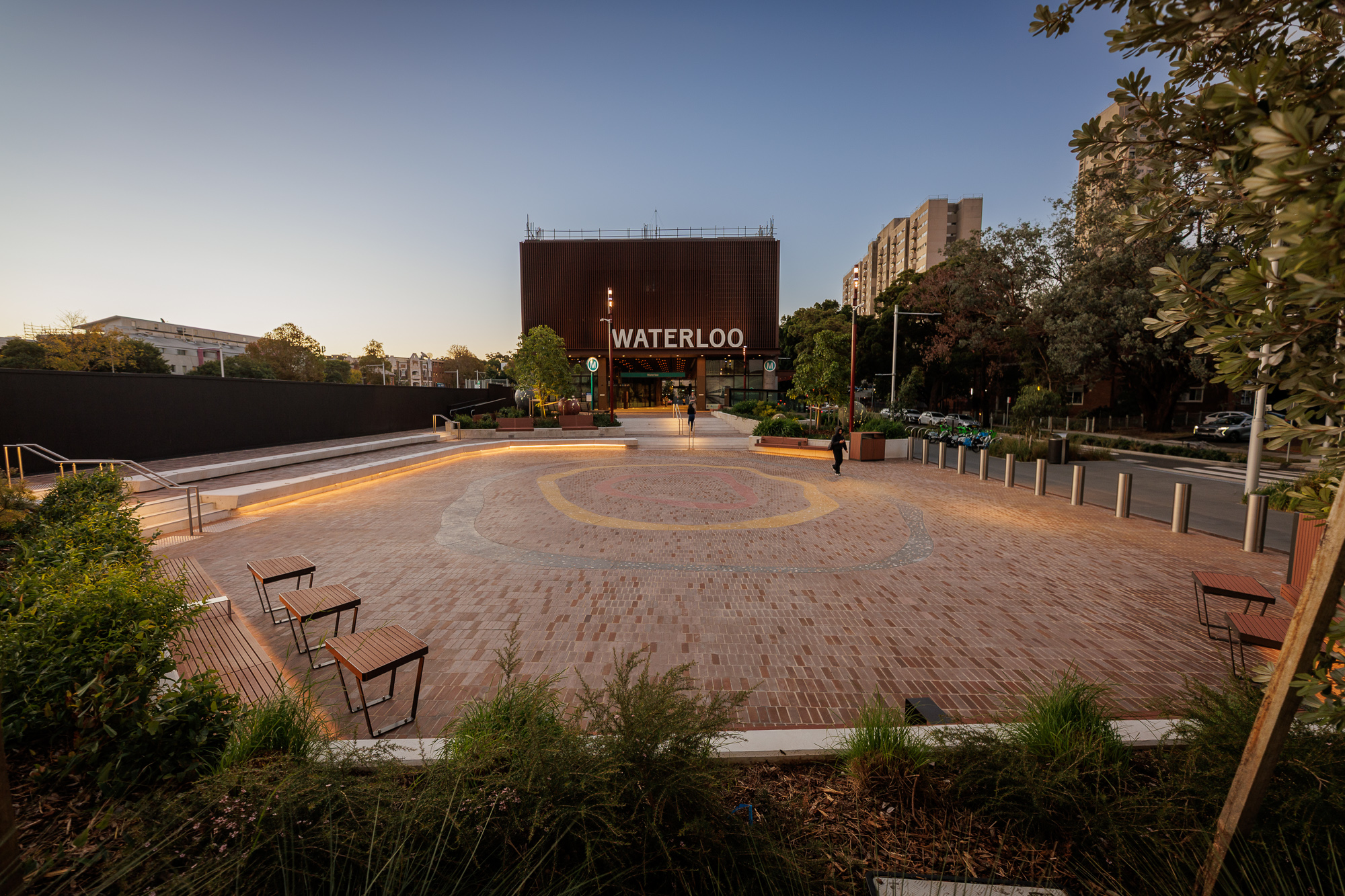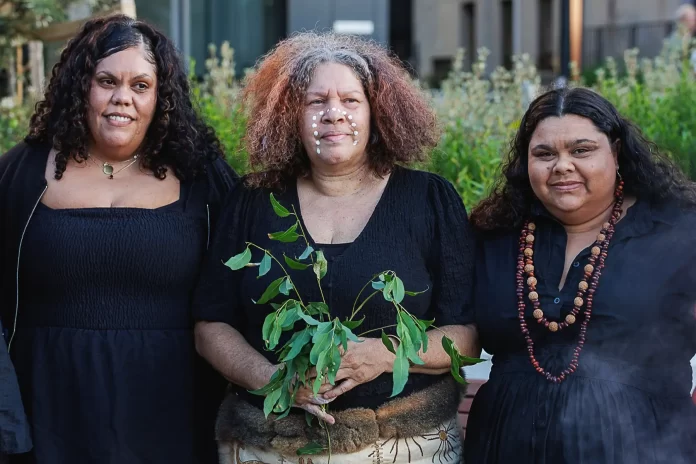
Badumurru Place is the new centrepiece of the development at Waterloo station, which officially opened on Wednesday, 6 May. It represents an ambitious attempt to create a community “third space” for the residents of Waterloo, set within a wide and relaxed plaza. Designed around the works of three local First Nations artists, the plaza cements the relationship between the local Indigenous community and the physical space.
The word Badumurru is a combination of the Gadigal words Badu (water) and Murru (path), which together mean ‘water pathway’. It recognises the history and significance of the pre-colonial waterways and wetlands that once existed in what is now the Redfern and Waterloo area.
“This Place is designed to gather and channel water to remind us of the water sources that are underneath the Redfern area that flow all the way into the city and to the harbour,” explained Sebastian Goldspink, Assistant Curator.
The plaza was built by Mirvac as part of the development of the land surrounding the Waterloo Metro station.
“The artwork acknowledges the local community,” said Daniel Doyle, Project Director at Mirvac. “That connection back to the community, we hope, will really provide this space as something that means something for the community and is there for the community to use.”
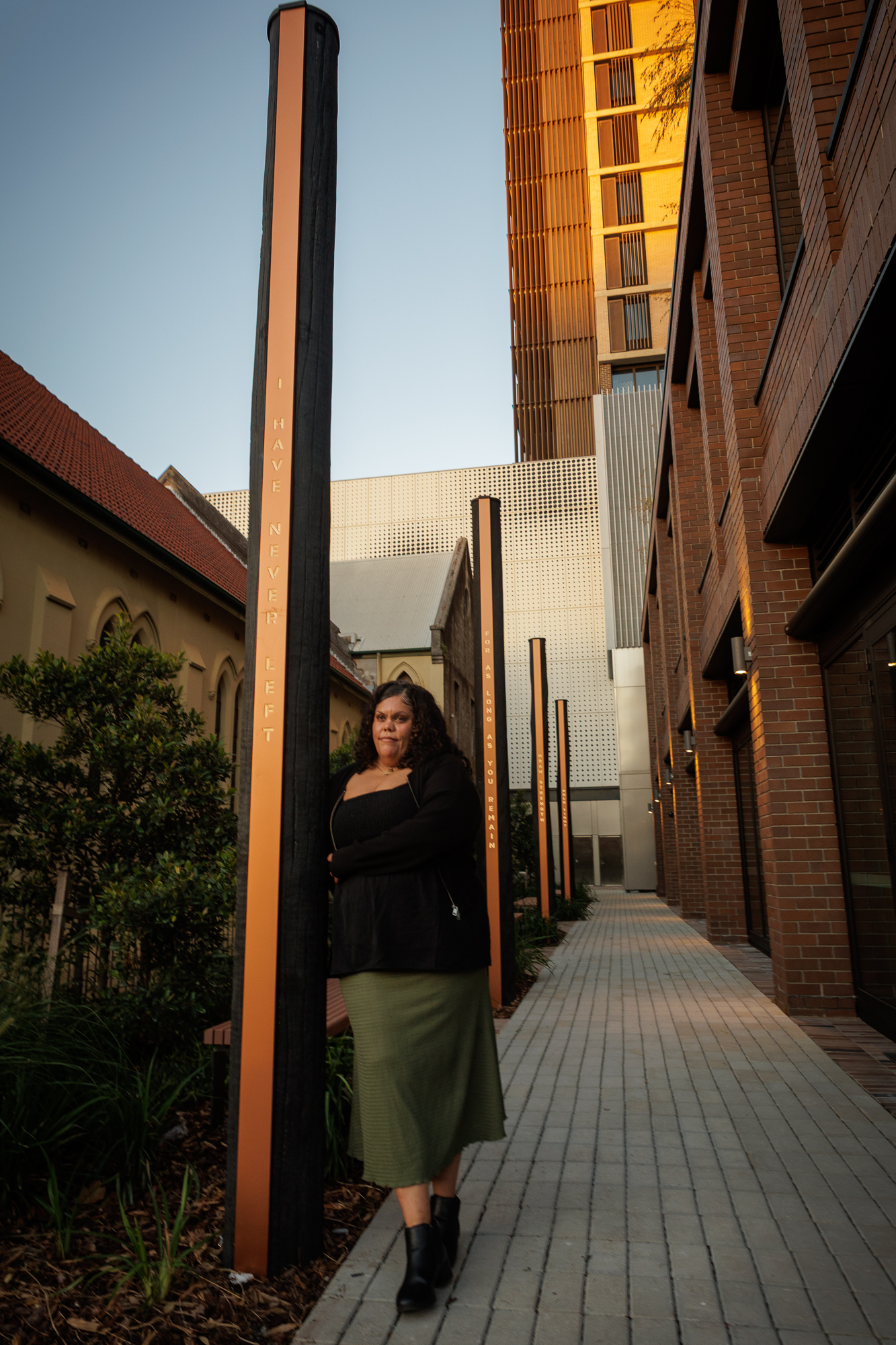
A walkway leading into the site from Botany Road is lined with vertical wooden columns in a piece called Matriarchs by Lorna Munro. Each column is adorned with a line of poetry on one side and the name of a local matriarch who helped to shape and protect the local community on the other side. Together, these columns are vertical reminders of the contributions and memories of women who helped to steward the local community.
Artist Lorna Munro explains that the poem is about “finding the way home regardless of where you are or where you end up.”
The main courtyard of Badumurru Place is inscribed with the large ground installation, Yenma Nura (‘Walking Country’), by Nadeena Dixon. This piece explores the interconnected layers of land, water and culture through three concentric rings of red, yellow and black that radiate outward from the centre of the Place. Each ring is made of symbolic materials including earth, clay, sandstone, casuarina pods, river gravel and seashells, representing the interconnected nature of land, sand dunes, rivers, ocean and the night sky.
“The rings of Yenma Nura form a pathway through the Place, which is a meditation on walking on Country – an exploration of the relationship between people and place, connecting past, present and future,” Dixon noted.
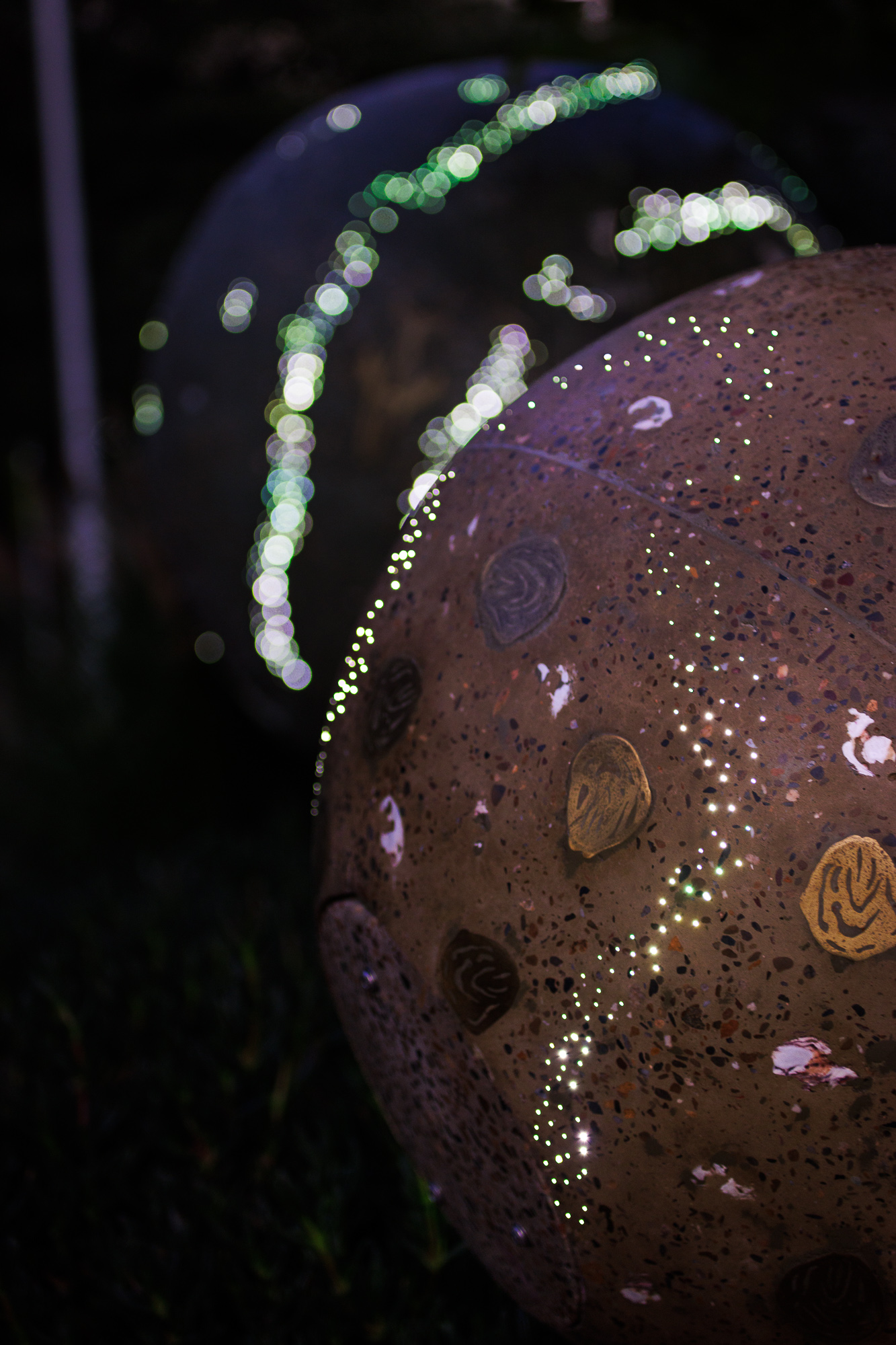
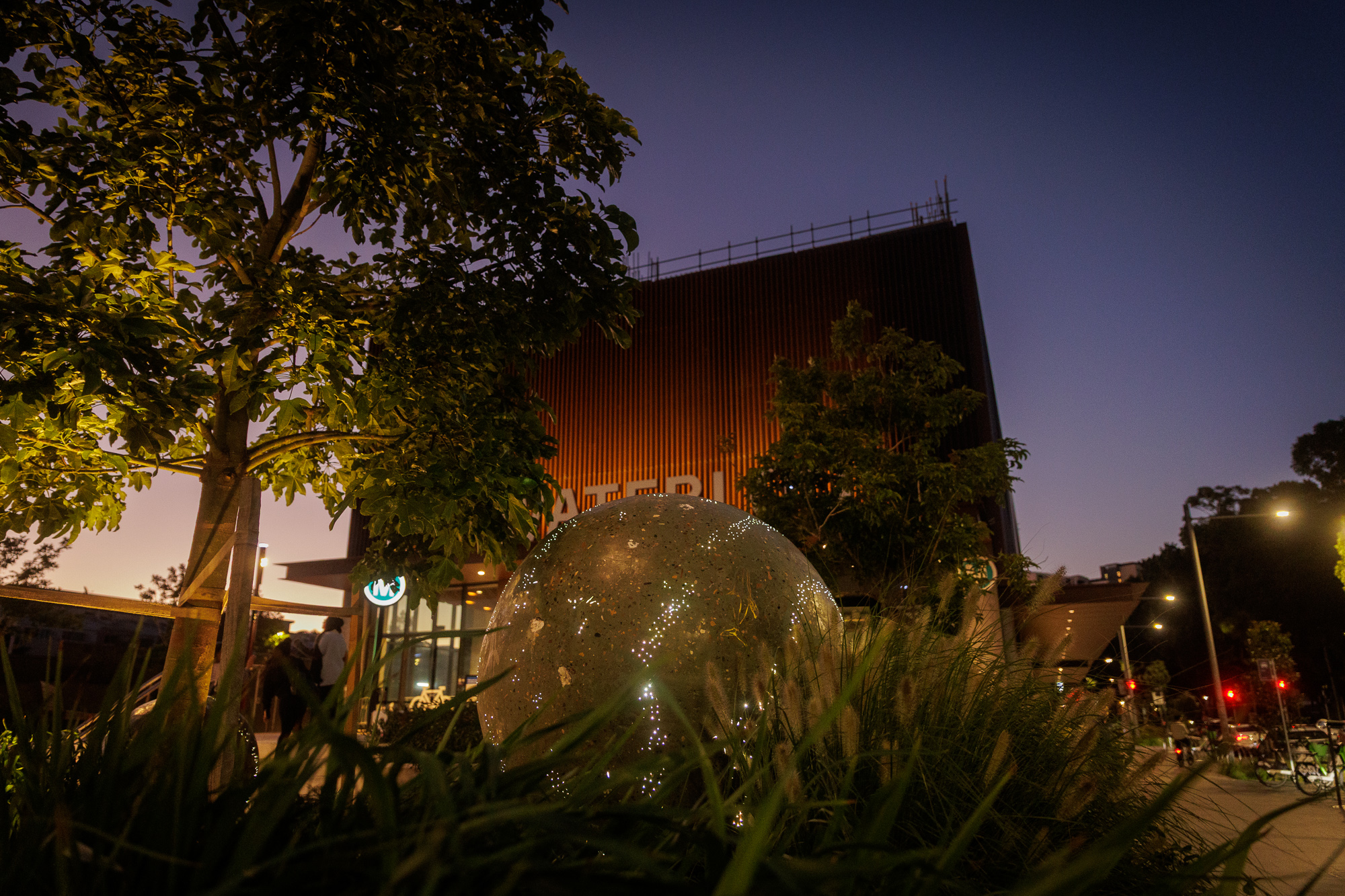
Dotted around the gardens of Badumurru Place, creating a liminal presence after dark, are the glowing concrete orbs of Beneath Concrete Currents by Carmen Glynn-Braun. These seven massive concrete orbs, weighing up to six tonnes, took six years to create, and this type of work has never been created before. Each orb is made from a mixture of concrete, seashells and fibre-optic lights, with patterns that represent cultural stories that come alive after dusk when the fibre-optic lights shine through the polished concrete.
The largest orb on the south-east corner represents the moon’s seasonal light, while the other six orbs reference local stories. Together, they explore Gadigal ideas of the six seasons of the year.
As gentrification continues to push out the local First Nations community, Badumurru Place reads like an elegiac poem written in concrete, stone and wood – a message from the community’s recent past to the future communities of Waterloo.
“I hope that they take the time to stop and consider what’s been inscribed in Badumurru Place and why,” said artist Carmen Glynn-Braun. “It’s a really important time to mark stories here because, sadly, there’s a lot of gentrification happening. Friends that I’ve grown up with here, went to school with, and watched have their own children are about to lose all this.”