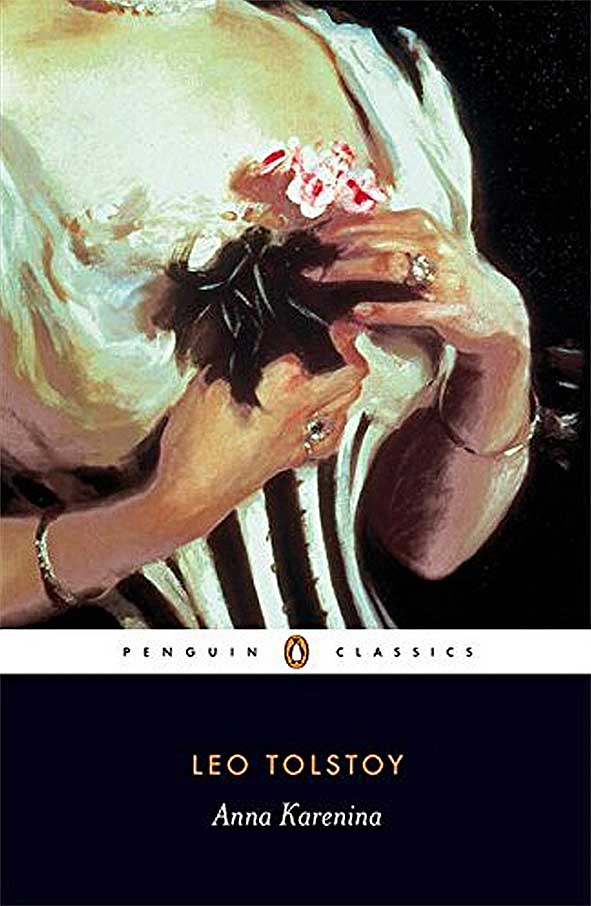
Anna Karenina
Leo Tolstoy
Penguin Classics, $12.95
I seem to be in a Russian zone at present; having never read anything by Tolstoy, I began the year with War and Peace and was so impressed that I turned to the (slightly) shorter novel, Anna Karenina, written between 1874 and 1876.
I imagine that many people are already familiar with the plot of this work, but in case there are some (like me) who have not encountered Anna, I shall refrain from discussing the characters and their relationships in detail.
Like its longer predecessor, this novel engages the reader in the lives of a variety of characters, with their desires, successes and failures. Tolstoy characterises with great sensitivity and awareness of humanity, such that it is possible to appreciate how and why the people in his novel behave as they do, even if we do not always agree with, or approve of, their behaviour.
But aside from the characters, what has struck me most forcibly is Tolstoy’s prescience in reflecting the ongoing tension between the peasants and the aristocracy and a foreshadowing of the social activism which would lead to the Russian Revolution.
One of the principal characters, Constantine Dmitrich Levin, is a wealthy landowner with several estates and many peasant workers attached to them. Levin is keen to improve the lot of his workers and, in the process, to improve the efficiency of his estates. But for the peasants, the notion of change is unpalatable and Levin realises that “the first and indispensable condition [they] insisted on in any new arrangement was that they should not be compelled to adopt any new methods or use any new kinds of agricultural machinery”.
Tolstoy draws interesting contrasts with European countries and England, in particular, to highlight what he sees as this peculiarly “Russian” dilemma. But it is clear that Tolstoy believes emphatically in the benefit of universal literacy and the need to change attitudes through education.
I have come to realise that with Leo Tolstoy we embark on a journey, which needs to be savoured in all its points of interest and given the time it deserves. Despite the competition between Moscow and St Petersburg (which feels very contemporary to a Sydneysider who would never dream of living in Melbourne), he draws us into a world which no longer exists, but which is fascinating and touching. The world of 19th-century Russia may no longer exist, but Tolstoy is Shakespearean in his accurate insights into humanity. This novel is well worth reading.
Eds note: Anna Karenina by the Australian Ballet is in Sydney April 30 to May 18, 2020.
_______________
books@ssh.com.au