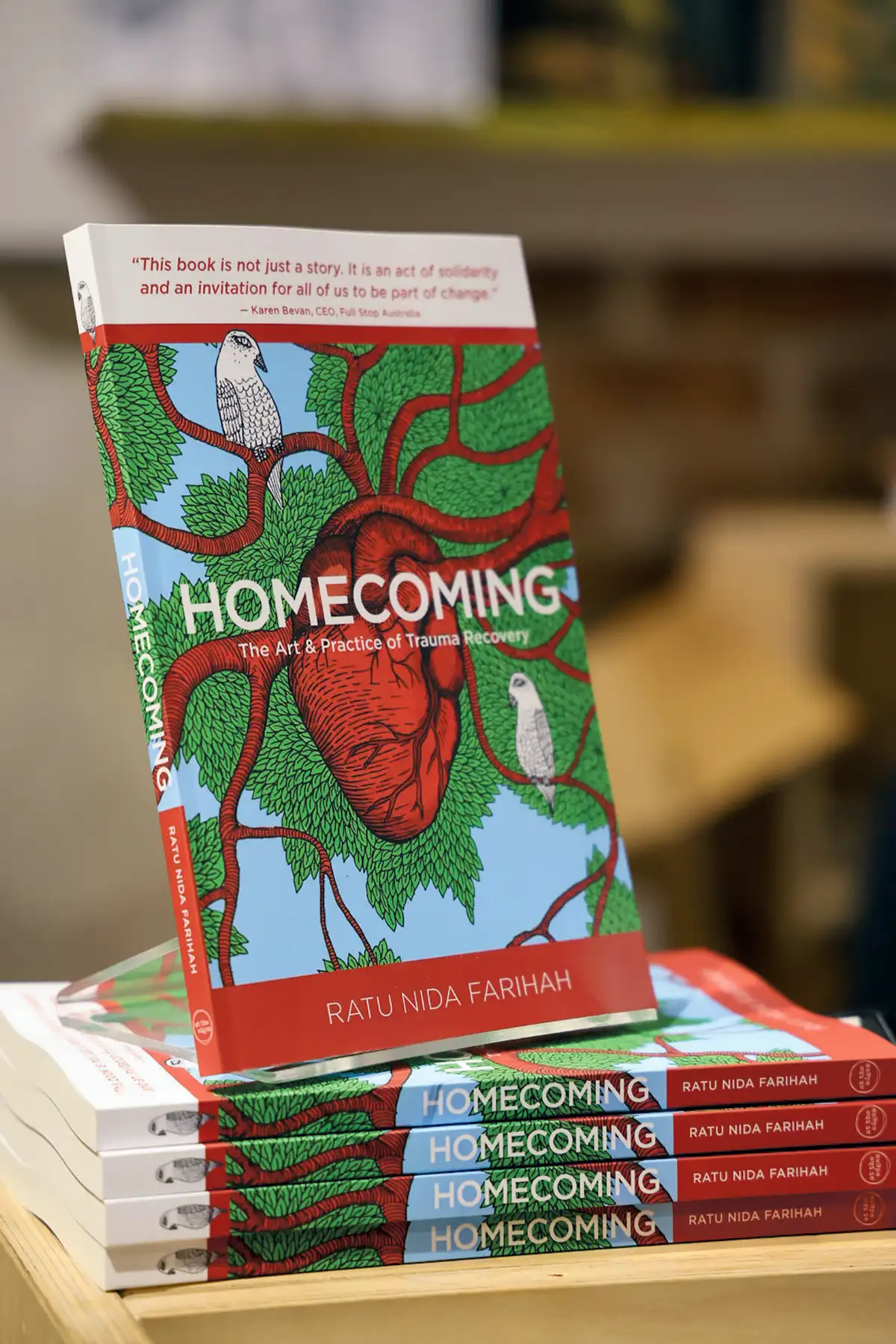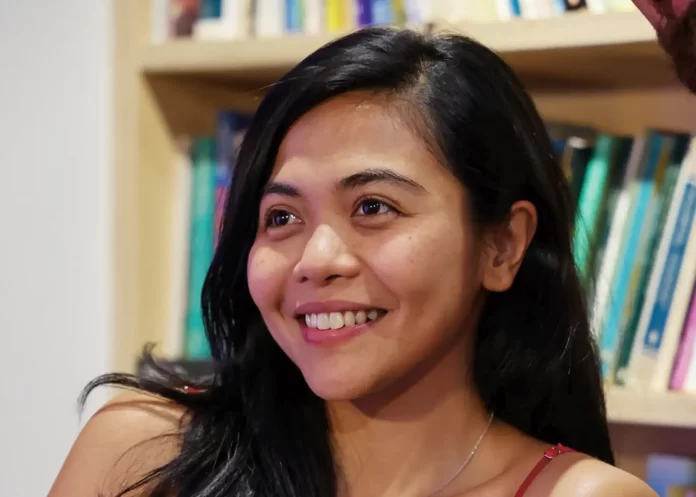
What does home feel like? This is the question writer, activist, founder, and now author, Ratu Nida Farihah explores in her debut book, Homecoming: The Art and Practice of Trauma Recovery.
The book weaves together personal reflection and practical insight, exploring how trauma is held in the body and how people can begin to reconnect with a sense of safety, self-trust and belonging.
This was no ordinary book launch. Gathering at Gleebooks on Wednesday 6 May, everyone was invited and given permission to breathe in and exhale.
From this intuitive act, guests were asked: what is your body telling you? In searching for an answer, attendees were encouraged to consider how they find safety within themselves and experience ‘homecoming’.
More than one in four Australians live with complex post-traumatic stress disorder (CPTSD). However, Ratu Nida Farihah pushes the conversation beyond trauma awareness. She gifts readers the knowledge and confidence to define personal safety for themselves. In sharing her own journey, she shares her vulnerability and opens about the complex and non-linear process of healing.
“I was fluid in going in and out of pain. Safety was still a word I was learning to pronounce.”
Homecoming resists reducing trauma to labels that can often carry shame. Instead, it rejects the notion that people do not possess the inner guidance needed to begin their own healing.
At the same time, it acknowledges the systemic harm that riddles the human body, shapes self-belief and imposes limitations on personal liberty.
When people are given permission to witness their own pain, confront it and sit with it, the body begins to do its own healing work.
Speaking about the book’s title, the author explains: “Home is not a place I arrive at. It is when my body exhales and I feel safe. I am most relaxed sitting under a tree, barefoot, listening to birds.”
Ratu’s courage in writing this book invites readers to stop asking, “why am I in pain?” and instead ask, “what is my body trying to tell me?”
In sharing pain and allowing the body to release, people move closer to their own homecoming – for themselves and for each other.