I met her when I was seventeen, walking home from school in my starchy uniform, which seemed to be shrinking with age.
She was so small, standing in her driveway in a pink jumpsuit, one hand clutching a toy rabbit, the other waving at me. I tried to wave back but I was carrying my laptop in one hand and a water bottle in the other, in a desperate attempt to make my backpack lighter. I wasn’t sure whether to say hello, knowing that she might get in trouble for talking to strangers, so I gave a half-nod instead, hoping she would notice. I shouldn’t have worried because soon enough she started talking to me. Asking me questions.
‘Why are you walking past my house?’
‘Do you go to school?’
‘I’m five-and-a-half, how old are you?’
‘I think I’ve seen you before.’
She had a confidence that I instantly admired, a confidence that I couldn’t seem to
match. It sounds strange, reflecting on this now, being slightly intimidated by a five-and-a-half-year-old.
‘I’m your neighbour. I live about three doors down,’ I replied, gesturing vaguely with my water bottle.
She was silent for a few seconds, just staring and smiling. And then she started to laugh. At me or at her own private joke, I wasn’t sure. I smiled back and wondered whether to stay or keep walking. I did a quick scan – there was no one else around, and I didn’t want her standing so close to the road all by herself. We had only just met, but already I felt the need to protect her. I stepped away from the road, onto her grassy front lawn, hoping she would copy me.
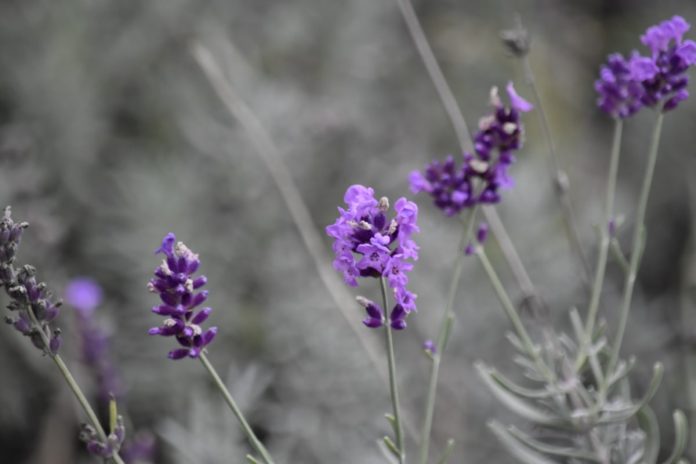
‘This is a lavender bush,’ she said instead, pointing at the giant bush near her front steps filled with bright, purple flowers.
‘Oh yeah, it is.’ I inched towards it. ‘It’s a very pretty bush.’
And that was it. She proceeded to spend the next five minutes explaining the history of the lavender bush: how her dad planted it, and her sister watered it, and her grandmother always picked the lavender whenever she came over and used it to make her clothes smell nice. She talked and she talked, and whenever I tried to say something, she just kept on talking. It was like adding fuel to an engine.
She was about to tell me about her second-best friend’s new cat when a woman emerged from the front door, presumably her mum. She was dressed in blue nurse’s scrubs, her eyes heavy with fatigue and all the things she had seen that day.
‘Ivy, I told you to come inside ten minutes ago!’ she said. She sounded strained, putting all her efforts into being patient with her ever-talkative daughter.
Then, seeing me standing on her front lawn, awkwardly balancing my belongings, the woman gave me a knowing look and shrugged her shoulders, as if to say, What am I supposed to do with her?
‘I’m so sorry you’ve had to listen to all of that. Ivy’s a bit full on.’ As she said this, she smiled like I was part of some inside joke.
I smiled back. ‘I don’t mind, she’s fun to talk to.’
‘Ha, well you’re very patient with her!’
I laughed but I felt hot suddenly, like I was somehow betraying Ivy by talking about her with her mum. I watched as she led Ivy back inside, waving before she closed the front door. I remember just standing there, unable to stop smiling. Talking to Ivy felt like drinking a glass of cold water after too much salt.
And as I walked home, my seventeen-year-old world hit me with a newfound dullness.
…
I saw Ivy again on the weekend while I was walking to work. The air was thick with heat and dread. I dragged my feet and wished I had the courage to turn around, lie in bed and call in sick. But the sight of Ivy in the distance made me want to walk faster. There she was, kneeling on the side of the road, a stick of pink chalk in her hand. The road was usually a dull black, but on that day it was full of colourful drawings, mainly rainbows and flowers with giant petals, and what looked like a mixture between a dog and a rabbit. I asked her what she was going to draw next.
She beamed at me. ‘I’m going to write the alphabet.’ She inspected her hands for a second; they were covered in pink and blue and orange chalk dust.
‘Do you like drawing?’ she asked, looking at me expectantly. ‘I’m doing lots of drawing at school.’
I smiled but her question made me sad. I couldn’t remember the last time I picked up a pen that wasn’t black or blue. Put it to paper that wasn’t ruled out in neat, evenly spaced lines.
‘I love drawing,’ I said, because it sounded like something I could love.
I thought she was about to offer me a crayon, but instead she started to write out the letter A. I started to walk away; she seemed to have enough road sense not to go near the cars. But something else made me stop. I remember the way she looked at me so intently, her eyes round and unblinking, her forehead creased in concentration.
‘What are you doing now?’ she asked me.
‘I’m going to work,’ I said. Pointedly, I bent down to tighten the laces on my boots.
‘Why?’ she said. She was so serious, filled with genuine concern.
I laughed. I couldn’t help myself. I had no idea how to respond. And I realised that I didn’t really have a response for her. Money was the obvious answer, but I didn’t want to burden her with a subject so uninteresting.
‘I get to make food for people,’ I told her instead.
‘But why?’ she asked, and I could see she was trying not to smile. This was clearly a question she asked people a lot.
‘Well…’ I said and then I stopped. I felt like she had some kind of magnifying glass, and she was using it to inspect my life up close. I tried to think about my life the way she might be seeing it. A seventeen-year-old, old enough to do things by herself, yet spending her days being so boring.
I tried to find the words to explain how I was going to finish school soon and try to be more of an adult. How I wanted to gain independence and meet new people. How it was a stepping stone for another job someday, in a far-off future. But all those responses seemed too unoriginal, like I was mimicking someone else’s words instead of my own. Ivy shrugged her tiny shoulders, as if accepting the fact that she was never going to get the answer she was looking for.
‘I’m going to finish my alphabet now,’ she told me, rummaging through her chalk collection.
…
I saw Ivy almost every day after that. She would see me walking, and she would start running, her loud voice flying along the street like a sudden gust of wind, strong enough to knock me over after a long day. She always had so many questions, most of them unanswerable.
‘Why is that tree swaying so much without falling over?’
‘Why is that dog just lying there?’
‘Why haven’t you moved homes yet?’
We were discussing why the sky is blue but also sometimes grey when she told me she was leaving, ‘finding another house, somewhere different’. Something about her mum needing to move closer to her work and ‘getting to have a bigger bedroom’. I tried to take in what she was saying but her words seemed to wash over me like water. I stood beside her on the driveway and looked across the street in a daze. Everything suddenly seemed so harsh and glaring. It was like I was watching the scene unfold through a movie screen.
‘Really?’ I said, just to make sure.
‘Yep!’ she said, grinning at me. ‘Tomorrow I’m gonna move all my things into my new room!’
I pictured a for-sale sign being pitched in front of her newly emptied house. I pictured walking past the house every day and seeing it standing there so still and so silent. The windows would be shut, the blinds down, the inside dark and airless, waiting for someone else to liven it again.
…
Everything seems to be transforming. People arriving. People leaving. I wonder whether it’s my turn to leave soon. School’s finished and some of my friends already have plans to move to the city next year, scrolling through listings for dingy apartments and one-bedroom flats that cost twice as much as what their bank accounts will allow. I’ve looked at places too, just to see what it might be like living somewhere else.
Yesterday, I followed a tour guide around a student accommodation centre. I stood in the shadow of the doorway and looked around. The room was small and simple. A single-size bed was pushed against the wall. There was a bookshelf and a study desk crammed against a tiny window, looking out into the lights of a city not yet familiar to me. I walked further inside. The room smelt musty, disguised with cleaning vinegar and pine-scented air freshener, as if trying to hide the fact that it once belonged to someone else. It made me feel intrusive, like I was trying to break my way into another life. I thanked the guide and left the tour early. The smell seemed to linger on the car ride home, and I wondered if I could ever get used to it.
…
Ivy’s house has transformed too, in the few months since she moved. The house has been sold to an older couple. They seem nice enough, settling in with careful precision, like two birds compiling their nest.
I’m standing in the afternoon sun looking up at it. The front door has been given a fresh coat of paint. There are shiny solar panels on the roof and an even shinier Tesla in the driveway. A healthy-looking flower bed has been planted in the front yard, where the lawn used to be. I notice that the lavender bush is still there, but it’s been pruned back to half its size. It’s like the couple are afraid it will steal the attention away from all the other flowers they have growing. I smile, thinking about Ivy.
I wonder how she’s doing in her new house. I’m sure she’s making friends, drawing people into her world like magnets to metal. I’m sure that she is growing out of alphabet chalk drawing and chatting to strangers on the side of the road. I’m sure she’s finding new interests; dragging her parents’ arms to the car so they can drive her to soccer training and art classes and violin lessons. I think about what she might say if she saw me now. I imagine her head tilting, her eyes full of surprise.
I can almost hear her asking, ‘why are you still here?’ Or maybe I’m the one who is asking. I could be moving to that accommodation centre, adjusting to the apartness, embracing city life. I could be making travel plans. Plans to go out and see the world, as my friends like to say. They talk about the world like it’s an oyster waiting to be cracked. They tell me to go for it. I don’t think I know where to start.
I keep walking, passing time as the afternoon stretches slowly into the evening. The street is silent and empty of people. If I concentrate, I think I can hear air-conditioners whirring and TVs blaring behind closed doors.
It wouldn’t be this quiet if Ivy was still here, I find myself thinking. Something sharp and heavy lodges in my throat, and I think about how I may never see her again. I am fading into the background of her new, growing-up life and she is fading into mine. Still, I turn over the conversations that we used to have; all the interesting questions that she used to ask me.
I hope that someday, I will be able to answer at least some of them.