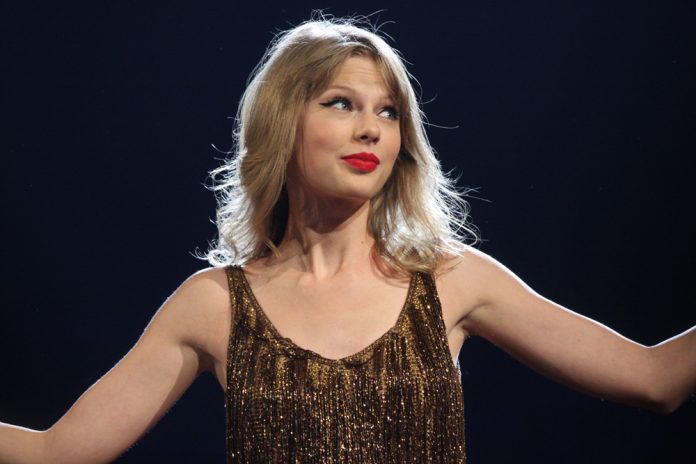
Taylor Swift’s new album, The Life of a Showgirl (released 3 October), is both dazzling and disquieting – a confounding study in performance, power and vulnerability. It turns personal experience into vivid art while revealing the tangled conditions of its making: the “showgirl” exploited by the music industry; the artist learning, painfully, to love and be loved, to give, to work, to perform.
Tracks like “The Fate of Ophelia” and “CANCELLED!” showcase Swift’s storytelling gifts. The first revisits Shakespeare’s tragic heroine – marginalised by the men in her world. Swift’s Ophelia floats in a dreamlike world of melancholy and longing. Yet the song also reflects privilege: Shakespearean language, the glossy production of Max Martin and Shellback. And what does it say about the wider struggles of women silenced or exploited today?
“CANCELLED!” is a clever, layered response to public shaming. Friends “cloaked in Gucci and in scandal” move through a hall of mirrors where fame, guilt and resistance intermingle. The song’s world – of luxury brands and curated outrage – feels far removed from the harsher realities faced by women and minorities confronting systemic violence, religious nationalism and social precarity.
These tensions give The Life of a Showgirl its power. The album knows it is caught in contradiction: the showgirl as both agent and product – a performer making meaning in a culture that consumes sincerity.
There is, nonetheless, grace in the work. The showgirl becomes a figure of endurance and reinvention, of work as witness. Swift’s capacity for self-reflection hints at something theological: the possibility of redemption through recognition, of artistry as confession. Her songs (on this as on previous albums) invite empathy even as they test its limits.
For all its ironies, The Life of a Showgirl gestures toward a larger conversation. “Father Figure” exposes inherited patterns of control; satirises patriarchal values. Here Swift’s writing begins to connect personal experience to structural critique, showing how power and tenderness coexist uneasily in families, industries and communities.
The challenge – for Swift and her audience – is to move beyond autobiography toward something more relational and responsible. Art can reveal privilege as both burden and opportunity: a chance to listen, to share the stage, to imagine freedom not as solitary success but as mutual recognition.
In the end, Swift’s album is both mirror and window: a mirror reflecting her own world of fame and feeling, and a window onto the ongoing question of what it means to make beauty in an unequal world. The Life of a Showgirl is sonically rich, lyrically self-important and ethically unresolved – a reminder that art, like faith, is never finished but always becoming.