A thrilling theatre event, Version 1.0’s devised performance, The Vehicle Failed To Stop, based on the killing of Marou Aswani and Geneva Jalal as they returned from church by private security contractors in October, 2003, asks hard questions about the relationship between commerce, war and privatisation.
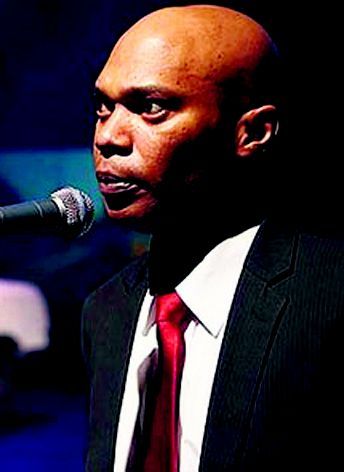
This intimate but often concealed connection between legitimised violence and moneymaking is presented effectively in the opening sequence. As a military-clad man (Irving Gregory) robotically steps towards the audience to the accompaniment of increasingly audible voice-over reiterating “kill or be killed” he gradually removes his fatigues to reveal a suit and tie. His seamless transition into a businessman references the situation in Iraq after its occupation by the US. L. Paul Bremer, who took up the position of Administrator of the Coalition of Provisional Authority of Iraq, privatised the country’s infrastructure (Order 39) creating the opportunity for international companies to contract for its reconstruction/exploitation. “Iraq was open for business.”
The deaths of the two Armenian Christian women on a Baghdad street in the relatively quiet Karadah district has its origins in Order 39, a situation kept to the forefront by the constant on-stage presence of their white car. While the United States Agency for International Development contracted companies, in this particular case, the Research Triangle Institute, to carry out reconstruction, companies hired their own security forces, in this instance, the Australian-owned Unity Resources Group, to protect their staff and operations while in conflict zones. Unlike soldiers, the private security forces do not have deterrents such as court martial to discourage irresponsible behaviour. As the greatest penalty they can incur is to be sent home, accountability for their actions is negligible. Their training, enacted by performers and implied on screen as indecently hasty, emphasises self-protection, while recruits come from countries, in this case, Chile, where there is a background of military conflict, unemployment and poverty.
The situation is explosive. “Incidents” otherwise called “defensive measures”, may occur. When a white car travelling 90 metres behind a security vehicle protecting a four-vehicle convoy fails to respond to an “escalation of warnings” including hand signals and flares over a period of 10 seconds, the guards open fire. Of the 40 bullets 19 enter the body of Aswani, a middle-aged part-time taxi driver, supporting three daughters from her earnings. Why didn’t she stop in view of the fact that the security vehicle carried the injunction not to approach it closer than 100 metres? Perhaps she had forgotten for a few moments she was a citizen living in an occupied zone and indulged in ordinary human behaviour like talking to her companion. But as movingly enacted by Jane Phegan and Olivia Stambouliah there is no place for ordinary humanity in the privatised world.
The Version 1.0 company of artists make this complex drama of modern warfare accessible through a combination of official information and personal reaction. Should you wonder how so much information about the situation in Iraq (and there is much more) can be conveyed in 60 minutes, go to see this punchy, highly-polished production. While not discounting the very considerable contribution made to The Vehicle Failed To Stop by the artists responsible for music (Paul Prestipino), lighting (Frank Mainoo and Jessica Lowe) and video (Sean Bacon), special praise must go to Dillon MacEwan for car design, construction – and deconstruction.