Christmas is not a sentimental story. It is the feast of Incarnation – the Word of God taking flesh and dwelling among us. As Athanasius of Alexandria wrote in the fourth century: “He became what we are, that we might become what he is.” The divine enters human life not in splendour, but in solidarity.
Irish philosopher Richard Kearney describes this mystery as the coming of “the God who may be”. God is not a distant ruler but a promise, a presence still becoming. “In the circular words ‘I am who may be,’” Kearney writes, “God transfigures and exceeds being … revealing the infinite as desire and possibility.” This is not the God of domination, but – as Kearney says – “a God of desire and promise … who prefers orphans, widows and strangers to the mighty and the proud.”
Such a vision invites a spirituality of attentiveness – the courage to believe that the infinite dwells in the infinitesimal, that God appears in the last and the least. The wager of faith is to welcome this divine possibility in the everyday – with Mary and the saints, to say yes.
The Orthodox Icon of the Nativity shows it: God enters the world, sanctifying the fragile and the lowly (https://www.stvolodymyr.ca/feasts-fasts-saints/nativity-icon-explained).
There is also much to learn from Indigenous theologians. Anne Pattel‑Gray, a Gubbi Gubbi woman from south‑east Queensland, reminds us that Country is imbued with Spirit: “My Aboriginality is deeply embedded in my spiritual connection to Country, where land, water and story carry the presence of the Creator.” The land, water and story are not merely resources but living presence, offering guidance and sustaining life.
Central desert artists, over the last 50 years or so, have portrayed Country in vivid acrylics on canvas. These astounding works teach us that to walk rightly is to enter into respectful relationship with an ancient presence and practice.
For example, Eileen Napaltjarri’s painting ‘Untitled’ (2021), depicts Tjiturrulpa, an ancestral site west of Kintore, and evokes the presence of Spirit in Country – a visual theology of incarnation, where sacred life moves through land, community and everyday sustenance (click here to see the painting).
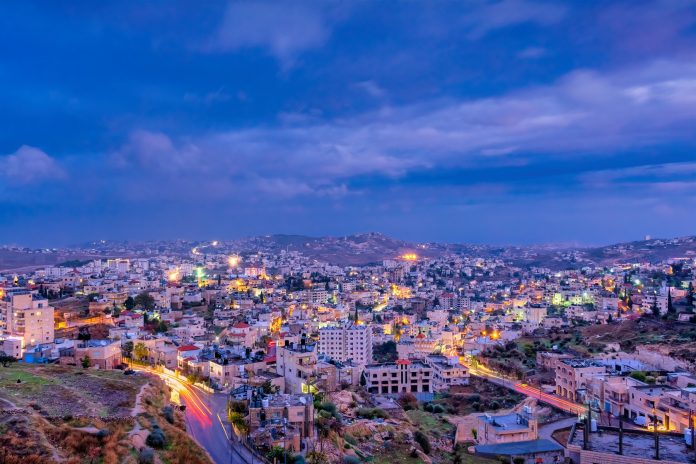
The Christmas story expands: Bethlehem meets Tjiturrulpa, where ancestors walk and gather, shaping and sharing life’s gifts. The manger becomes every site of birth and renewal – every place where Spirit takes flesh in Country and community.
To recognise the Word made flesh is to make space – for the neighbour, the stranger, the hungry, the weary – and to trust that, in such hospitality, God still comes to dwell among us.
In this season of light, may we learn to see: the infinite shimmering in the everyday, the holy flickering in human kindness, and the Word becoming flesh – again and again – in our midst.