She found the neighbourhood intriguing, like an ocean disguised as a street, each house a tidepool of lives she had yet to discover. People here seemed to be stitched together by invisible threads, a kind of communal heartbeat she wasn’t aware of. On the left, a Nigerian family, who blasted classical music, reaching its crescendos. On the right side, Mr and Mrs Poe were minor celebrities around the area for their potato farm on the edge of the village.
Directly across stood a house with a white fence and a scarecrow guarding the garden of roses, tended by a man everyone called ‘demure’. He seemed gentle when she noticed him handing out fresh lemons the way some offer prayers: soft-spoken, sun-coloured.
Spring arrived like a shy lover. The children’s laughter intertwined like a ribbon through the music, the chatter of the grandmas on the bench and the rustling of the bushes satisfied people’s earlobes. She liked visiting the potato farm when the sun melted into the shade of apricot and assisting Mr and Mrs Poe with packing the potatoes. Mr Singh would let her ride in the back of his ute, while the wind tugged at her hair like an impatient friend. Other evenings, she perched with the villagers on overturned buckets, listening to the tales: who baked best, who lied worst, who secretly fed the stray cats behind the church, but the rose man never came. When he did, he arrived like a zestful breeze, rushing through her ribs.
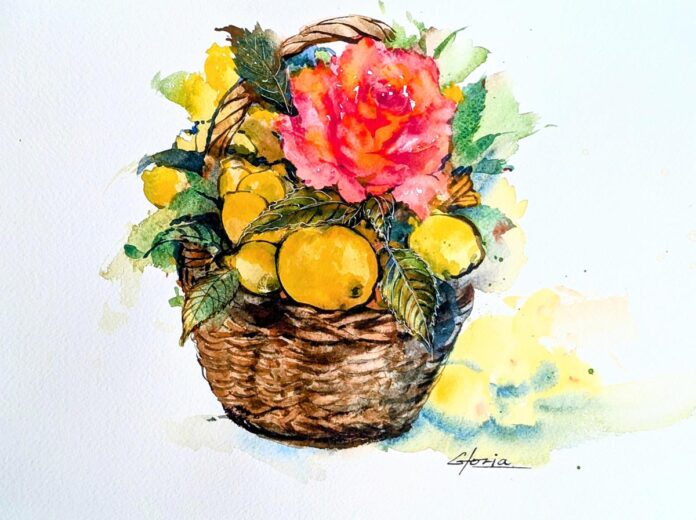
He handed her a basket of yellow lemons, labelled ‘welcome’. His fingers trembled like shivers when he retreated quickly. He had terracotta crimson plastered on his cheeks. It was never expected, not even in her gentlest hopes, to think her door might be the one he would knock on. A blush of rose peeked through the bundle of lemons, “For you.” he whispered.