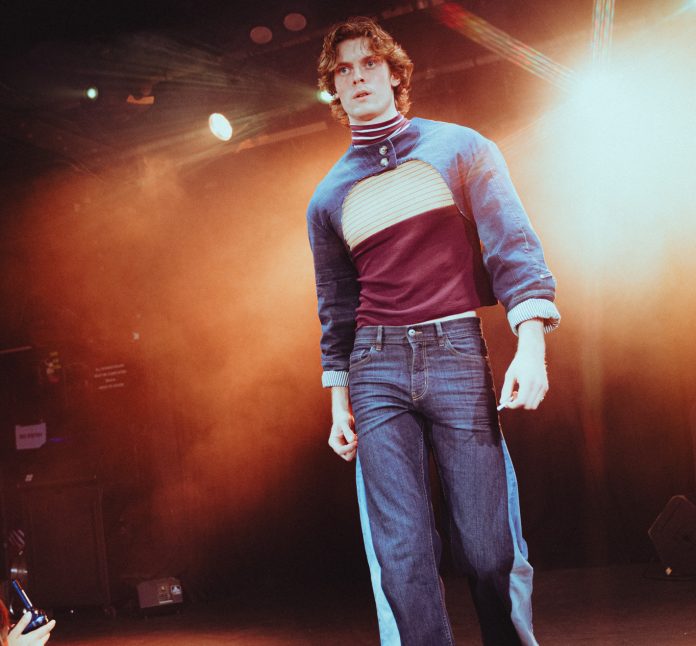
A live recording of Jimi Hendrix’s Voodoo Child (Slight Return) accompanied the young models strutting down Oxford Art Factory’s runway in patchwork denim and warm-coloured stripes that would not have looked out of place half a century ago.
Most of 20-year-old Piper Finnegan’s pieces had another life before reaching the runway. The 1970s aesthetic began with garments collected either from op shops, her own wardrobe or her mother’s.
Finnegan was one of the 17 emerging designers brought together for On Cue Runway at Oxford Art Factory on 13 August. The sold-out event was produced by Love Zainab with Debaser Events, which dedicated the night to fashion and music.
Alongside their fashion lines, each designer created a playlist around the emotions and references behind them, which DJs interpreted live as the models walked.
Backstage, every collection seemed to belong to a different world.
While the models waited for their brief turn on the runway, some posed for photos and chatted with collaborators. Others who had been there since 11.30 am for styling, more than nine hours before the runway began at 8.30 pm, passed the time scrolling on their phones.
Even scattered across the room, it was easy to tell which models belonged to the same collection. But despite each one having its own identity, the references behind many of them were recognisable at first glance.
Finnegan’s was one of the easiest to place. Her collection radiated 1970s style through denim, stripes and warm colours.
Yet backstage, she said she had never set out to make a ’70s collection. Only after noticing the warm palette of the second-hand pieces she had gathered did the decade come to life. She described the result as a “’70s present fusion”.
Piper Makes grew out of a university project, with the collection beginning as a two-look assignment before the UTS fashion design student expanded it for On Cue.
Another On Cue designer, Amelie Carter, was less concerned with making something nobody had seen before.
“Everything’s been created already,” she said.
Carter believes designers can expand on what already exists and “create new versions of it”.
Growing up on Sydney’s Northern Beaches, Carter pictured parties as places where people connected through music and danced in crowds until they felt like they were one body.
Now that she’s part of Sydney’s nightlife, she said the reality can be dangerous for young women, with ego and cliquishness adding to the pressure to fit in.
“I wanted to do something that wasn’t that,” said Carter.
The NIDA set and costume design student used damaged and discarded clothing to design her first collection, Promised Party, around the version of nightlife she imagined as a child.
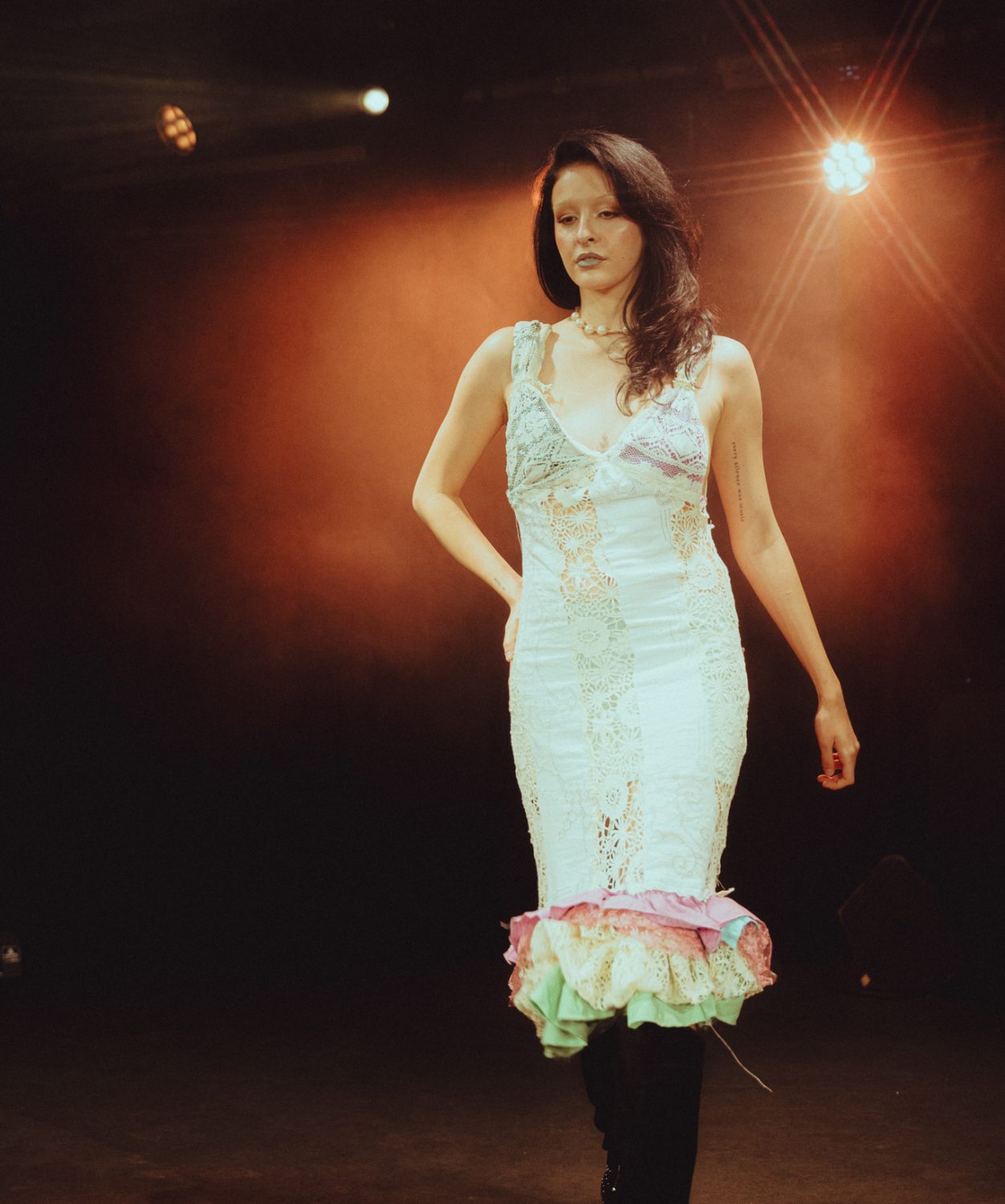
Carter connected that material choice to the rise of cheap going-out clothes and “Shein culture”, even using holed garments that might otherwise be passed over in a thrift store.
“There’s just so much stuff,” she said. “Things keep on rolling around and trends are back all the time. So why not use the stuff that’s already there?”
The cycle of familiar trends continued as the runway moved through its four acts.
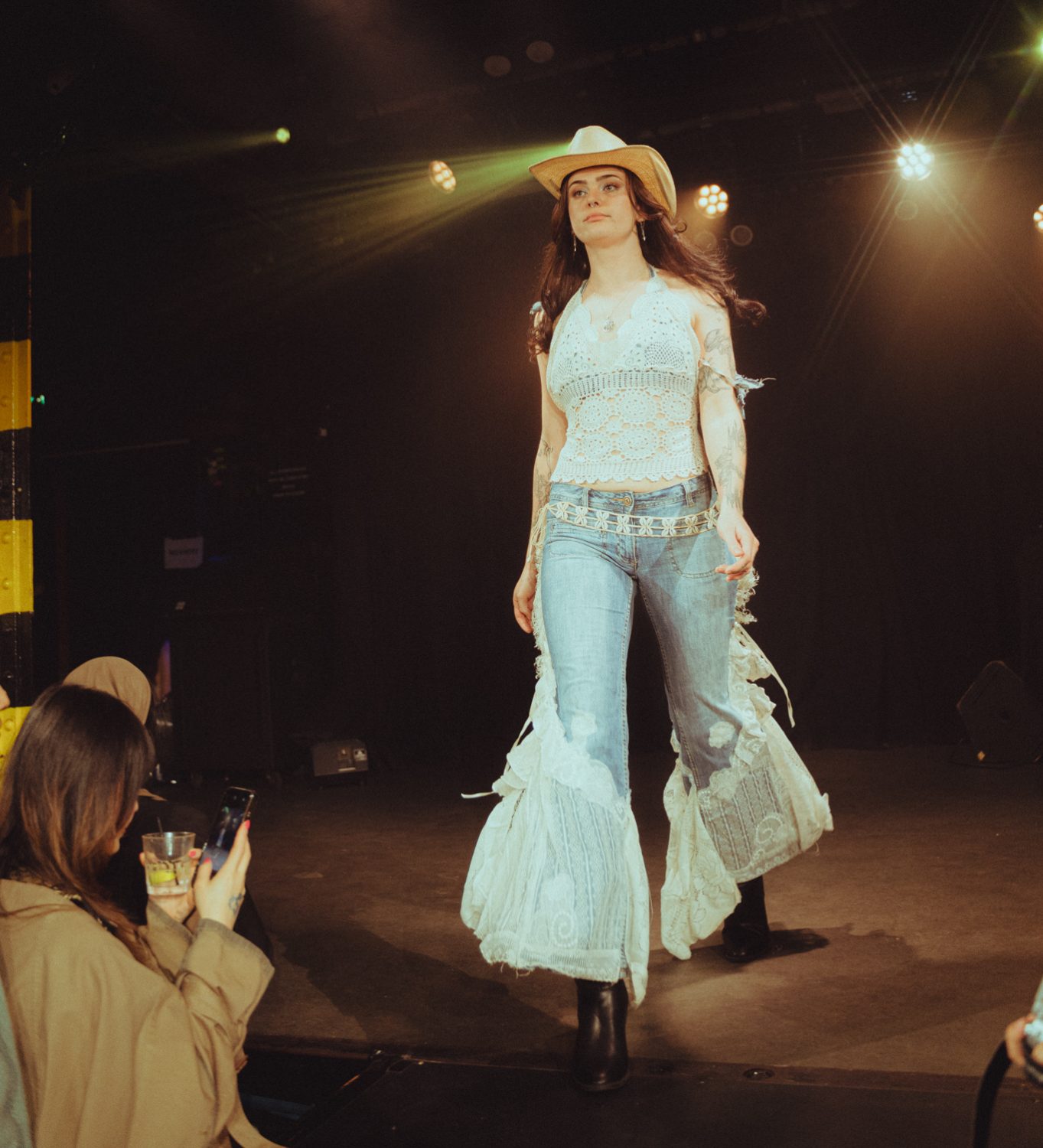
South Coast designer Charlie Owens opened with Lana Del Rey’s West Coast and channelled country influences through vintage repurposed textiles like old tablecloths and locally sourced second-hand material.
Poppy-Coco Embi Fava’s collection moved into a more ethereal, bridal fashion with white lace draped across the looks on the runway. Inspired by family history and childhood memories, the collection featured passed-down textiles and fabric from her mother’s wedding dress.
Romantic-turned-gothic looks then emerged on the runway with the clothing brand Perverted Desire, as the music transitioned into Suzy Sheer’s Blissed during Act Three. The collection drew on designer Alina’s interest in darkness and desire within identity.
Less than an hour before her collection hit the runway, Finnegan described clothing pieced together from things that had already existed as “Frankenstein garments”: a fitting description of the pieces that followed.