Ministers jumped at the chance to be associated with the project, clamouring to be the one espousing its benefits for the local ecosystem. That it would finally position Sydney as an international hotspot for high-tech jobs! That it would attract the best and brightest! That it would put Australia on the map alongside the Silicon Valleys, Hong Kongs, and Israels of the world! There were such high hopes.
But, fast forward a year and a half, and the radio silence on White Bay is now deafening.
Google rejected it. Atlassian’s Mike Cannon-Brookes publicly criticised multiple aspects of its implementation, such as the painful (and, dare I say it, embarrassing) lack of infrastructure planned for the project, and the prohibitive rents asked of the cash-lean startups expected to make it their home.
In fact, it would be hard to classify it as anything other than a resounding failure by anyone’s measures.
So, as the same government that brought us White Bay now announces a new Startup Hub for the CBD, the question is now being asked: has the government learnt from its mistakes? Or should we prepare for White Bay 2.0?
Why this is the wrong question
The soon-to-exist Startup Hub has been pre-emptively hailed a “quantum leap forward” that will help Sydney “compete on a global scale” with other technology centres. Sounds familiar, doesn’t it?
It will relocate several prominent startup hubs, including Stone & Chalk, Fishburners and iCentral, into one shared space above Wynyard Station. The office space will be subsidised and on top of transport, and residents will count as their neighbours some of Sydney’s finest corporate behemoths and funders. Tick, tick, tick. So far so good.
The first knee-jerk response to this might be to point out that these hubs already enjoyed these basic features in their original homes anyway. But this would be to remain focused on the wrong part of the equation.
A better question might be to ask – why does our focus remain so narrowly on digital and fintech startups, when they comprise such a small component of the overall technology ecosystem?
Missing the forest for the trees
Agonising over whether Stone & Chalk’s digital startups will get to market faster if relocated 500 metres up the road and within a larger cohort of more of the same digital startups is an opportunity lost.
It’s great to see recognition of the need for startup clusters, and locating digital startups in the CBD is commonplace and successful in many European cities. We applaud the government for continuing to attempt to build a successful digital startup hub, and for ensuring avoidance of some of its past mistakes – even if these could have been avoided in the first instance with greater industry consultation.
But it’s way past time that dedicated resources were also directed towards a different, largely neglected category of startups: our far more intensive and impactful deep technology startups.
The chance to change the world …
Far more tragic than Google’s rejection of White Bay was the Australian Technology Park’s rejection of Atlassian.
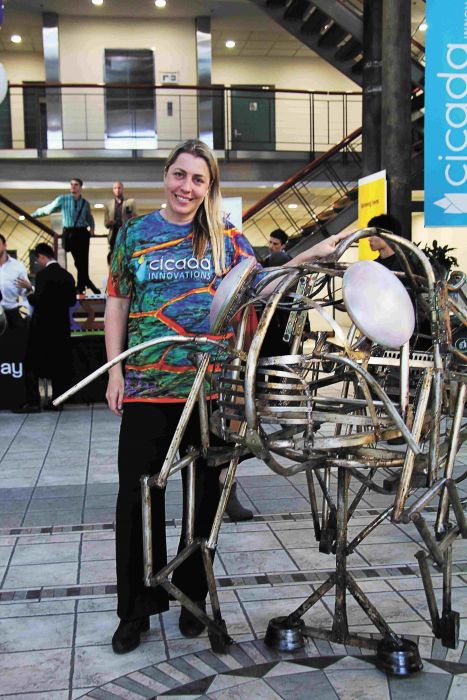
ATP, as the park is commonly called, is the perfect location for a world-leading deep technology startup hub. It’s already home to Cicada Innovation’s cohort of 75+ deep technology startups and scale-ups, who are building everything from combat robots to bone glue to plants that can be grown on Mars. Australia’s largest angel investment group, Sydney Angels Inc., meets on the premises every week. And though York Butter Factory just moved in (despite their digital retail focus better placing them in the CBD hub), there is plenty more space yet to be occupied by other true deep technology startups.
But these types of startups with their hyper-advanced levels of innovation require more than just a funky desk, foosball table and a strong internet connection to thrive.
They need access to world-class universities and research institutions, with pathways that transition academics and their IP into industry. They need networks of investors capable of seeing the bigger picture, and are comfortable with the longer-term investment horizon required by more capital-intensive projects with more rigorous and lengthy incubation periods. They need legislative support at all levels, including government funding and tax incentives. They then need a government who will take a step back and hand the reigns back over to industry, to organically develop a “pay it forward” culture where those who have had success are incentivised to give back and share what they’ve learned with up-and-coming startup founders – instead of having the government force the introduction of service providers as mentors and coaches who may not have been there or done that.
They need specialised infrastructure and unique equipment. They need labs where they can blow things up, shoot their lasers, and test out their robots and drones, and a maker space for high end machinery and prototyping.
And they most definitely need to be positioned in a startup cluster where Australia’s most successful technology startup on record isn’t rejected in favour of a bank!
We are pleased that the government appears to realise the benefits of startup clusters, and we hope their new CBD cluster manages to stay put for more than a few years unlike past clusters.
But we also wish they would quit blindly fumbling their way forward by neglecting to consult with the very stakeholders who possess the greatest knowledge on what will make them work.
Because it’s one thing to mess up a digital startup hub. Try getting it wrong when you’re dealing with lasers and robots.