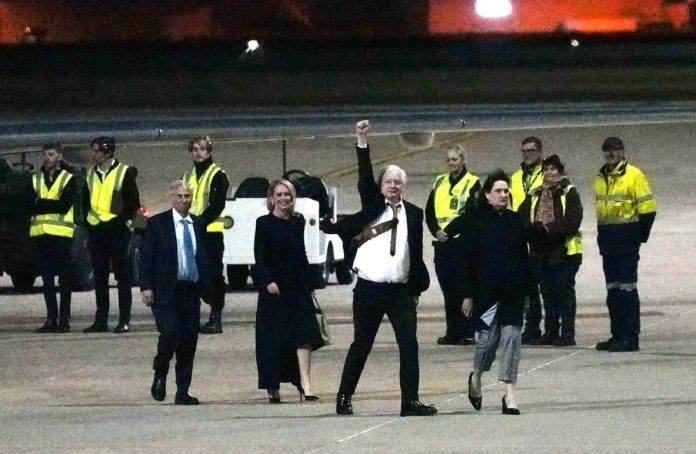
In a moment of such significance that some even switched off Origin Game Two, Julian Assange arrived at Canberra airport on June 26 after spending nearly 15 years involved in a legal saga that sparked global debates on the role of independent media.
Assange’s long-awaited return to Australia reminds us of the risks independent journalists still face when exposing uncomfortable truths.
Connie Levitt, current editor of UNSW’s Newsworthy and former foreign editor at the Sydney Morning Herald, reflected on the chances independent journalists take when pursuing stories that could result in legal action.
“Journalism is in a challenging space because historically it was underwritten by advertising, which was kept separate from the journalism, but it allowed the journalism to take place. I think the big challenge for independent journalism today is the funding model underneath it because good journalism costs money,” she said.
“The best journalism, I think, talks truth to power and holds powerful institutions, whether it be government or big organisations, financial organisations, or insurance companies, accountable. So that needs resources.”
Without such resources, journalists are often deterred from pursuing stories that could uncover corruption and wrongdoing, a vital process in upholding democratic standards.
Despite Assange’s story now acting as a beacon of hope, it also serves as a cautionary tale about the precarious nature of journalistic freedom.
The Media, Entertainment, and Arts Alliance (MEAA), Australia’s foremost media union, has long expressed concerns over the concentration of media ownership in Australia. A 2020 survey conducted by the MEAA amongst its members found that 92 per cent of respondents believed that Australia’s media ownership is too highly concentrated, with 94 per cent agreeing that this is bad for democracy.
“There’s always been efforts by the powerful and the influential to control what journalists produce, and that is exercised by having connections with media proprietors,” said Dr Peter White, a former journalist and current media lecturer at UNSW.
“With there being fewer journalists, that strengthens the ability for powerful people to influence that journalism.”
According to the University of Canberra’s 2024 Digital News Report, almost half of Australians use social media as their primary news source.
This shift to digital media has altered journalism, changing traditional revenue models and how news is produced, distributed and consumed. While the change has led to challenges, such as misinformation and newsroom downsizing, it has also created an open landscape for young, passionate journalists to reach wider audiences, just as Assange did in 2006.
There is hope for the future of Australian journalism, after all, the South Sydney Herald is still going strong. Even after watching the media landscape completely change during her 38 years in the industry, Levitt still believes in the enduring power that good journalism can have on society.
“It’s completely changed, and yet, some things haven’t changed at all,” she said.
“At the heart of journalism is storytelling and keeping big, powerful people and institutions accountable and working to serve the public in giving transparency and shining a light on decisions so that people can clearly see what’s going on in their society and make their judgements.”