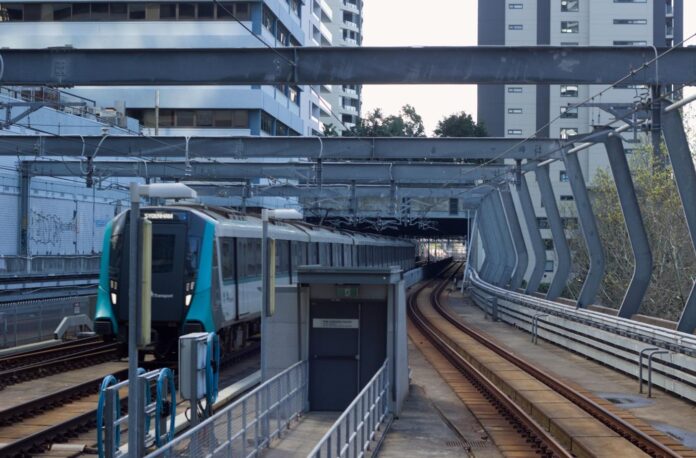
Sydney Metro has ruled out extending station platforms between Sydenham and Bankstown, confirming that future capacity increases on the M1 Metro line will depend on more frequent services rather than longer trains.
The section was part of the T3 Bankstown Line before it was shut down in September 2024 to allow stations and rail infrastructure to be converted for metro services. The upgrade forms part of the Sydney Metro City & Southwest project, a major infrastructure investment aimed at expanding the city’s rail network and increasing passenger capacity.
The NSW Government expects a 34 per cent increase in morning peak passenger movements, from 7,100 to 9,500 between 8am and 9am, on the Southwest section after the line reopens. However, platforms along the final section of the line are too short to accommodate longer metro trains.
A Sydney Metro spokesperson said the most effective option to support an increase in potential capacity requirements on the M1 would be to purchase additional trains and increase the frequency of metro services.
The affected stations are Marrickville, Belmore, Lakemba, Wiley Park and Bankstown, whose platforms range from 163 to 169 metres, according to reporting by The Sydney Morning Herald.
Preserving Sydney’s heritage stations
Sydney Metro said extending the platforms was not part of the project’s plans due to the heritage significance of stations along the route.
“Southwest stations have served their communities for more than 130 years and remain valued landmarks woven into the fabric of communities they serve,” the spokesperson said.
Feedback from public consultation in 2017 showed a strong preference for preserving the stations’ heritage character, the spokesperson said, adding that retaining and celebrating the heritage-listed assets remained a priority throughout the project.
Capacity to increase through more frequent services
The spokesperson said the line would be able to carry around 17,000 passengers an hour in each direction on the Bankstown line during peak periods, compared with around 12,000 passengers an hour under the previous suburban system.
The line is planned to operate with trains arriving at least every four minutes during peak periods when services begin, but capacity could increase to 23,000 per hour in each direction if a decision was made to increase the frequency of metro services to a train arriving every three minutes.