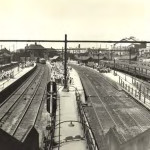
In the short term, our priorities include the much-needed upgrade to Redfern station to ensure access for people with disabilities and parents with prams and to ease congestion on the overcrowded platforms.
Nearly 10,000 pedestrians make their way between Redfern station and the University in peak periods every day, and the narrow footpaths along Lawson and Little Eveleigh streets create pedestrian bottlenecks or force people to walk on the roads and cycleways, creating potential conflicts and accidents. The footpaths take pedestrians through established residential suburbs, affecting local people.
The University is keen to find solutions to these issues and strongly supports the reconnection of North Eveleigh and South Eveleigh via a bridge over the railway lines. A pedestrian overbridge, constructed in 1914, was removed in the 1980s. It provided railway yard workers with a link between North and South Eveleigh and also enabled access to the Redfern station platforms.
A new bridge would re-establish this connectivity and enhance links to the station. It would link the University with Australian Technology Park and provide a gateway for train passengers on journeys to and from the Sydney CBD. It would provide relief from pedestrian congestion on local streets and at existing station entry and exit points, and reduce road safety risks in the surrounding area for pedestrians, cyclists and vehicles. It would provide a link to the regional bike network and improved connection between employment and residential areas.
The University’s longer-term proposals include creating better pedestrian links over and under City Road, Camperdown to improve safety between the Darlington and Camperdown campuses, and promoting improvements to the bus services on City Road.
The University supports the introduction of an Inner West light rail link that will alleviate CBD congestion, revitalise Parramatta Road and give the Inner West and Sydney’s CBD a sustainable transport network.
We have identified the need for committed investment in transport infrastructure for the area – not just so that the University can continue to provide accessible educational and employment opportunities and deliver research excellence – but to benefit the local neighbourhood so that everyone can live, work and enjoy a vibrant and well-connected community.