It is over 20 years since the publication of the Bringing Them Home report, yet many Australians are still unaware of the full impact of policies of successive state and federal governments on the Aboriginal and Torres Strait Islander children stolen from their families, and the intergenerational trauma experienced by their descendants.
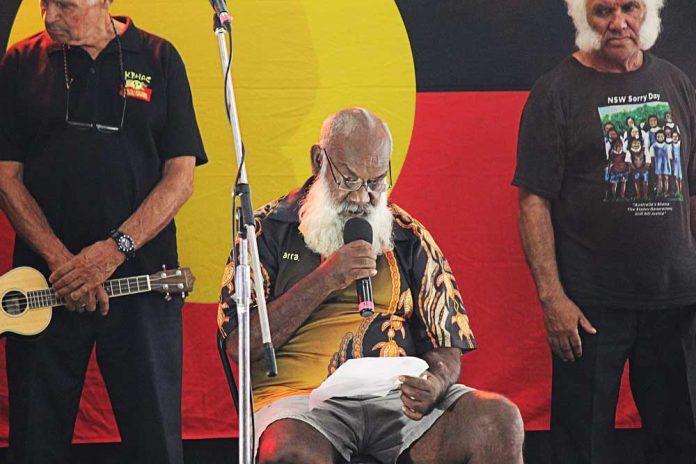
At Carriageworks on February 13, the 12th anniversary of the National Apology to the Stolen Generations, the survivors of Kinchela Boys Home Aboriginal Corporation (KBHAC) launched a modified bus to take their stories on the road. The Stolen Generations Mobile Education Centre, the first of its kind in Australia, aims to facilitate truth-telling and healing.
Boys at KBH were addressed by number, not by name. They were forbidden to speak their own languages, so the entrance to the bus has been painted in black with stark white numbers. The exterior is decorated with Aboriginal designs in ochre colours with the words: “Unlocking our past to free our future”. The back half of the bus has been converted into a cinema that shows a short, animated film collaboratively produced with the uncles.
The bus is an experiential learning centre and aims to educate children, young people and communities (Aboriginal and non-Indigenous) through three levels of engagement, drawing on a range of resources: oral testimony, archival material, animated film, visual images and timelines, as well as interactive materials including an online portal.
NSW had three main Aboriginal children’s institutions. Between 1908 and 1980, the babies and children under 10 were taken to Bomaderry. Aunty Christine Blakeney from Bomaderry Aboriginal Children’s Home spoke at the launch of how when children turned 10 they were moved to either Kinchela Boys Home (1923-70) or Cootamundra Girls Home (1911-69) for “training”. They were wrenched from older brothers and sisters.
Often it was only later in life that people attempted to find members of their family. Many were told to go to Redfern, as “the place to meet your mob is at the big E” (Empress Hotel).
Mark Lock from the Stolen Generations Council (NSW/ACT) spoke of the symbolism of KBHAC using a bus, and the heritage of buses in the struggle for justice with the NSW freedom rides in the 1960s. Aboriginal people were not allowed to travel on buses or had to sit at the back – even today some find “the seat next to them is the last to be sat in”.
Aunty Robyn Lowe fought back tears as she spoke about the bonds between survivors of Cootamundra Girls Training Home (1912-69) and the brothers at KBH and their descendants.