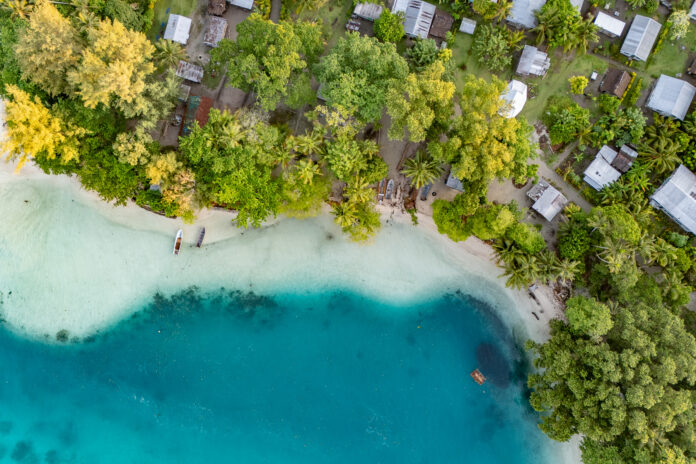
When it comes to the state of the natural world, reasons to rejoice are scarce. But amid the gloom are success stories that tell a positive tale. While “bright spots research” has only flourished recently in ecology, new research reveals why some natural places are healthier than expected, and it all starts with how people care for them.
Ten years ago, researchers working on coral reefs around the world and in close association with local reef users asked the following question: “Are there reefs that are doing much better than expected given the pressures they face, and others much worse?” After analysing data from 2,500 reefs, the answer was yes, and outperforming reefs were identified as “bright spots”.
The study, written by Professor Joshua Cinner of the University of Sydney and his co-authors, essentially introduced to ecologists the concept of bright spot research, already used in medicine and human development. Since then, environmental studies have identified hundreds of bright spots – places that are unexpectedly healthy – in a wide range of ecosystems worldwide (chimpanzee territories, temperate forests, lakes, etc.).
For this research to be truly useful for conservation purposes, though, the next challenge was to identify what sustained bright spots. By compiling and analysing more than 70 studies, Professor Cinner and postdoctoral researcher Bing Lin have now shown that bright spots share common features: these are places where local knowledge is valued, populations are involved in decision-making, and management practices adapt to local social and environmental settings. The study also provides the first unified overview of environmental research on bright spots and is the first to quantify its impact on policymaking.
Importantly, bright spots are not always pristine. In fact, two-thirds are found in populated areas. But “doing good when you should be doing terrible is already great,” Professor Cinner says. And this is especially true because of the study’s findings: if human mindsets and actions overwhelmingly sustain the existence of bright spots, nothing is predetermined. It is up to us to create the conditions for bright spots in an increasing number of places across the planet.
References
- Lin and Cinner (2026), Identifying bright spots research for people and nature. Nature Ecology and Evolution
- Cinner et al. (2016), Bright spots among the world’s coral reefs. Nature
- https://www.sydney.edu.au/science/schools/school-of-geosciences/research/thriving-oceans-research-hub.html