Molière malgré Elles / Molière, Her Way
Original text: Molière, adapted by Natacha Muller and Marine Grangier
Director: Natacha Muller
Pact Theatre, Erskineville
24 November – 28 November, 2026
Molière malgré Elles / Molière, Her Way is a French-language production with English surtitles that stitches together scenes from four Molière comedies: The School for Wives, The Imaginary Invalid, Tartuffe and The Doctor in Spite of Himself. Directed by Natacha Muller, it uses Molière’s original words but views them through a very modern, feminist lens.
The “manosphere” is often presented as a new problem, created on social media by a particularly unpleasant generation of men. This play makes it clear that the underlying attitudes are anything but new. Men using money, marriage, religion, medicine or sheer bullying to control women are right there in Molière’s plays, written centuries ago.
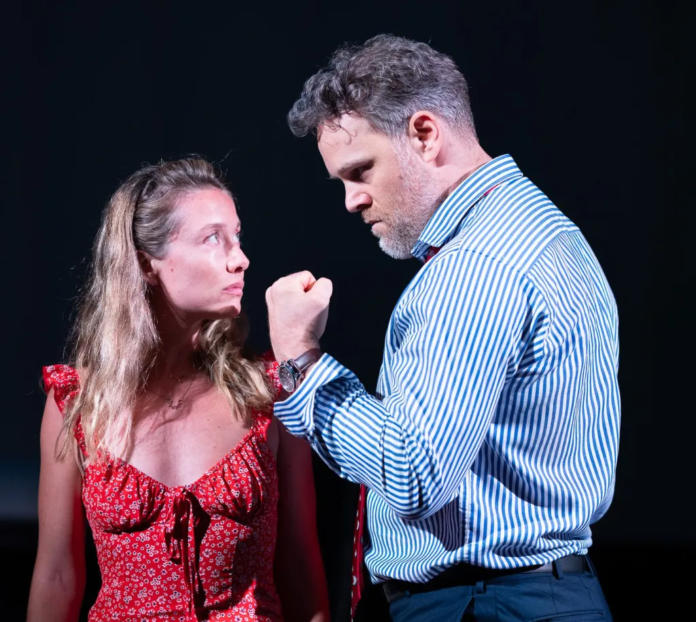
The first act presents four separate stories, all involving men trying to exert power over women. Molière wrote these as comedies, but viewed in a modern light, the violence and dominance underneath the jokes feel very serious. Some patrons during the interval were discussing the lighting or song choices, but on reflection it was not those details that unsettled them. It was the deliberate discomfort of watching women being controlled while feeling helpless to intervene.
The most disturbing moment comes at the end of act one, when Sganarelle, played chillingly well by Daniel Heppell, silences his wife Martine, played by Lucie Brumont, in near-total darkness. The sounds of blows and whimpers are all the audience is left with before heading out for wine and some uneasy contemplation of what women have endured.
Act two offers resolution, as the four men are dealt with in different ways. Manon Cabes and Ben Suhr steal the show in the final scenes, emotionally dragging us across the stage as they argue, deny and plead. A stellar performance and one worth the price of admission.
As in many amateur productions, there are odd and occasionally distracting choices in direction and staging. But the storytelling is strong. From a small theatre in Erskineville, the audience is transported into a centuries-old struggle and given hope that good will prevail.