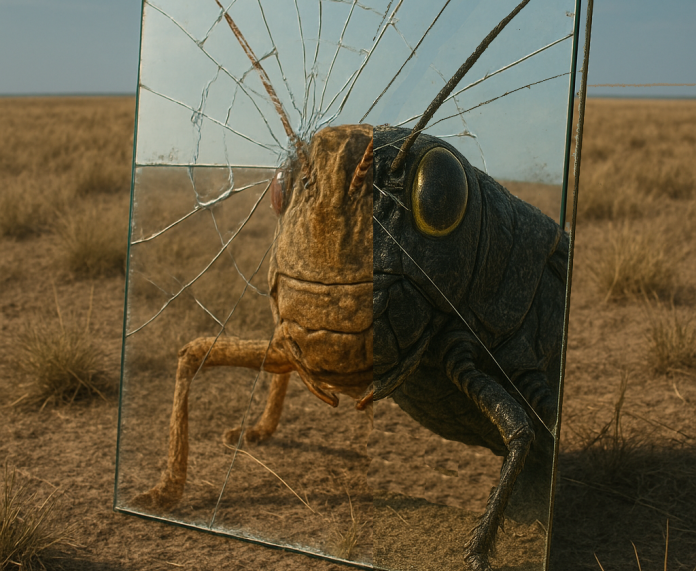
Locust
Joel O’Connor
Tales from the Treehouse, 2026
Try reading Locust by Joel O’Connor slowly and silently to yourself. You might settle into the innocent persona of a solitary grasshopper watching “Parrots strolling the ruptured clay with Churchillian ponderance” as you sit in the arid outback. But there’s possible trouble ahead – once the rain breaks.
I was captivated by the detailed biological revelations of how these cutesy-critters (short-horned grasshoppers) go from being Dr Jekyll to Mr Hyde without any changes in DNA. But that’s only part of the story in this (almost 2,000-word) carefully crafted exposition.
Try reciting Locust aloud and it becomes theatrical. The human elements of this provocative narrative take over. As grasshopper numbers increase, their personal space decreases. “While taking up a spot along pews of straw”, “The recluse within a crowd” is changed by the touching presence of others, as if in church. Bonding, we find ourselves caught up in a dizzying fervour “To throw ourselves headlong into the pleasure of eating the world” and “killing in the name of utopia”.
I anchored myself again in the lines below:
“Renaissance, Enlightenment, Manufacturing
Outbreak, upsurge, and plague
The wheel of life for a locust
Matching our modern age.”
Reminiscent of Shakespeare’s Song of the Witches (“Double, double toil and trouble …”), instead of appearing just once, I would have loved a repeat appearance for this significant call and response.
There’s more to Locust than its poetry! Like tiny triggers that provoke grasshopper-to-locust plague, Joel O’Connor prods us with hints and historical topics to think outside the box. At one point, my mind buzzed with visualisations of human-brained robotic space invaders. I admit, I abandoned reading lines in other languages (there are translations in brackets underneath) towards the end, simply because I was on a frenzied roll with this exciting multifaceted poetic rampage. A cautionary tale for us to keep in touch … but carefully.
The poem is available to read and listen to here.
Celia Berrell hosts Science Rhymes, sharing YOUR POEMS about science for National Science Week each August. She co-hosts Australian Children’s Poetry with curator Linda Davidson. Celia’s poems are published in magazines including CSIRO’s Double Helix and school textbooks around the world. Her latest book is Science Rhymes in the Sea (2025).