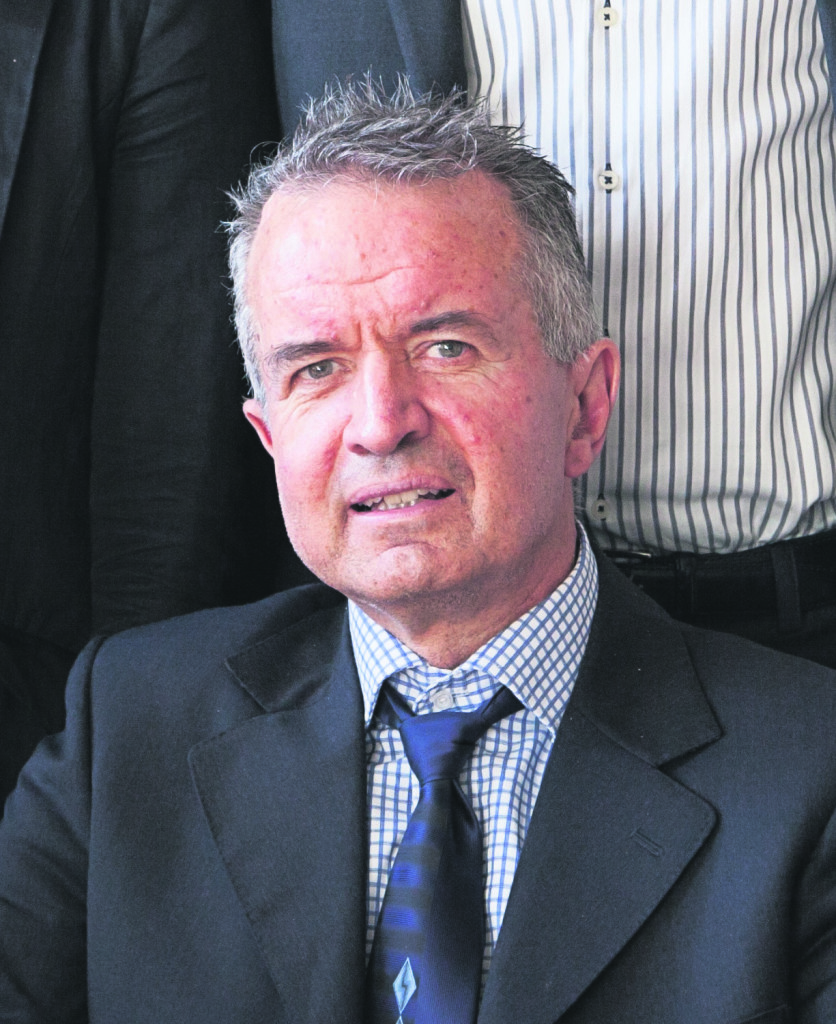
In the year 2000, while running in the City2Surf, I developed pain in my left foot at around six kilometres into the race. When I stopped running, the pain subsided and I went on to finish. For several months prior I had experienced similar pain while running and over the next few years the exercise-induced foot pain worsened. My foot began to turn in while I ran and I noticed my left arm was swinging less than my right.
In 2004 at the age of 46 I was diagnosed with Parkinson’s disease (PD). The irony of this diagnosis is that I am a neurologist and had developed a disease in which I was an “expert”.
Parkinson’s disease is, next to Alzheimer’s disease, the second most common neurodegenerative disease in Australia. It is a slow disease with an average duration from onset to death of 12.2 years. One is much more likely to die with Parkinson’s disease than from it. It is conservatively estimated that, in 2011, over 64,000 Australians were living with PD. This equates to 283 per 100,000 in the total Australian population, or 857 per 100,000 among the population aged over 50. Although Parkinson’s disease is considered a disease of the elderly, 20 per cent of patients are diagnosed under the age of 65 with some patients diagnosed as early as their 30s.
Parkinson’s disease affects the ability to move. This is manifested by slowness of movement (e.g. shuffling), impaired dexterity and limb stiffness. About half of sufferers develop a tremor. The illness also affects the nervous system in other ways, causing sleep disturbance, depression, anxiety, cognitive impairment, bowel and bladder dysfunction and difficulty swallowing. In the very late stages of the illness the disease may cause marked hesitancy or even “freezing” of walking, falls, and some patients develop dementia.
The cause of Parkinson’s disease is unknown although initial symptoms are due to loss of dopamine-containing cells in a part of the brain called the substantia nigra. By the time the illness is diagnosed, around 60 to 80 per cent of these cells have already been lost. Dopamine is a chemical or neuro-transmitter necessary for, amongst other things, correct function of brain circuitry required for movement. This circuitry is known as the basal ganglia.
Parkinson’s disease is an incurable, slowly progressive illness but, despite this, its symptoms can be managed for many years. In the 1960s the treatment of the illness was revolutionised by the introduction of levodopa, a drug which can replace the loss of brain dopamine. This drug can lead to a dramatic improvement in symptoms and remains the mainstay of medical treatment today. Unfortunately, after three to seven years of levodopa treatment, some patients may develop involuntary fidgety or writhing movements as side effects from this drug. These movements are called dyskinesias and such movements may be accompanied by levodopa transiently losing its effect, called “wearing-off”.
Nowadays when these complications develop, there are a number of newer drugs or strategies that can be used to ameliorate these troublesome side effects. Recently there has also been a lot of interest in the role of exercise in slowing progress of the illness and regular exercise is now prescribed as part of disease management.
The most recent dramatic development in the management of Parkinson’s disease has been deep brain stimulation. This neurosurgical procedure involves the implantation of electrodes deep within the brain that pass under the skin and attach to a battery placed in the chest or stomach wall. The electrodes are placed in the brain and deliver a continuous high-frequency electric current to areas of the brain that are dysfunctional. It is thought that the small electric current interrupts these abnormal brain circuits and more normal brain function is restored. Parkinson’s symptoms may be dramatically improved for up to eight years following the procedure. Currently this surgery is reserved for younger patients whose drug therapy is failing.
In 2011 the estimated cost of Parkinson’s disease to the community was $8.3 billion. As the population ages this figure will dramatically increase. A major challenge facing advancement in reducing the burden of PD is the lack of government funding for services focused specifically on PD. The disease is not formally recognised as a chronic disease under the Australian Government National Chronic Disease Strategy, and sufferers are therefore not able to access funding under that Strategy. Over a lifetime, Parkinson’s sufferers experience greater disability than people with many of the conditions that are recognised as chronic (including cancer, diabetes, heart disease, stroke and vascular disease).
There remains a lack of awareness in the general community and in many parts of the health services community of the challenges and needs of patients, their families and carers. This often results in sub-optimal care, amplifying suffering and leading to higher associated costs. This is exacerbated for people with early onset PD, who often have additional needs (e.g. forming relationships, children and financial planning), and for whom dedicated services are currently very limited.
I consider myself lucky, despite developing this disease. The course of my illness has been slow and I was able to continue medical practice for 10 years after diagnosis. I remain independent and uniquely straddle the fence between Parkinson’s sufferer and Parkinson’s specialist. My aims for now are to continue with research into the disorder by helping supervise the Parkinson’s research clinic at the Brain and Mind Research Institute at Sydney University, and to educate as many people as I can about the disorder by being a speaker on behalf of Parkinson’s NSW.