GUEST EDITORIAL: It’s hard to forget those satellite images that flashed across our news – one of the most powerful eruptions observed in the modern era. So strong it sent atmospheric shock waves, sonic booms, and tsunami waves around the world.
“I want to thank Australia”, he began, “for their support during the eruption and during the tsunami. It’s been six months now, and we are almost back to normal.”
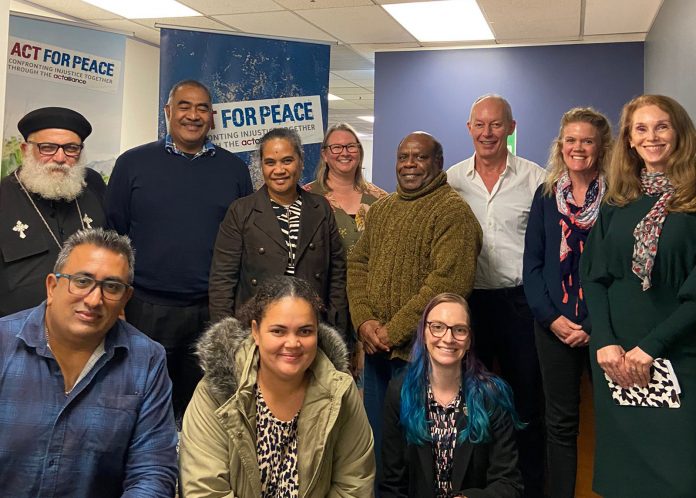
As he addressed the table, the Rev. Ikani Tolu, General Secretary, the Tongan National Council of Churches, looked to staff of Act for Peace, the international humanitarian agency of the National Council of Churches in Australia.
“We owe the world [to those] who immediately responded to the new disaster that our people faced at the beginning of the year, with the many prayers, we survived, and on behalf of our people, I say thank you. Malo ‘aupito.”
A collective hush fell over the table as we took in his words. Words carrying the weight of a small nation that, earlier this year, was devastated by the Hunga Tonga-Hunga Ha’apai volcanic eruption. It was the communities of Tonga, at least 84,000 affected people, who bore the brunt of its impact.
In this time of crisis, the Act for Peace community raised over $94,000 to help our partner in Tonga, to assist communities living with the physical devastation, food insecurity, and trauma caused by this disaster.
The emergency response was implemented by our partner, with support of USAID, providing critical physical and emotional assistance to 18 communities in Tonga, while leaving them with increased resilience and capacity to reduce their vulnerability to future disasters.
Rationally, I knew our help was making a difference. But now, sitting at a table in our Sydney office opposite Rev. Ikani, and other church leaders from the Pacific Islands, I could feel what that support really meant.
The reality of working in the international humanitarian space is that most of the time, our communication with our partners is through emails, texts and calls. But sitting with someone is so special. You feel a connection. It is something we have all missed during this pandemic.
I hope the Rev. Ikani’s words remind you that people are at the centre of our work, at the centre of disasters that we see around the world, and you too can feel some of the impact you make when you support our work.
To find out more or to support the ongoing work for people who are forced from their homes by violent conflict or disaster, visit https://actforpeace.org.au/.
________________
Emma Brophy, Digital Content Lead, Act for Peace.