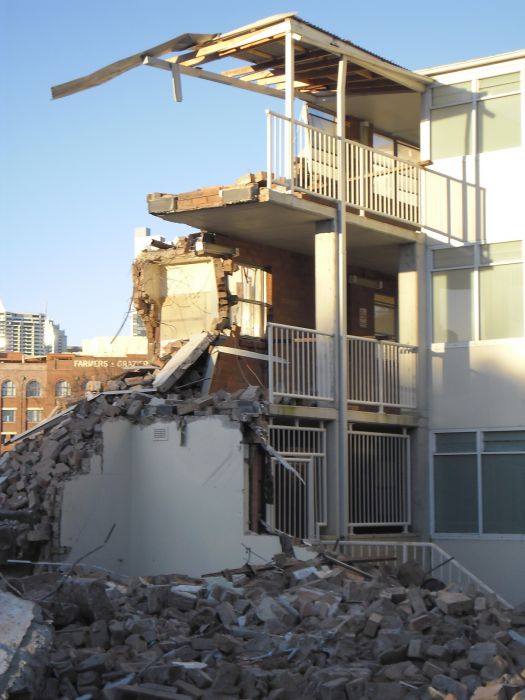
In 2009 the previous ALP state government decided to privatise an area of 16 small buildings at the end of Cowper Street in Glebe. The tenants were evicted and the buildings were demolished. The land was cleared of asbestos contamination and put up for sale. The development plan was for 50 per cent private, 25 per cent affordable and 25 per cent public housing.
A determined rearguard action was fought. Hands off Glebe Inc. and other civil groups objected strenuously, campaigning for 100 per cent affordable and public housing. The mayor and the then ALP MP Verity Firth, who had promoted the scheme, were criticised as “social cleansers”.
The Liberals inherited the plan and continued to develop it along the lines laid down by the Keneally government.
The developer Roxy Pacific has built the private dwellings. A Domain article (13/3/17) reported that the project brought “new elegance to Glebe”. Some of the units are selling for $2.3 million with a one-bedroom flat costing from $735,000 to $945,000. Apparently elegance is based on price.
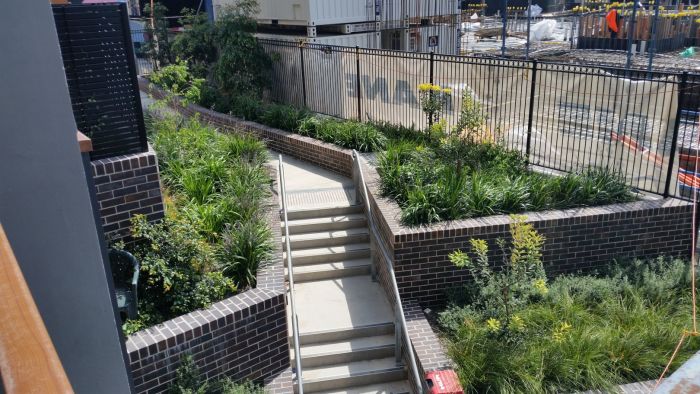
Nearly 300 people were driven out with only 167 places to rehouse them to create what was dishonestly called the Cowper Street Affordable Housing Project.
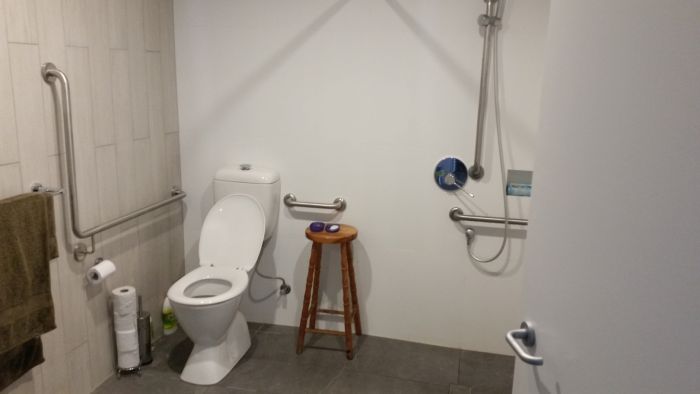
The public housing section has been completed by community housing provider Bridge Housing. The units seem comfortable and well appointed. City West is currently building the affordable housing component of the project.
It is not clear how many of the people evicted have returned to the site. The usual figure for such returns is only around 5 per cent.
The same government propaganda and honeyed language are evident at Waterloo, intended again to conceal the brutal reality that public lands set aside for decades for public housing, for the working class of the city to live, are being stolen and sold to the highest bidder. The Waterloo project shows the same contempt for the disadvantaged.
The current housing policies of both Liberal and Labor are based on an economic rationalist approach in which government housing assets are valued at current market value and sold off if their value is sufficiently high.
This is not a social policy; it is the government acting as a private investor playing with a large pool of assets. But democratic governments are not created by society to play at being investors. They should invest in socially useful projects from which the whole society continues to benefit over time.
Governments should maintain and expand housing supply as an essential service to meet social needs. These can be met through the revenue from a market rental for those on good incomes to provide a surplus for cross-subsidising quality public housing for those on low incomes.
The sale of existing public housing should not be used as an ongoing source of funding. Funding should be obtained from stamp duty and other state property taxes.
A new system of universally accessible public housing, with rents based on ability to pay, is the only way the current housing crisis can be fought. The alternative to the housing crisis is public housing, available to everyone who needs it or who would benefit from being in public housing rather than up to their necks in debt.
The provision of sufficient public housing will require ongoing subsidies which should be funded from stamp duty and land tax. This is not unusual. Recurrent health expenditure in NSW is 86 per cent subsidised, education is 96 per cent subsidised, and trains are 52 per cent subsidised.
Governments must deal with public housing as a necessary and positive element of the entire housing system, as infrastructure and not welfare.
The “market” should no longer be allowed to determine the availability of shelter for our people – the common good is superior to the right of private property.