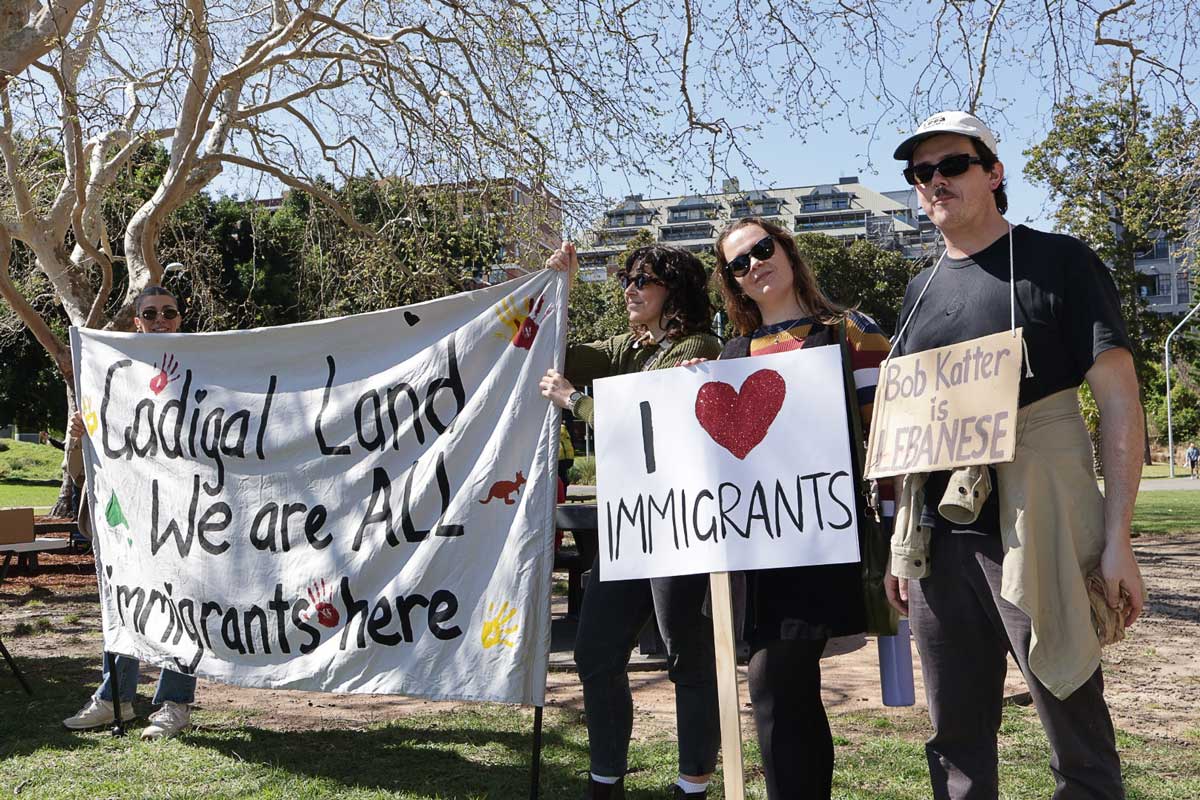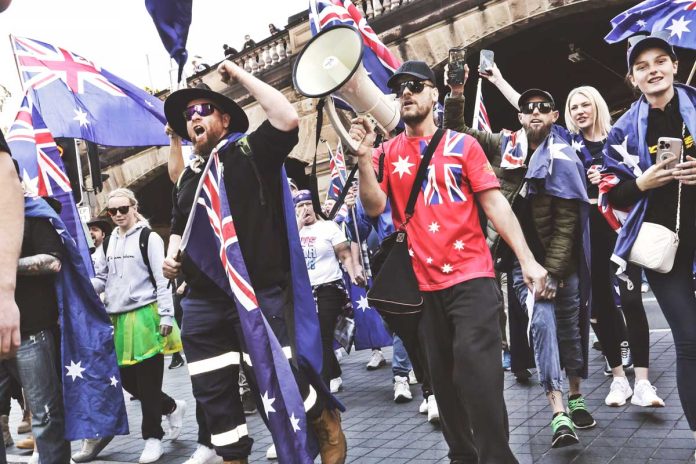
On August 31, right-wing groups marched for the end of “mass migration” during their so-called “March for Australia” protest. TikTok and Instagram algorithms promoted the protests, accompanied by AI-generated advertisements and slogans that framed the movement as “uniting Australia” against government policies. Narratives included accusations that immigrants are taking jobs, university spots, and driving up house prices.
However, academic research shows that misinformation and racist ideologies were deeply embedded in the motives behind the march.
Debunking anti-immigration rhetoric
‘Immigrants are taking jobs’
According to the Australian Bureau of Statistics, as of May 2025, there were 339,400 job vacancies – a 2.9% increase from February 2025. A key cause of these vacancies is shortages in specific skills, due to an ageing workforce, underinvestment in education, and rapid industry growth in technology and healthcare. Migrants whose skills align with these shortages are often granted permanent or temporary skilled visas. ABC journalist Greg Jericho found that data on skills shortages shows a decline in qualified candidates applying for jobs.
Research also shows that migrants help fill critical shortages in public sector jobs such as nursing. The 2.5% wage cap introduced by the Liberal Party led to a surge in job vacancies and nurses leaving the profession. While the Labour Party abolished the cap in 2023 and implemented a 4% wage increase, this was not enough to offset the high tax burden faced by nurses. Although some efforts have been made to increase domestic nursing graduates, a 2023 academic study found that skilled migration of nurses has been vital in addressing Australia’s chronically low workforce supply.
‘Immigrants are causing a decrease in home ownership’
While the housing crisis is complex, research shows that barriers to home ownership are driven primarily by a taxation policy that favours wealthy investors. Known as the 50% capital gains tax discount, it halves the tax property investors pay. This incentive encouraged investors to rush into the market, enabling them to make large tax-free profits and accumulate multiple properties, further inflating demand and costs.
This pattern is worsened by negative gearing, which lets investors deduct costs and losses that exceed the income generated from rent, and offset these costs against their taxable income. Those in higher tax brackets benefit the most, as they can claim larger deductions at their higher marginal tax rate, reducing their tax burden far more than those on lower incomes.
Immigration has had some impact on rental demand, but far greater pressures come from labour shortages in construction and rising building costs. These factors have reduced housing supply in major cities – a situation that benefits investors by driving up rent prices.
‘Immigration is out of control’
I came across a TikTok video on my “for you” page where the creator blamed her financial problems on immigrants and claimed migration needed to be cut back. This is not true. Australia’s overseas migration decreased by 18.8% in 2024 from 2023.
Moreover, Australia often mistreats immigrants. For example, immigrants with high skill sets are often granted temporary visas, and/or treated as low-skilled. A recent SBS News study found that 620,000 permanent migrants are currently working below their skill set. Barriers include discrimination, lack of local work experience, and limited professional networks. Government programs to recognise overseas qualifications are underfunded.
The same study found that Australia’s economy could grow by $9 billion annually if skilled migrants were fully recognised. Instead, according to the University of Sydney Business School, domestic training and skilled immigration have been slow to expand, while corporate profits have risen sharply – from 20% to 30% of GDP – despite GDP being at the lowest level in 50 years.
‘Immigrants cause crime’
This is not true. Research shows that migrants have lower crime rates than the Australian-born population.
What do the protests tell us about Australia?
Scrolling through TikTok and Instagram, it seems that much of the anger fueling protest advertising stemmed from pro-Palestinian demonstrations on the Sydney Harbour Bridge.
Clips circulated of the Australian flag being burnt, prompting outrage and calls for Australians to “stand for our country” on August 31 rather than protesting for other nations. But the burning of the flag was a single act among 300,000 protestors, more likely a symbol of frustration with the government’s complicity in genocide than a rejection of Australia itself.
Secondly, protesting for humanity and against genocide is incomparable to protesting over cost-of-living narratives that are not only ineffective but also rely on misinformation and conditioned entitlement. Such protests further depend on racist narratives that instinctively place blame on people from other countries.
Other videos claimed that immigrants were “ruining Australia’s culture,” while ignoring the fact that most people in Australia are immigrants or descended from immigrants.
When you visit the dentist, buy a kebab or sushi, or order an Uber after a night out, consider who makes these everyday services possible.’
The number of likes on these videos is alarming. It signals a rise in anti-immigration rhetoric and a lack of education strongly linked to Trumpism. It is important to debunk these narratives that place blame on immigrants, encourage disengagement from these protests, and stay focused on the bigger picture: the structural inequalities that drive the cost of living.
________________
Jessica Shepherd is a second-year law/media (majoring in journalism) student at UNSW.