Ask the Rev. Fr Alasdair MacKinnon-Love to describe his spirituality in one word and his answer comes quickly: “Sacramental.”
Alasdair is an Anglican priest on the Far South Coast of New South Wales. For him, Christian faith is grounded in people gathering for worship that is “heartfelt, dignified and beautiful”.
He speaks of giving thanks to God, of redemption through Jesus the Christ, and of fellowship in communion.
This sense of communion resonates especially in Sydney, where people can live close together yet still feel lonely and divided.
“Even when we are divided, for any reason, Christians believe that we remain connected in our sacramental communion,” Alasdair says.
A sacramental spirituality looks for the presence and grace of God in ordinary things: bread and wine, water and oil, words and gestures, bodies gathered. It invites us to see the world not as something to fear or possess, but as gift.
That way of seeing matters at a time when racism, suspicion of migrants and other forms of hostility are again finding a place in Australian political life.
Senator Pauline Hanson’s remarks about Indigenous Australians are particularly offensive.
The sacramental imagination asks us to see connection where some see only separation.
“The gospel commands us to love God, love our neighbours, and love ourselves,” Alasdair says.
To love our neighbour is to recognise the fellow human being before us. Christian love reaches beyond those who look like us, worship like us or come from the same place.
Alasdair’s affection for two apparently distant places offers an image of this.
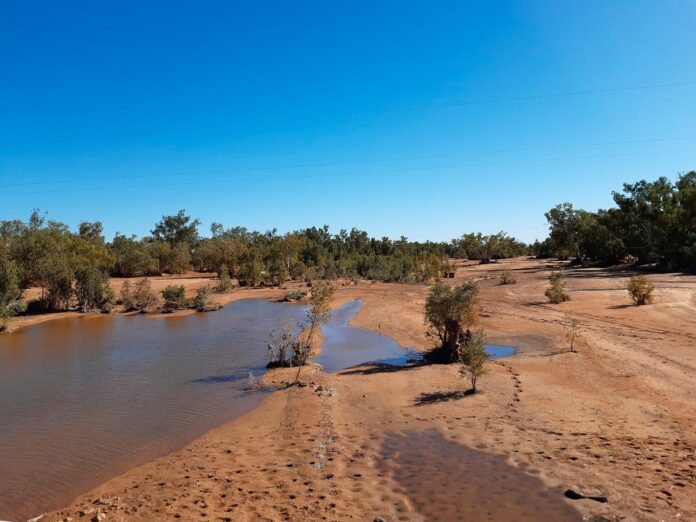
Two of his favourite places are the Gascoyne region of Western Australia and Botswana in southern Africa. He is struck by their similarities in landscape, vegetation and climate, a reminder that Australia and Africa were once joined within the ancient supercontinent Gondwana.
“Our peoples are so much alike it is extraordinary,” he says.
He has found friendliness and hospitality in both places and speaks warmly of their people-centred ways of life and leadership.
“Botswana has a much better train network than WA!” he adds with a smile.
At a time when some voices encourage Australians to become more suspicious of one another, perhaps the sacramental imagination offers another possibility: to look again.
To see the world as gift. To see another person as neighbour.
And, in the gathering of different people, to glimpse something of God.