The festival was intended to be a testament to the flourishing, multicultural, local enterprise of Redfern. It celebrated a wonderful idea, a dream if you like, of what the people of Redfern would like their “village” to be about.
On the surface, the festival perfectly reflected its intentions. It showcased Redfern’s artistic talent and varied foods and goods drawn from a vast cultural array, conjuring up the spectacle of a future of multicultural accord and prosperity.
That was my first impression.
Closer observation betrayed an unstable underbelly of social tension and unanswered questions. What could otherwise have been the pretty picture of Redfern’s bright future was riddled with holes.
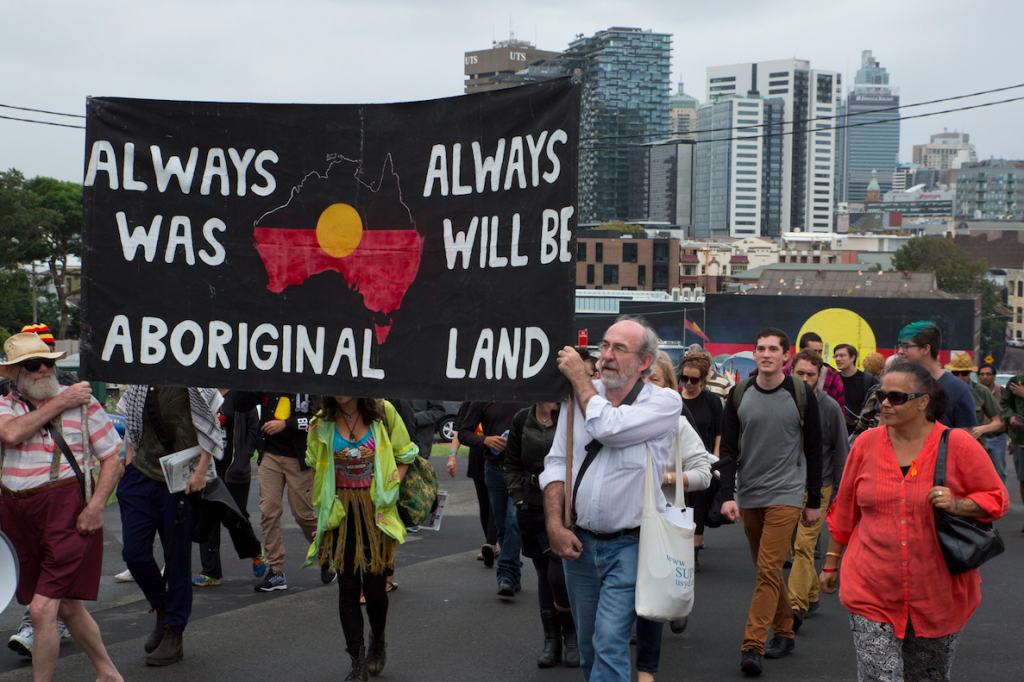
The arrival of protesters from Redfern’s Aboriginal Tent Embassy exposed the overlooked reality of Redfern’s present social situation. This peaceful demonstration faced a somewhat cynical reception by the police, provoking the displeasure of some Aboriginal people attending the festival.
Colleen Williams, a woman of the Mununjali tribe whose family recently moved to Glebe, remarked on the situation: “It could turn out to be a good day if the police respect the protesters and not treat them like they’re a problem … When the protesters turned up I saw all the police run over there. But nothing was happening; the protesters were just standing there. What did the police have to run over for?”
Did such a demonstration deserve police attention?
We may consider the police response only sensible procedure, and we may not be entirely wrong, but the sight of armed and mounted officers facing this peaceful demonstration showed that tensions still exist. While some in Redfern may be “Dreaming Beyond” Redfern’s history, the memory of a turbulent past remains ingrained in the minds of many.
Accompanying these tensions are the troubling circumstances of Redfern’s community housing. An event which set out to celebrate Redfern’s growing prosperity has been staged at a time when the Aboriginal community is at risk of being edged out of their home town by burgeoning development.
Councillor John Mant shed some light on the issue: “It’s very hard to find people willing to invest in Redfern’s community housing … Community housing needs to be subsidised … Previously governments gave grants. And now that’s dried up.”
While Redfern is being “gentrified,” the Aboriginal community is at risk of losing their homes. Considering this situation, there is unease beneath a purported harmony. Does our wish to look to the future leave us unconscious of vexing social problems?
Redfern cannot spend too much time “Dreaming Beyond” the present situation, not when there is so much to set right, right now.