This choice of words is both ill-informed and belittling. It ignores the reasons the Homelands communities exist, and it dismisses a significant and successful Aboriginal initiative as irrelevant.
Previous federal governments recognised the merits of the Homelands and provided some of the funding for them, but this will soon be withdrawn and services to these communities will have to be funded by the States. The WA Premier says that he cannot fund them, so 150 will have to close in WA.
This will have devastating consequences for the people living there and the closures have been widely condemned, notably by Aboriginal leaders like Pat Dodson and Noel Pearson. They know that the homelands are not a “lifestyle” choice but a survival choice – for individuals, families, communities and culture.
The Homelands are nothing less than remote Aboriginal people’s recipe for survival.
Changes in the Northern Territory pastoral industry were already threatening Aboriginal employment even before the equal pay decision of 1973 made things worse. Now, it didn’t matter that Aboriginal labour had actually built the pastoral industry; equal pay made these gifted and hard working men and women too expensive, and they and their families had to find somewhere to live. Many looked for it on country, in what are now known as the Homelands.
Aboriginal people also moved to the Homelands from missions and reserves. In those places, not only had they not been able to meet their responsibilities to the land; they could not even fulfil their religious and social responsibilities. Intolerable regulations meant that they could not choose what language they could speak, what work they would do, even whom they could marry.
Some who moved off the missions and reserves ended up in even worse conditions in towns, either homeless or packed into overcrowded accommodation that made decent or dignified living impossible. Others drifted to town camps that almost totally lacked the services we expect governments to provide – adequate water, sanitation, power. In these places addiction and violence were endemic.
To these people too, the Homelands offered survival – escape to a place where they would enjoy adult freedoms and the right to determine their own lives.
The Homelands are established on, or close to, traditional lands. They are well governed and achieve good results. Research over three decades indicates that, despite endemic underfunding, people on the Homelands have better health outcomes and even better housing than those in larger townships. Livelihood options and social cohesion are also better, and “closing the gap” might be more likely in Homelands than elsewhere. As Amnesty International lawyer and Indigenous woman, Tammy Solonec, pleads: “… close the gap, not the communities!”
Aboriginal people forced out of the Homelands by their closure face cultural loss that devastates them. It is impossible not to be moved by their plight.
Yawuru man, Stephen Buck Pigram, whose traditional country takes in Broome, says: “We are a saltwater people, we have songlines that go across here … we won’t be able to go there any more, we won’t be able to practise our traditional ways … blackfellas without culture are going to end up depressed and angry and the rest of it.
“It’s 200 years and it’s just another method of assimilation and oppressing our culture … Young men who have begun their beginning stages of ceremony won’t be able to go to the higher stages.
“Ceremony is being ripped out of their hands. It’s tearing our hearts apart … they don’t see these things.”
A Yamaji woman in Geraldton, Charmaine Green, estimates that up to five communities in that country could be affected. She told New Matilda: “Country is important and we have a right to say no, and we have a right to stay on our country.
“It may affect only a small amount of people living in community … But you have to think of what will happen when you force those people into towns. That’ll put pressure on infrastructure, housing, overcrowding, and all the problems that come with overcrowding – like health and education.
“And what about the waste of money that’s already been spent in communities? In the long run it would be cheaper to keep people in their communities.”
Ms Green complains that the Barnett government hasn’t made an attempt to consult with communities. “He’s not consulting with his West Australian Aboriginal advisory committee. He’s having no discussions with anybody, but he’s putting fear into the lives of people who live on the Homelands, and live out on country. They think they’re once again going to be herded around like cattle … it seems very racist.”
Uncle Ben Taylor, a Noongar elder from Perth, told New Matilda how distressed he is about the closures. He was at the site of the Nyoongar Tent Embassy recently when the police brought in horses, dogs and helicopters to shut down the Aboriginal refugee camp, set up to house displaced people from Homelands!
“They’re going to close down these communities and turn people into fringe dwellers,” Mr Taylor said. “There’s going to be more in jail, and more homelessness. And there’s a lot of people homeless now.
“I’m 75 now, and there’s been 70 years of racism in my life. Dehumanising conditions we’ve been living under. There’s still that hopelessness.”
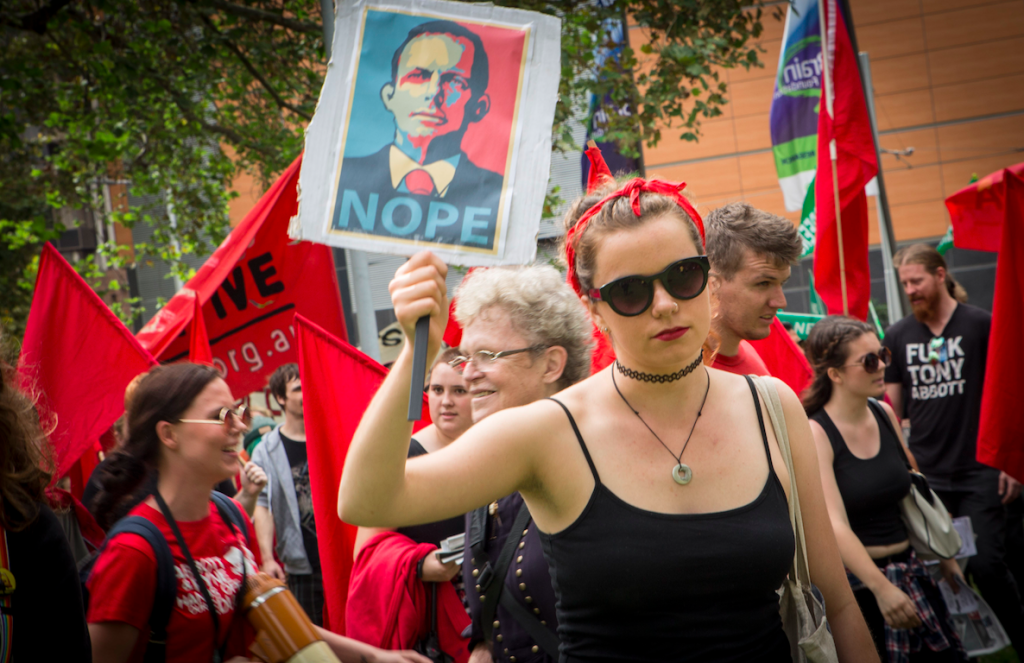
As for Tony Abbott and his touching concern for the “taxpayer” burdened with the cost of servicing these communities, it could be pointed out that the Australian taxpayer owes simply everything they have to the dispossession, without compensation, inflicted on Aboriginal people. Everything we have has come to us through the expropriation, without treaty, of their lands.
The cost of supporting the Homelands could surely be seen as the minimum the taxpayer owes in compensation.