This is where the notion of fair trade comes in. Fair trade encompasses civilised working conditions, sustainability, stable prices and fair terms of trade for farmers and producers. The first two weeks of May marked Fair Trade Fortnight, an annual nationwide celebration of a fair trading system. A forum was hosted as part of the celebration to showcase the reality of fair trade in Australia and its impacts in developing countries.
Molly Olson, CEO of Fairtrade Australia and New Zealand, disclosed the organisation’s goal of achieving long-term sustainable futures. With 1.3 million producers, farmers and workers around the world dependent on decisions made by companies and consumers in developed countries, it is in essence a global situation the organisation is attempting to change. Currently, cocoa growers receive 3.5-6 per cent of the average retail price of a chocolate bar. In light of this, the organisation aims to increase the number of producers with Fairtrade Certification. The Certification has ISO65 accreditation, which is internationally recognised as the strongest indicator that a certification body is transparent.
With this certification, the organisation is able to pass on the premium paid for its goods. The Fairtrade Premium is the additional sum of money, which is paid over the agreed Fairtrade Price. One hundred per cent of the premium goes directly to the producer. “The premium is sometimes used for cash bonuses, expanding our farms, helping schools with materials and uniforms, and improving our water access. Fairtrade provides us the premium immediately, unlike many other companies farmers deal with”, says Esther Mintah Ephraim, cocoa farmer from Kuapa Kokoo, Ghana (member of the Fairtrade Kuapa Kokoo cooperative for eight years).
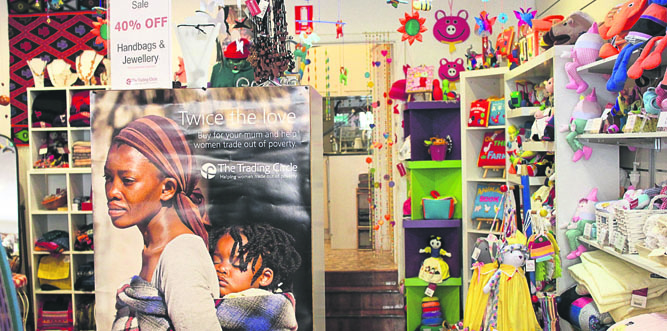
In response to global poverty and in support of Fairtrade, the Sisters of The Good Shepherd established an ethical fair trade retail outlet in Summer Hill called The Trading Circle. It is designed to “support income-generating projects, micro enterprises and community cooperatives to help women in dire need”. Over 20 years ago, the Sisters engaged with various producer groups in Asia, South America and Africa. They created a business avenue for the women in these areas, utilising their skills and craftsmanship for the Australian market. The women were trained to establish businesses, which provided a safe environment for them to earn a stable income. The store buys directly from these producer groups and exclusively stocks their products, with the exception of carefully selected local items. This ensures as much revenue as possible goes directly back to the producers.
Yupin is one of the many women who are part of the Hands of Hope project in Thailand, an initiative established by The Good Shepherd Sisters. She is HIV positive and suffers from tuberculosis of the bones. Due to being bed-ridden she became unemployable. Wanting to provide Yupin with an income, the Sisters employed her to make pom-poms (like the ones on the end of a beanie) from her lying position. Today, she is still supported through her work from the Hands of Hope project.
“One of the most satisfying elements of our work at the Trading Circle is to be able to support and implement as much as we can to the Good Shepherd Sisters’ original mission, which was to simply ‘help women and girls in less fortunate circumstances trade their way out of poverty’. It is not with handouts, it is through empowering them,” says Di Brennan, General Manger.
The Trading Circle makes a conscious effort to educate the community on the ethical concept of fair trade and the power that an individual purchase has on women and girls in the developing world. With every purchased item, included is a flyer with information on the cause behind the Trading Circle and why choosing Fairtrade is so critical.
Information on Producer Groups, along with images, is displayed throughout the store. They have also developed a program which educates school children on fair trade. The Trading Circle celebrated Fair Trade Fortnight with a store event launching its own blend of Fairtrade coffee. It distributed over 140 show bags to children in the local community which included Fairtrade information and items such as Fairtrade chocolate, a key ring, a colouring-in storybook about an African boy and his cocoa-farming family, and a card made by the producer group women.
“We feel it is really important for children to have an understanding of fair trade and the power they have when it comes to purchasing. Pretty soon they will become teens and consumers themselves, and we feel that there is a need to educate them before they reach this stage, so they can make an educated choice,” says Bindi Katakalos, Store Manager.
Ninety-three per cent of consumers in Australia believe companies engaging with developing countries should pay farmers and workers fairly. With power in the consumer’s hand, purchasing Fairtrade Certified goods means a promising future for all, especially the farmers, producers and their communities.