Kids on our Block is an adaptation of a song by Aunty Wendy’s Mob, adapted for the book by Wendy Notley herself, who is notable for her lifelong dedication to the teaching of children. Notley is one of the longest working non-Aboriginal teachers at the Murawina Child Care Centre in Redfern. The book is beautifully illustrated by Adam Hill, a familiar name in the art world for his public artworks that have adorned the walls of schools, council structures, shopping malls, banners and flower-beds.
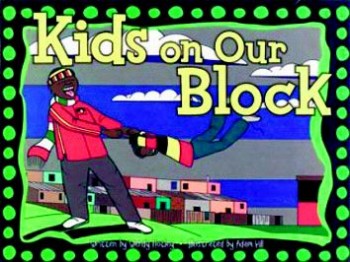
It is a story of how youth play together, talk together and stay together. It shows a sense of community, what kids can do if the local pool is closed or the weather is bad. It’s sweet; it’s innocent. It’s a lovely story to tell all of our young, regardless of race and culture, that only boring people get bored.
What is most striking about the book, apart from the constant message and feel of community, is its vibrancy from start to finish; from the bright smiling faces of the children to the wonderful choice of colours consistent throughout.
The words read like a song, it’s rhythmical, it’s easy and it’s clear to see why Aunty Wendy’s Mob was and remains so successful. Given the sense of rhythm in the text it’s easily translated into a nursery rhyme to sing to an unsettled child, take this as tried and tested from yours truly.
For the reader, it is helpful that there is a small glossary at the start of the book that translates some of the key words used. It is an added importance to ensure an understanding for the reader, and their children, as this is the key in preserving this beautiful language and educating our youth about the language of their fellow children in Australia.
What is also notable is the choice of the colour palette from Hill, incorporating true Aboriginal colours from his own artwork and the flag takes pride of place without being the centre of attention, a testament to Hill’s subtle ability to pay tribute to his heritage.
Wendy Notley continues to present her songs, dances and stories in preschools, and though the book was published in 2009, the story is still relevant, important and has a place in my children’s bookcase.