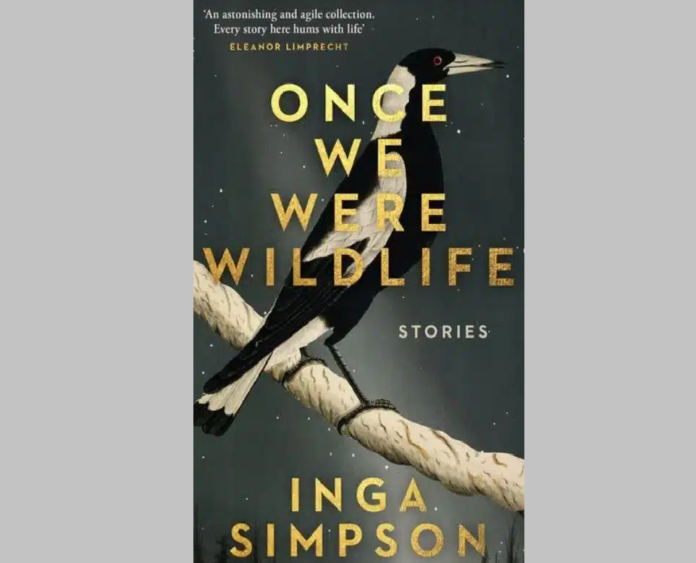
Once We Were Wildlife
Inga Simpson
Hachette Australia, 2026
Inga Simpson’s books keep returning to the bond between people and the places and materials that shape them. Willowman centres on a Melbourne batmaker who crafts a bat for a promising young cricketer, and her picture book The Peach King, illustrated by Tannya Harricks, is a fable about how nature endures. In it, an unusually hot, dry summer sends animals running and threatens an entire orchard. Once We Were Wildlife, her first short story collection, carries that preoccupation into adult fiction.
Its eleven stories and single poem unfold across burnt country, rough seas and stony ground, following characters caught between longing, loss and transformation. Landscape is more than a backdrop. Simpson has explained that she wants to close the distance between human life and the rest of the living world, and the structure of the book reflects this. The opening stories focus on people, with hiking as a central motif, but the final stories contain no human characters.
The title story anchors the book. Running to roughly eighty pages, it reads like a novella, weaving desire into a vision of a ruined future that one critic finds surprisingly hopeful. The Black Summer fires, which Simpson endured on the NSW south coast, reshaped her life and work, and that experience lends the book’s ecological concerns their urgency.
Those who came to Willowman for its narrative pull may find this collection slower and more reflective, which suits what it sets out to do. The prose is evocative, and compassion for all living creatures runs through every piece.
Where The Peach King introduces young readers to resilience, Once We Were Wildlife invites adults to recognise themselves as part of the natural world. It’s a thoughtful, absorbing contribution to Australian nature writing, and one to recommend to longtime fans and new readers alike.