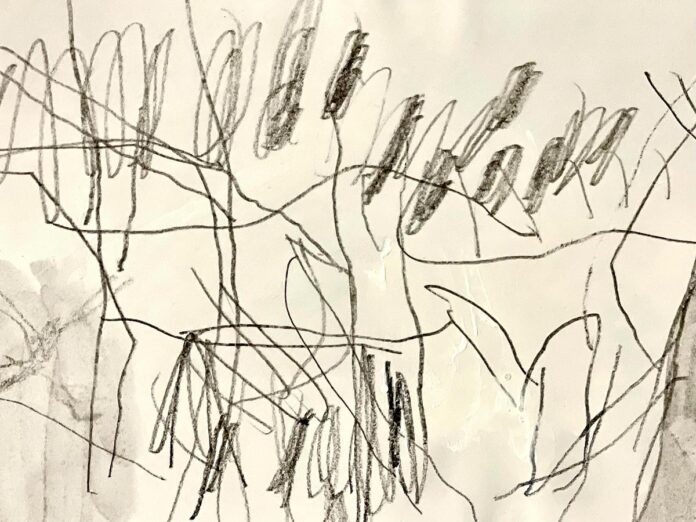
What if the way we pay attention to the world changes the world we experience?
This is the fascinating question explored by psychiatrist and philosopher Iain McGilchrist in his books The Master and His Emissary (2009) and The Matter with Things (2021).
McGilchrist draws on neuroscience, philosophy, literature and the arts to argue that the two hemispheres of the human brain attend to the world in different ways.
The left hemisphere favours focused attention. It grasps and measures. It attends to particular parts of the whole.
The right hemisphere is more receptive to relationships, patterns and possibilities. It attends to the whole, appreciating things in their living context.
Both hemispheres are essential and constantly work together. But McGilchrist argues that the right hemisphere has a certain primacy. It provides the wider understanding within which the specialised work of the left hemisphere finds its place.
He worries that modern Western societies increasingly privilege the left hemisphere’s way of attending. We become preoccupied with information and control, at the expense of imagination and wonder.
Consider a tree.
We might identify its species, calculate its age or estimate its value as timber or carbon storage.
These are useful ways of knowing a tree. But they are not the whole story.
We might also encounter the tree as beautiful, a living presence shaped by sunlight and rain, home to birds and insects, connected to soil, water and the surrounding bushland.
We begin to appreciate not simply the tree but the world of which it is part – and our own place within that world.
The tree becomes more than an object of study or a resource to be managed. It invites us into relationship.
What might this mean for religious faith?
For one thing, faith may be less about possessing correct answers than learning to pay attention.
Prayer and contemplation become practices of openness and receptivity.
The stories and parables of Jesus invite us to see familiar things in unfamiliar ways. A tree, a seed, a neighbour. The kin-dom of God.
How we attend shapes what we notice, what we value and how we respond. A tree is more than timber. A person is more than a number.
To pay attention is to recognise that we belong to a living world of relationships. Learning to pay attention is learning to love.