Indulging in our Australian tall-poppy syndrome, we pour scorn on toadies who try to get a leg up by “blowing smoke up someone’s arse.” Few of us know the phrase’s origin, or how accurately it still describes the way societies seize on half-understood ideas and blow them out of proportion.
The expression began quite literally on the banks of the Thames in the eighteenth century. A woman pulled from the river appeared drowned. A passing sailor suggested her desperate husband insert the stem of his smoking pipe where the sun doesn’t shine and blow. Up the pipe went and up went the woman, jolting awake like the wolf in The Three Little Pigs after climbing down the chimney and getting a bumful of coals.
There was a thread of logic. Tobacco was already being touted as a medical wonder, and European reports of Indigenous Americans using smoke for abdominal complaints seemed enough to justify wider application. “Hallelujah!” cried the witnesses. “There must be something in this.”
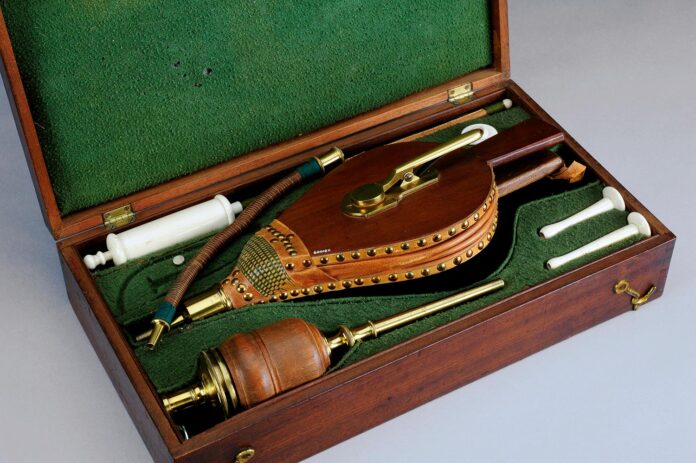
The medical community responded with industrial enthusiasm. Papers were written, theories expounded. Intricate brass bellows designed specifically for the rectum were manufactured and hung in pubs along the Thames like early defibrillators. Anyone dragged from the water could be subjected to the treatment – their return to consciousness attributed to the magic smoke rather than, perhaps, the involuntary rectal examination and the fact that they weren’t actually dead.
It was pure Lewis Carroll: wigged gentlemen in waistcoats solemnly debating rectal insufflation while shiny contraptions waited on riverside walls for the next unlucky drinker to tumble in.
Meanwhile, on the other side of the world, Burke and Wills were staging their own tragedy of hubris. Laden with Victorian excess – tons of equipment, canned food and confidence – they declined sustained help from the Yandruwandha people who knew the country. When starvation forced them to try nardoo, they observed the preparation but skipped the critical processing that rendered it safe. They ate heartily and died of thiamine deficiency. The sole survivor, who accepted proper guidance, lived.
In both cases, a kernel of Indigenous knowledge was encountered, stripped of context, and overlaid with European certainty. The result was elaborate machinery for failure: bellows on the riverbank, toxic porridge by Cooper Creek.
The absurdity endures in the language itself. We still speak of blowing smoke up someone’s arse long after the practice was abandoned, perhaps because the underlying behaviour never really went away.