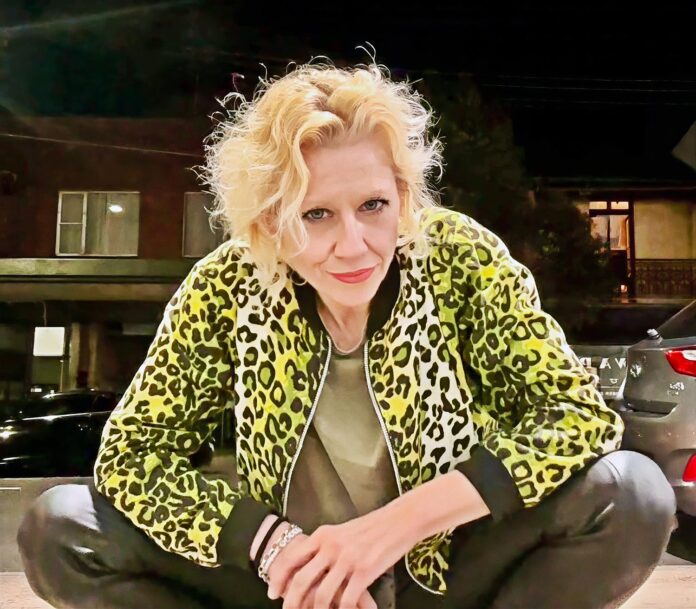
Kings Cross live music venue owner Dolly Kadek Pops on diagnosis, addiction, love and the long road from survival to understanding.
Opening a live music venue should have been the moment Dolly proved what she could do. Instead, it exposed how unwell she had become.
Before opening Sean & Dolly’s with her partner, musician Sean Mackenzie, Dolly had always considered herself highly capable. In businesses run by other people, she was the person who performed under pressure, solved problems and kept moving.
But when their own dream became real, that version of Dolly did not appear.
“I couldn’t think,” she said. “For much of that first year, I felt as though I was walking around in circles. I couldn’t plan, finish things or work out what I was supposed to do next.
“I didn’t understand what was happening to me.”
Before meeting Sean, Dolly had endured several painful experiences that left her more depressed than she realised. Falling in love was genuine and beautiful but it did not erase what was happening underneath.
As the pressure of the new business grew, Dolly became increasingly overwhelmed, ashamed and isolated. Her drinking, which she had long used to manage feelings she did not understand, became secretive and dangerous.
The spiral culminated in a severe mental health and alcohol-related crisis in November 2025, when Dolly was taken from the venue to hospital on her 45th birthday.
Why she is speaking now
October is Mental Health Month. In New South Wales, this year’s theme, A Little Connection Goes a Long Way, highlights the role everyday connection can play in supporting mental wellbeing.
Bipolar disorder is a chronic mental health condition involving episodes of depression and mania or hypomania.
For Dolly, receiving the diagnosis was only the beginning. It did not come with an instruction manual for recognising the illness in her everyday thoughts, decisions, relationships or behaviour.
“I haven’t really sat with anyone outside my medical team and spoken honestly about what it is like to live with bipolar,” she said.
“I’m not telling this story for sympathy, to glamourise suffering or excuse what has happened.
“I want to tell the truth. If it helps somebody recognise themselves, feel less ashamed or ask for support earlier than I did, then the discomfort of telling it may be worthwhile.”
A diagnosis without an instruction manual
Dolly said medical records from when she was 23 referred to mood swings, anxiety, depression and alcohol problems. Yet it would be another 15 years before she was diagnosed with bipolar disorder at 38.
“I kept going around in circles, asking for help, going through detox, rehabilitation and outpatient treatment, and trying to treat the alcoholism. I always knew there was something behind the drinking but I didn’t know what it was.
“For years, alcohol was treated as the entire problem. It was a very real and dangerous problem but it wasn’t the whole explanation.”
The diagnosis came while Dolly was working at a bar in Balmain. She found a doctor who saw her weekly, helped her access appropriate treatment and prescribed medication.
“He became my angel, really. For the first time in my life, at 38 years old, I wasn’t just trying to survive. I was learning how to live.”
When that doctor retired, Dolly again had to find her way through the medical system. She discovered that receiving a diagnosis did not necessarily mean understanding how to manage the condition, recognise an approaching episode or explain it to the people around her.
“Medical support matters enormously, but I also need practical tools: routines, language for what is happening, people I trust, early warning signs and a plan for what to do before an episode becomes a crisis.”
When the dream became real
Dolly said, “When we opened the bar, I assumed the capable version of me would simply kick in. She always had before.
“Instead, I couldn’t think or plan. I’d start something, become overwhelmed and end up walking around in circles.
“Sean was already exhausted from the enormous demands of opening a venue. He could see I wasn’t functioning, but he didn’t understand why, and neither did I.
“I felt I was letting him and the business down. Every perceived failure created more shame. The shame made me withdraw and the further I withdrew, the more secretly I drank.
“It became a terrible circle, and Sean was living inside the consequences of it too.”
Dolly said bipolar disorder did not occur neatly in isolation from the people who loved the person living with it.
“Sean has lived beside the confusion, broken plans, exhaustion, fear and my withdrawal.
“Loving someone doesn’t automatically give you the tools to understand a mental illness. I know the past year has asked too much of him.”
The crisis was not the whole story
Dolly remembers waking in hospital on her birthday frightened, disoriented and unable to understand how she had arrived there.
She now sees that night as the point when declining mental health, symptoms of mania, exhaustion, isolation and dangerous alcohol use had become impossible to separate.
“Alcohol nearly killed me and my drinking affected the people I love. I’m not trying to minimise that. But treating the drinking alone never reached the reason I kept returning to it.”
“I was trying to alter states of mind I didn’t understand. For a long time, alcohol felt like the only switch I knew how to reach.”
She is careful not to present bipolar disorder as an explanation that wipes away responsibility.
“The bipolar diagnosis helps me understand patterns in my life but it doesn’t erase my responsibility or the effect my behaviour has had on other people. Both truths need to exist at the same time.
“I may never have intended to hurt anyone but intention and impact aren’t always the same thing. Recovery means being honest about both.”
Beyond the labels
Dolly said behaviour could be judged quickly when people did not understand the illness beneath it. Labels such as dramatic, chaotic, difficult, alcoholic or badly behaved could become the entire story.
“Mental health language is sometimes used very casually and that can blur the difference between ordinary changes in mood and living with a serious, diagnosed condition,” she said.
“I don’t want to speak for anybody else’s experience. I simply want people to understand that bipolar disorder isn’t shorthand for being dramatic, unpredictable, difficult or badly behaved.
“It involves episodes that can profoundly affect a person’s judgment, energy, relationships and ability to function.”
Dolly said the depressive periods were often easier for other people to recognise than periods of mania.
“When I’m manic, I can feel over the moon. I feel as if nothing can stop me and I can do anything.
“For years, people simply saw the party girl. They loved the energy. I didn’t understand that it could be an early warning that things were about to end badly.”
Working in hospitality and music placed Dolly in an environment of late nights, disrupted sleep, pressure and constant proximity to alcohol. In her experience, that made it harder to distinguish the expected intensity of nightlife from signs her mental health was deteriorating.
What caring connection looks like
“People did ask whether I was okay. I kept saying yes because I didn’t know how to say no or how to explain something I didn’t understand myself.
“I don’t blame anyone for believing me. But I wish we all knew how to look beyond the automatic answer when somebody is visibly disappearing in front of us.”
For Dolly, connection is not a cure or substitute for medical care. It can, however, interrupt the shame and isolation that allow a crisis to deepen.
“Connection isn’t simply telling someone what you think they should do. It’s asking what is happening, what they need and whether they feel safe.
“It means listening without immediately diagnosing, correcting or judging them. It means staying long enough to hear an answer that might be uncomfortable, complicated, inconvenient or messy.”
Recovery without a tidy ending
Dolly said sobriety didn’t suddenly solve everything.
“It meant I had to feel everything I’d spent years trying not to feel.
“I can see things more clearly now: the damage, the grief, the effect on the people I love and the work still ahead of me. That clarity can be excruciating but it also gives me somewhere honest to begin.”
Sobriety had not made the bipolar symptoms disappear or produced a simple recovery story.
“My moods can still move between elation and depression. I’m still learning what belongs to the illness, what belongs to ordinary life and what I can do when I recognise things beginning to shift.
“Recovery isn’t one dramatic transformation. It’s treatment, accountability, routines, early warning signs, difficult conversations and practising the same tools over and over again.
“I don’t describe what happened last year as a gift. It was frightening, it caused harm and it affected people I love. But surviving it has forced me to stop confusing illness with character, and punishment with recovery.
“I consider my 45th birthday a kind of rebirth, not because everything changed overnight but because the old explanations were no longer enough.
“I’m still here. I’m sober, I’m learning and, for the first time, I’m trying to understand my life rather than simply survive it.”
Support
If you or someone else is in immediate danger, call triple zero 000. Lifeline provides crisis support 24 hours a day on 13 11 14.
Information about bipolar disorder is available from the Black Dog Institute and Healthdirect.
For advice and connection to local mental health services, call Medicare Mental Health on 1800 595 212.
Find more information about Mental Health Month here.