What happens when we bring art into an aged-care home – not simply as an activity to fill the time, but as an invitation to look, touch, remember, imagine and create?
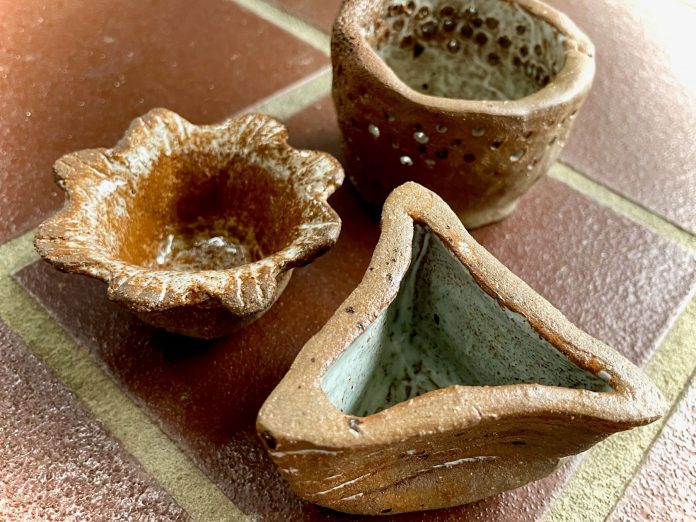
I have been making a series of small ceramic pinch pots to share with residents at a local facility. Each is small enough to sit comfortably in the hand and to be passed from person to person.
The pots draw on stories and images from Matthew’s Gospel.
One, inspired by Jesus’ words about “salt and light”, is a little vessel for a tea-light candle. Coarse sea salt has been pressed into one side, while small holes allow light to shine through.
Another has eight small forms around its rim, recalling the eight blessings of the Beatitudes. A triangular pot represents the Trinity. Another carries impressions of native plants inside and feathers outside: “Consider the lilies …”
A fifth has two patterns winding towards one another – love of God and love of neighbour, the “two great commandments”.
The point is not to explain what each object means. The hope is that touching and looking might prompt a memory, a question or a story.
Textures matter. So does weight, shape and the movement of an object from one pair of hands to another.
Even the empty space inside the pot matters. It suggests receptivity: openness to another person, to love, to prayer and perhaps to God.
Such approaches are increasingly valued in dementia care.
Dementia Australia encourages meaningful creative engagement as a way of supporting connection, identity and enjoyment. Artists also recognise that making and responding to art can provide ways of expressing experience when words are difficult.
This is not art therapy as such. But there is much we can learn from its respect for creativity, embodiment and communication beyond words.
The next step might be to bring some soft clay along to share.
The temptation with an “art activity” is to decide beforehand what everyone should make. I would rather offer the clay and ask: What would you like to do with this?
Someone might make a bowl. Someone might make a face, a bird or something unrecognisable. Someone might simply enjoy pressing fingers into the clay.
Curiosity is key.
Art can be more than distraction. At its best, it creates a little space in which a person can still choose, play, wonder, communicate and surprise themselves – and in which the rest of us might learn to pay attention.