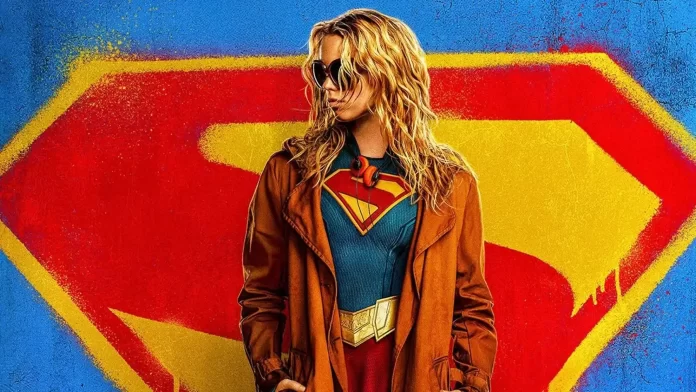
Before she was Supergirl in the eponymous movie released in June, Milly Alcock was a young actor from Petersham and a student at Newtown High School of the Performing Arts. She now wears the cape of Kara Zor-El, survivor of a destroyed world.
Supergirl has extraordinary powers, but the film’s more interesting question is what has happened to her.
Kara remembers Krypton: her parents, her language, her people and the ordinary life of a world that no longer exists. Unlike Superman, who arrived on Earth as a baby, she carries conscious memories of catastrophe.
Trauma-informed care begins by changing the question. Instead of asking, “What is wrong with you?”, we ask, “What happened to you?” It is a compassionate question. It may also be a theological one.
Christianity emerged within a world of Roman occupation and violence. Jesus of Nazareth was publicly executed. In the decades that followed, Jewish and early Christian communities experienced war, displacement and profound loss.
The New Testament bears witness to communities living under imperial power and struggling to interpret fear, persecution and terror. Christianity might therefore be understood as a literary and ritual project of survival and resistance.
Jesus is remembered as a teacher and bearer of peace. Food is shared. Strangers are welcomed. Paul imagines a body of many members, each offering gifts needed by the others – a body of shared pain and glory.
At its best, Christian life becomes a reconciling practice: eating together, forgiving, tending wounds, resisting domination and learning again to trust – a practice of becoming more alive together.
Supergirl is especially interested in grief and justice. Kara accompanies the young Ruthye, whose family have been murdered. Ruthye wants revenge, imagining that killing Krem will settle the account.
Kara understands the feeling but recognises the danger. Can grief recognise itself before it becomes vengeance? Can pain be honoured without recruiting another victim?
Christianity, too, is a wounded tradition in which another possibility – a kingdom of heaven on Earth – struggles to become visible.
A movement formed around a crucified victim has repeatedly failed to recognise victims. This is more than hypocrisy.
Trauma can narrow the imagination. When people are frightened, humiliated or demoralised, they may locate the source of disorder in someone else: a minority, stranger or dissenter. Scapegoating promises a terrible simplicity – remove or subjugate them, and perhaps we will be safe.
Antisemitism, Islamophobia, homophobia and hostility towards migrants and refugees continue to draw strength from the desire to make somebody else carry our fear.
The suffering of Palestinians confronts us with questions about land, scripture, empire and whose grief counts. Trauma-informed practice resists the competition of wounds. It refuses the logic by which one people’s suffering becomes permission to inflict suffering on another.
It asks: Who is afraid? Who is hungry? Who has no safe place to go? Who is being spoken about but not heard? Can I listen without taking your story away?
In Australia, churches continue to reckon with their participation in colonisation and its ongoing harms. Repentance may begin when the church stops defending its intentions and attends to the impact of its actions.
“What happened to you?” is therefore a question Christians must ask those harmed by churches. Then we must listen.
The question also becomes: “What have we done with what happened to us?”
Perhaps healing begins when the pattern is recognised. “Peace be with you.” “Do not be afraid.” “Bear one another’s burdens.” These are practices of regulation: ways a frightened community learns to breathe, listen and remain present together.
Prayer slows speech. Lament gives pain a voice. A table gathers bodies. Testimony turns isolated experience into shared story. The passing of peace rehearses connection.
Christianity is a long, unfinished practice. Like Kara Zor-El, we cannot change what happened. We can ask what its memory is making of us.