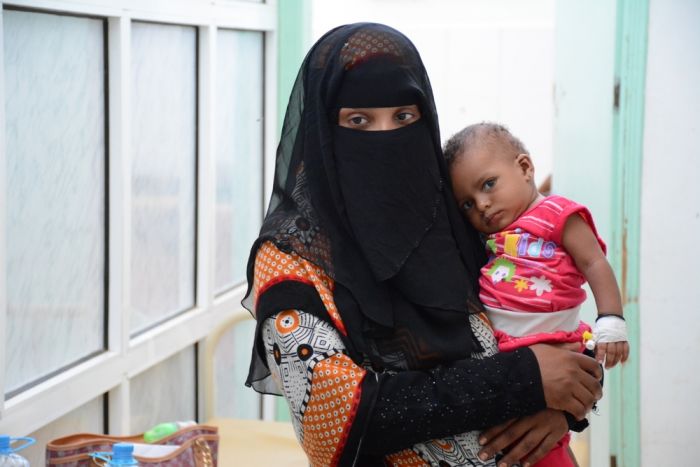
The cholera outbreak in Yemen has now become the biggest on record, with more than 800,000 cases and 2,100 deaths over a six-month period.
Médecins Sans Frontières/ Doctors Without Borders (MSF) has established or supported 22 cholera treatment centres and units in nine governorates of Yemen.
From the end of March to end of August, our teams treated 91,645 patients – or 16 per cent of all patients recorded across the country. We are also running preventative activities aiming to control the spread of the disease, such as providing health education and distributing disinfection kits.
In recent weeks there has been a decrease in the number of cholera cases, but the situation remains concerning, especially as the ongoing war has taken such a heavy toll on the country’s health system.
One Australian field worker who has recently returned from Yemen shares her experience.
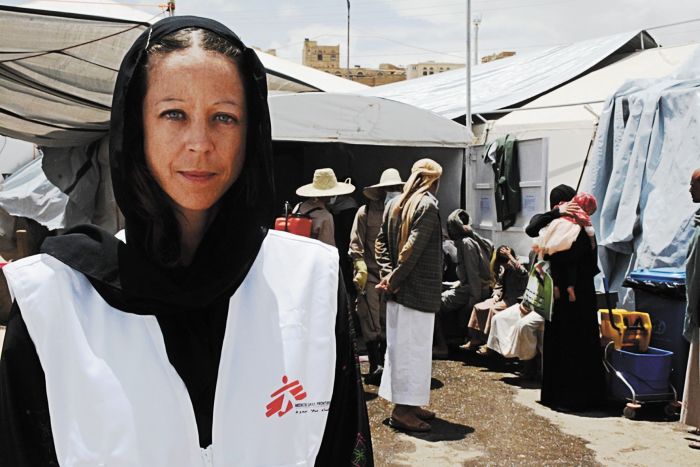
Claire Manera, from Fremantle, WA, worked as Project Coordinator in Khamer, Yemen, from April to October 2017.
“Cholera is a water-borne infection transmitted by contaminated water and food. Since the war began, the relentless bombing of towns and villages has destroyed sources of safe water. Many people also have run for their lives, and now live out in the open, again without access to safe water. Then of course, there’s nowhere to practice good sanitation. People have no soap, or other basic hygiene items. There’s no rubbish collection, for example, or many other services we take for granted in times of peace.
To make things worse, hospitals have been bombed, or have closed down as there is no money to keep them running. Sick people have nowhere to go. People are also struggling to find food, with malnourished children being at much greater risk of death from cholera. These children are the victims of cholera, and the victims of the war.
Because so many health facilities have stopped functioning, people have to travel further to reach help, but often have no money, fuel or transport to do so. They wait too long in the hope that they will get better, but then by the time they reach us, it’s too late. One case we had was a seven-year-old boy who started vomiting and having diarrhoea in a village several hours away. His family went desperately around their village to collect money for transport. His condition worsened as they were travelling, and unfortunately he died 10 minutes before reaching us.
The tragedy is that we can treat the symptoms reasonably easily through rehydration, if people reach a health facility early enough. For more serious cases, we give IV fluids, but for others we give an oral rehydration solution, which is basically a mixture of sugar and salt.
But we’ve realised this isn’t enough. If the water supply remains contaminated then cholera will continue to spread. We’re still hearing stories of people dying in their homes in remote villages. This is why we now go into the community, to give out chlorine tablets to purify drinking water and soap for handwashing, to try and slow down the chain of transmission. We have also set up oral rehydration points in different villages, which help people survive long enough to reach a health facility, or cure them if they are not yet too ill. We are also providing health education about cholera’s causes and symptoms, so that people will hopefully be able to get help in time.”