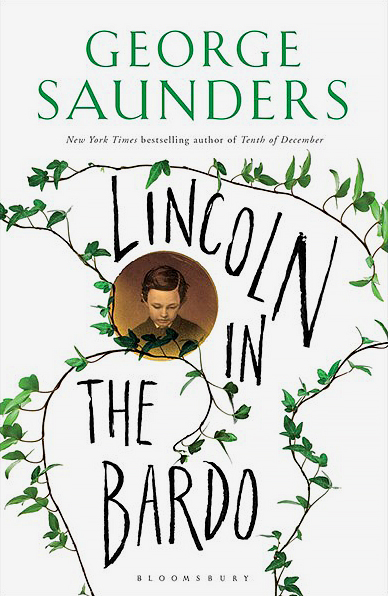
These are the facts upon which George Saunders builds Lincoln in the Bardo, his captivating first novel. And it is in the “bardo” – the transitional state after death and before rebirth – where the bulk of the novel takes place.
The rules of Saunders’ afterlife are clear-cut and brutal: children are not supposed to tarry in the bardo, and those who take too long to accept death and move on undergo a hideous transformation. The race to convince Willie to leave his father behind is the driving force of the novel.
The story is told in more than 160 voices. Drawing upon real and invented accounts, the narrative passes easily from hand to hand in a daring formal experiment.
Many of these voices belong to the various spirits that populate the cemetery. While the spirits observe Lincoln’s torment and Willie’s incomprehension, it is their own personal stories that animate the novel.
Unable or unwilling to accept their deaths, the spirits are disfigured by the desires that defined their lives. Hans Vollman, who died before consummating his marriage to his young wife, appears naked in the graveyard, inconvenienced by oversized genitals. Roger Bevins III, gripped with regret after taking his own life, appears with multiple ears and noses to take in the sensory delights that his death will deny him.
Bevins and Vollman, along with a more self-aware Reverend Everly Thomas, guide us through the afterlife. Through them, we find out that the dead can enter and influence the living. Through them, we hear Lincoln’s voice as he reflects on the temporariness of life. With the president fixated on a domestic tragedy, it falls to the articulate dead to paint a picture of the national tragedy unfolding under his watch.
It is a crowded novel and at times it is difficult to make sense of the clamour. Saunders is at the height of his powers when he steps into Lincoln’s mind and reflects on the aching loss of a child. With melancholy pragmatism, Lincoln realises that Willie “came out of nothingness, took form, was loved, was always bound to return to nothingness”.
At its heart, the novel is a tender, long-form meditation on the nature of grief that will haunt you long after you turn the last page.