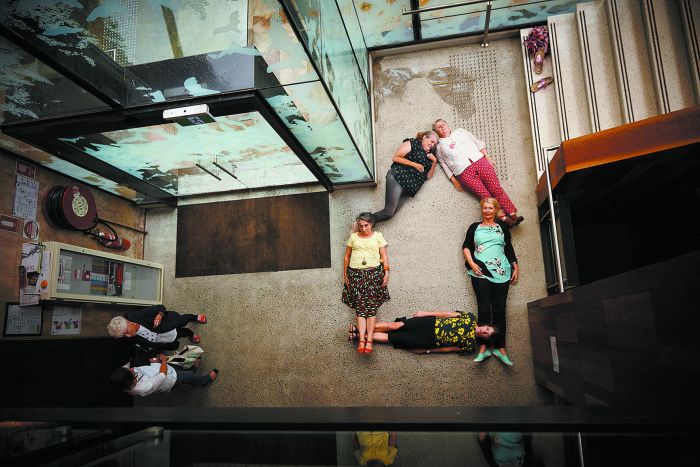
The morning forum consisted of small group discussions, followed by panellists fielding questions from forum participants in a Q&A style format. Panellists were representatives from across the sector and included Deborah Georgiou, former CEO of Women’s Housing Company, Professor Alan Morris from the Institute of Public Policy and Governance at UTS, and Mischa Gwaspari, Team Leader of the Boarding House Outreach Service at Newtown Neighbourhood Centre.
Ms Georgiou referenced the research report, A Plan for Change: Homes for Older Women, published by Homelessness NSW on behalf of the Older Women’s Housing and Homelessness group which was launched on International Women’s Day 2016. She also shared with the group briefly about a studio development project for older women which was to be officially launched the following day on International Women’s Day 2017.
Professor Morris commented on the diverse roles of a range of stakeholders in providing secure housing for older tenants. Mischa Gwaspari raised concern for the increasing number of older women presenting at the Boarding House service. The forum was skilfully facilitated by Felicity Oswell, Community Development Coordinator with Ability Links.
The participants talked together within the theme of NSW Seniors Festival, “We Can Do More Together”.
Glebe Community Development Project and Glebe HAPN ((Housing Action Plan Now) organised the conversation at Glebe Town Hall, Glebe on March 7. There was opportunity to design a postcard, participate in spatial representation on the theme of “house” and several lucky door prizes. Participants also enjoyed a morning tea and lunch.
Key points raised over the morning were the importance of ensuring women have affordable options, and the safety of a secure and stable home as they age; women are often displaced in housing due to affordability issues, combined with a lower financial footprint on retirement from salaried work. Women discussed housing options to address the range of scenarios specifically experienced by older women. The path ahead requires the vision and advocacy of politicians, policy makers, community groups and local residents.