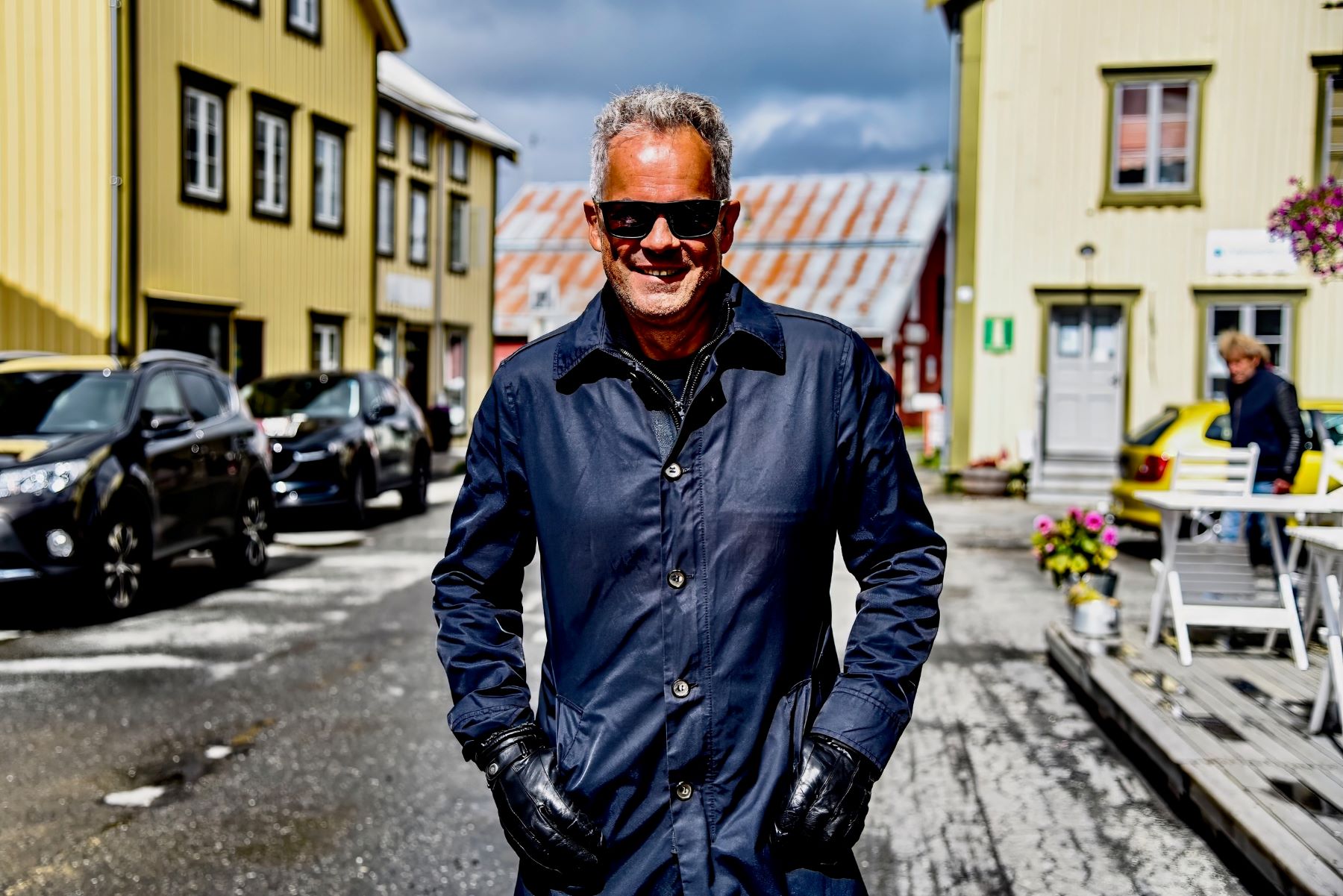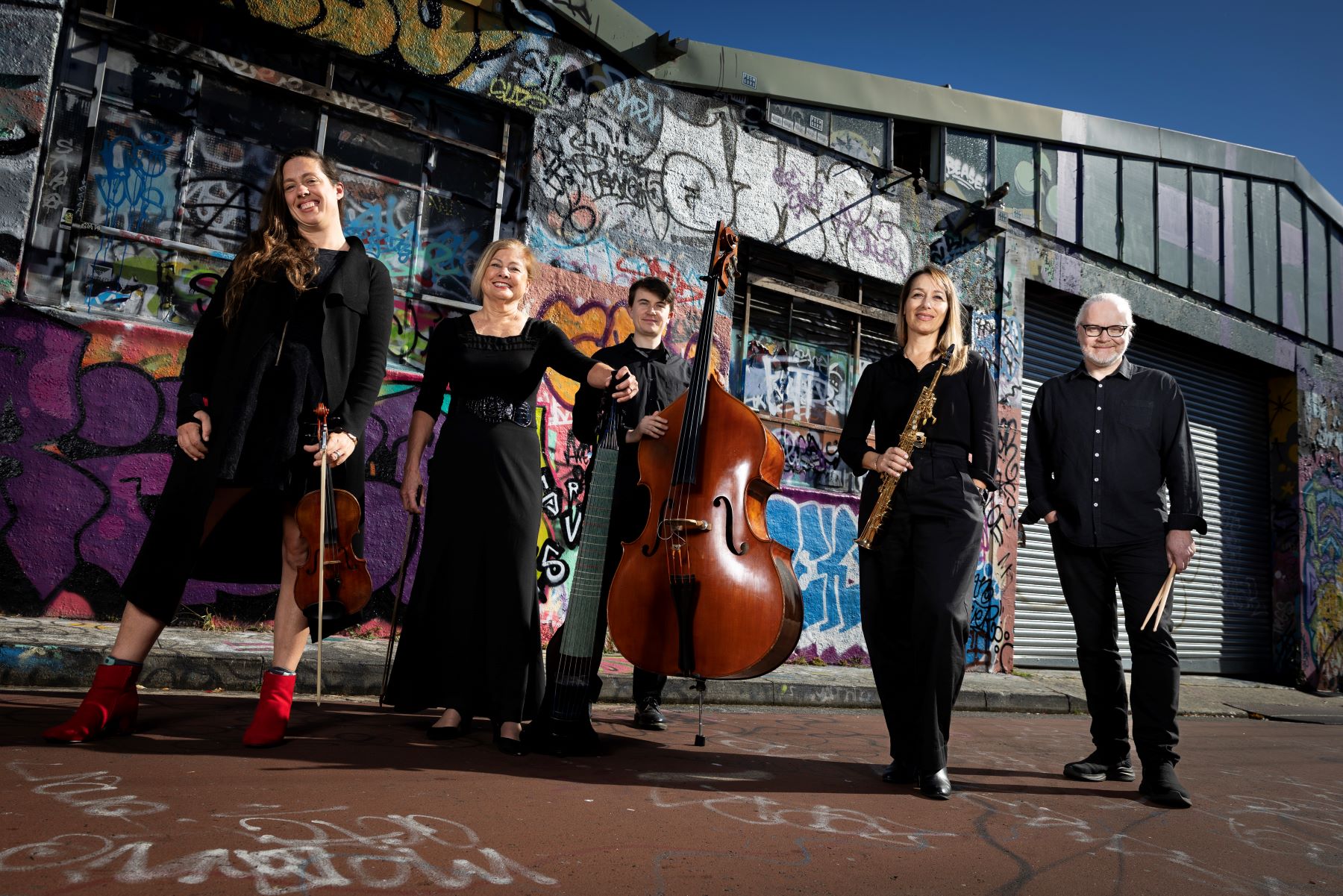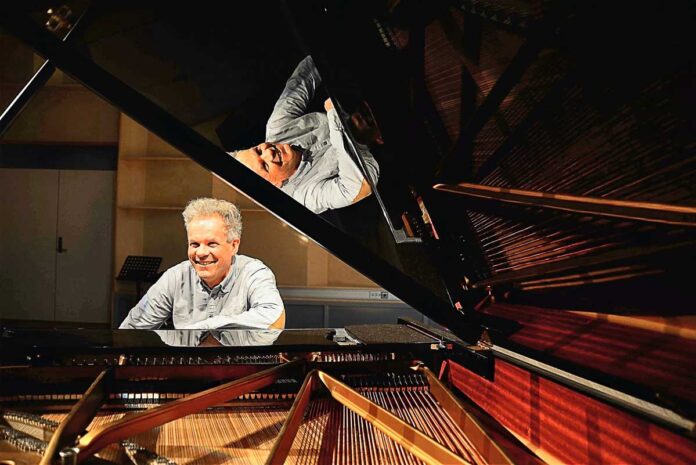
Acclaimed Norwegian jazz pianist Jan Gunnar Hoff will make his Australian debut in October with two Sydney concerts in collaboration with Sydney-based Scandinavian-inspired ensemble Elysian Fields.
Hoff, celebrating 50 years in music, is said to combine the melodic sensibility and dexterity of Pat Metheny Group keyboardist Lyle Mays with the edginess of American jazz pianist Chick Corea.
He has recorded and performed with international jazz luminaries including Metheny (“an adventure of a lifetime”), Corea, Mike Stern (named one of the best jazz guitarists of all time), and Weather Report drummer Alex Acuña.
With 27 albums released as a solo artist and co-leader, his honours include the Buddy Award (Norway’s highest jazz honour) and the prestigious Edvard Grieg Prize for his jazz mass Meditatus.
The Sydney concerts mark the culmination of a longstanding creative partnership between Hoff and viola da gambist Jenny Eriksson, founder and leader of Elysian Fields.
Of Swedish heritage, Eriksson has recorded several of Hoff’s compositions and has performed alongside him in Norway.
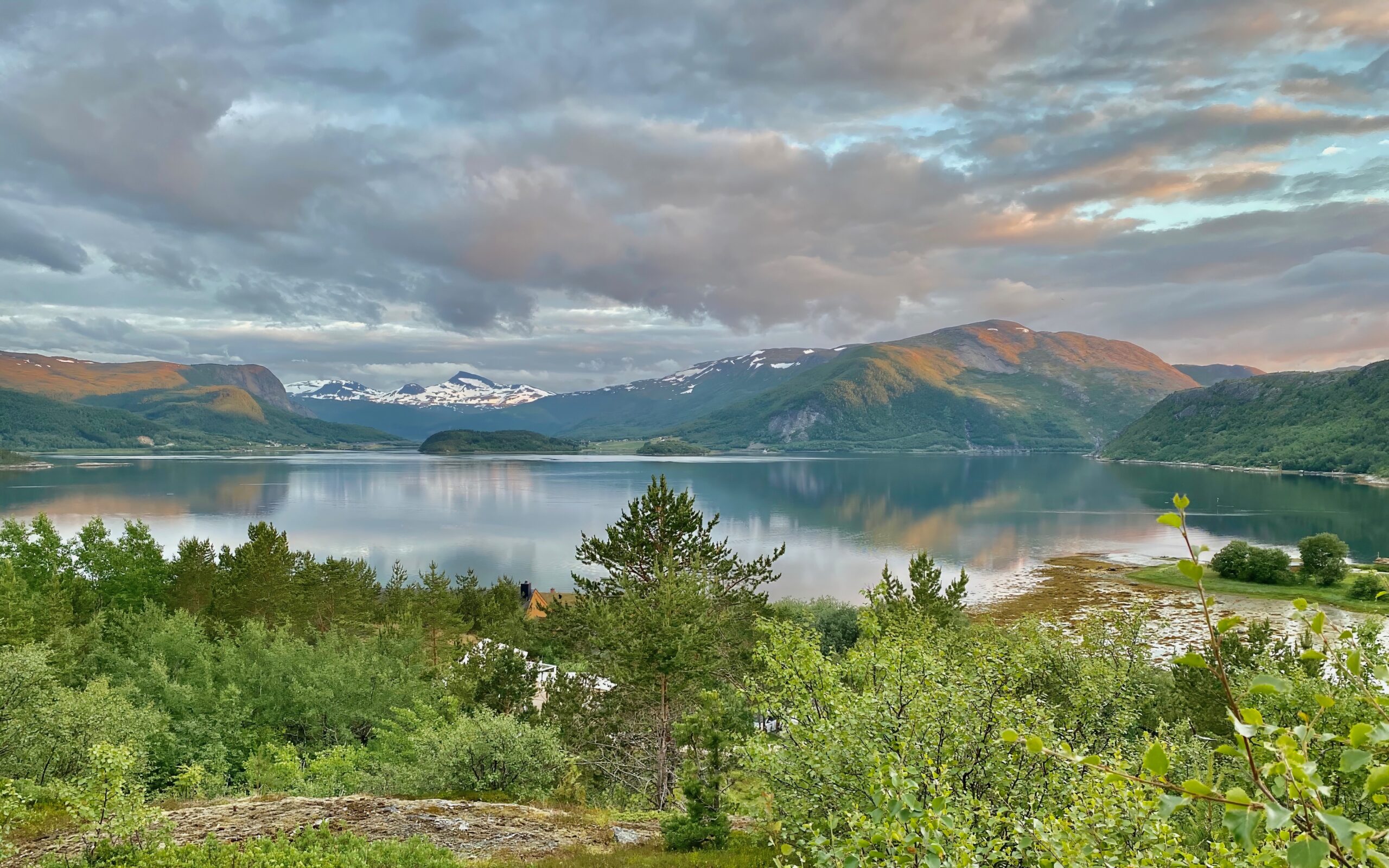
Hoff is based in Bodø, a coastal city in northern Norway above the Arctic Circle.
From his studio overlooking a fjord, he draws inspiration from the surrounding landscape, a connection that also informs his commitment to environmental issues, climate action, and the preservation of Norway’s wilderness.
His large-scale choral work Heartlands is a tribute to nature.
Connecting genres
Hoff’s music incorporates a blend of genres and influences, from the people and landscape of northern Norway to his personal experience and emotions.
His expressive pianistic repertoire – solo, in trios and larger ensembles – extends from a “folkloristic” touch to the so-called Nordic sound in Norwegian jazz, and then to fusion, incorporating synths with elements of funk, pop and rock.
“I consider myself an artist in a kind of crossover landscape. I started with classical piano at the age of 8, then I was invited to play with some prog rock groups. I was really fond of Emerson Lake and Palmer, Yes, and Focus. And Genesis, of course.
“There is a connection of good melodies, good harmonies, that you can follow from classical into prog rock. Bands like Focus were really using the classical harmonies.
“I naturally listened to Norwegian jazz saxophonist Jan Garbarek, who is also active in classical crossover with Hilliard Ensemble and other ensembles.
“And I was inspired by jazz pianist Keith Jarrett, another classical-educated guy, and his two albums of amazing tunes from the ’70s, My Song and Belonging.
“So I went from classical, through prog rock, and then I experienced jazz, which had the components that I needed to actually learn more.”
He said, “What I’m trying to do in my little world is to connect the genres.
“When you have grown up with classical piano, you can drag in some elements from different composers, like Chopin, Liszt, Debussy, and Beethoven.
“I am a big fan of Oscar Peterson, Herbie Hancock, and Chick Corea, so I have enormous respect for the great jazz legends.
“But they are out of my reach, really. I’d rather be a good version of myself than to try to be on their level, because they have gone so deep into the material.”
Hoff said for him it was always about a good melody.
“I can move into some kind of complexity, when it comes to improvisation – going wild into some kind of landscape – because I focus on bringing in the melody.”
He said, “I wouldn’t say that I’m a complete musician because it requires that you are really deep into all the areas. But I try to find a way to reflect my sound and my music and my style, sometimes outside the mainstream trends in jazz.
“Often I don’t fit the requirements of festivals looking for, say, hip hop jazz or Robert Glasper or the jazz pop fusion band Snarky Puppy.
“I don’t want to do that. I just keep making my own music, keep doing my own thing, which is basically compositions; compositions performed by dedicated musicians and artists, people who can make a difference in your music.
“I feel I make music for musicians.”
Elysian Fields
Hoff first came across Jenny Eriksson on social media. Then she met him in Norway.
“So we met online and she was really positive about my music. I heard her stuff and we started to think about doing something together musically.
“I was extremely proud that Elysian Fields decided to record my music on their album Fika.
“I wanted Jenny to play at our annual concert in a church in the countryside for Olsok (Olaf’s Wake), a national day of celebration. We started to play together and now she has invited me to Australia.”
Hoff said he thought it would be great to play at the Sydney Opera House.
He had been reading about Danish architect Jørn Utzon, the Sydney Opera House architect who designed the Utzon Room and who, like Hoff, had a Nordic sense of concern for nature.
With floor-to-ceiling windows, the Utzon Room is celebrated for its sweeping harbour views and exceptional acoustics. And that is where Hoff and Eriksson will be performing.
Hoff said it would be very interesting playing with Elysian Fields.
“Their music is less jazzy than my own stuff. But we can meet to produce music together. In the end, it’s more about expressing and interpreting your compositions and making the music come alive.
Music industry
Hoff said the contemporary music industry was struggling, at least for the minor artists.
“It is rough out there. You can’t really expect to make money in music. Musicians who earn the least are asked to sponsor websites and media and support those who write about jazz.
“With streaming, music now is basically free. You pay basically nothing for all the music in the world. It’s not sustainable
“I make CDs that cost me tens of thousands of Euros to produce and, in the end, I just give it away.”
He said musicians now depend on the live scene with the best opportunities falling to famous acts or really good players.
“I can play a lot of different things, like fusion bands with a top international crew. Or I can play solo concerts.
“I try to develop high-quality products on each of these platforms. The only problem is that 80 per cent of it is more or less promotion, even with great international players.
“I remember there was an interview with Lyle Mays, the piano player in the Pat Metheny Group, which used to fill huge arenas.
“He was asked if the group could have that success today. And he said probably not because there are fewer jazz outlets and the attention has turned away from instrumental music. Jazz had become niche and no longer appeared in mainstream media.”
Hoff said he was hoping he could create some interest during this first Australian tour so he could return for more performances.
Heartlands
Before he comes to Australia Hoff will go into the studio to record a 2024 composition on the theme of nature, climate, the environment and the role of human beings.
“Why are we up here in the north, what does nature mean to us, what can’t we do without?
The issue has become more urgent in recent years with Norway facing intense public and environmental opposition to new onshore wind farms proposed to power a rapidly growing data centre industry.
Norway is a petrostate, producing more oil and gas than Kuwait or Algeria in 2024, but it exports almost all of it. Locally, nearly all electricity is produced by wind (10%) and hydropower (90%).
That, combined with a cold climate and a relative abundance of space and water, makes the country a sought-after destination for operators of data centres. Several tech giants are already active in the country.
Critics argue that onshore wind developments to run foreign tech infrastructure – such as massive data servers for TikTok, Google, and OpenAI – drive up local electricity prices, strain grid capacity, transform scenic natural terrain into sprawling industrial energy sites, fragment untouched wilderness, threatening wildlife, bird populations and fragile local ecosystems, and damage indigenous reindeer herding lands.
That scenario is the basis for the title of Hoff’s commission Heartlands: “an area that a nation cannot lose without losing itself”.
Hoff had previously written The Fjords (on his album Voyage), a tribute to Norway’s natural environment, emphasising the importance of preserving fragile landscapes for future generations.
He said, “The Fjords is my homage to our vulnerable nature and environments in Norway. Pristine nature is constantly under pressure, and it is vital to preserve our untouched areas for future generations.”
Defending the environment was a difficult question, he said. “Ten years ago, I would probably have another view on the topic because we’re all interested in the environment, where we’re watching the wildfires and heatwaves in western Europe.
“But, when you see the consequences of supposedly saving the environment by making industrial areas of huge mountains in Norway, which you have to blow up and build enormous roads to access, you have to question selling out our valuable natural assets.”
Hoff said people wondered why he chose to live in a small town above the Arctic Circle.
“A lot of people ask me, ‘Hoff, why aren’t you in Oslo? You should be where all the other musicians are. What the hell are you doing up there?’
“I can tell you why I am up here. I’m up here because of the nature, because of the possibility to walk along mountain heights and watch untouched nature, where you see the birds.
“I grew up with this. I grew up in hiking. I was always getting my currency in the mountains, and now it’s becoming something I really need to defend.”
He said he was surprised that politicians and governments didn’t see this, that they were more loyal to European industrialists.
“We don’t need to take away all the nature. We already have hydropower plants that are a much more effective and sustainable way of getting carbon-free energy.
“Why should we accept losing huge mountain areas that are the finest places for living, for our mind and soul, and for our health?
“So, in 2024, I wrote this huge piece for choir and band, which is going to be like a prog rock happening. We did a successful concert in 2024 and the new album will have some of the finest musicians.”
He said, “It is Heartlands because we live inside nature, we are in nature, we live our true lives where nature surrounds us.
“Building wind farms to power data centres is like an invasion. We need to rise up in civil disobedience. I’m not hooked up with some chains up there … not yet.”
Hoff said the battle for the environment illustrated his inspiration to compose.
“Of course, most of it comes from an inner source. What’s your life been like? What are your emotions? Do you have some message? Do you have something in your heart you need to express?
“But it can also be direct things like the big issue of the environment: you get this idea and it leads to some kind of beautiful result.”
He said, “Imagine you’re sitting at your place composing music. You are looking at the mountains from your window. And then you see in the newspaper that the whole area is going to be covered by wind turbines.
“It is a terrible situation. In the beginning, you get kind of paralysed because you’re thinking, ‘Wow, they’re coming! Fucking hell, they are coming! We cannot stop this shit!’
“But you get some kind of drive, some adrenaline, and you get involved. You need to rise up to the occasion and find a way to participate.”
Hoff said Heartlands was a meaningful way to show that he appreciated, and was willing to fight for, the pristine nature of northern Norway.
“It takes a lot of personal energy but I got to produce one big piece as a result.”
On Saturday 3 October at 4.00pm Jan Gunnar Hoff will illuminate the Utzon Room, Sydney Opera House with solo piano plus intimate duos alongside viola da gambist Jenny Eriksson.
The Utzon Room program features Hoff’s signature composition Fly North, a jazz interpretation of the Beach Boys’ God Only Knows and Barndomsminne fra Nordland, a traditional song deeply connected to Norwegian cultural identity. Duos with Jenny Eriksson include Hoff’s Living and Vaapstenjeanoe (Big River) along with a new arrangement of the Scottish Australian folk song, Johnny Faa. Book tickets here.
On Friday 9 October at 7:30pm, Hoff and Elysian Fields will unite at The Lounge, Concourse Theatre, Chatswood.
The performance will feature the world premiere of a new work by Jan Gunnar Hoff commissioned by Eriksson and Elysian Fields, and Hoff’s Living and Meditatus. Book tickets here.